
Last updated September 20, 2026
Level 1 sweep and inspection to the NFPA 211 annual standard - flue, crown, cap, and flashing checked and photographed
Chimney sweep logs do not sweep chimneys. They loosen some creosote - which then falls where a brush and vacuum still have to collect it.
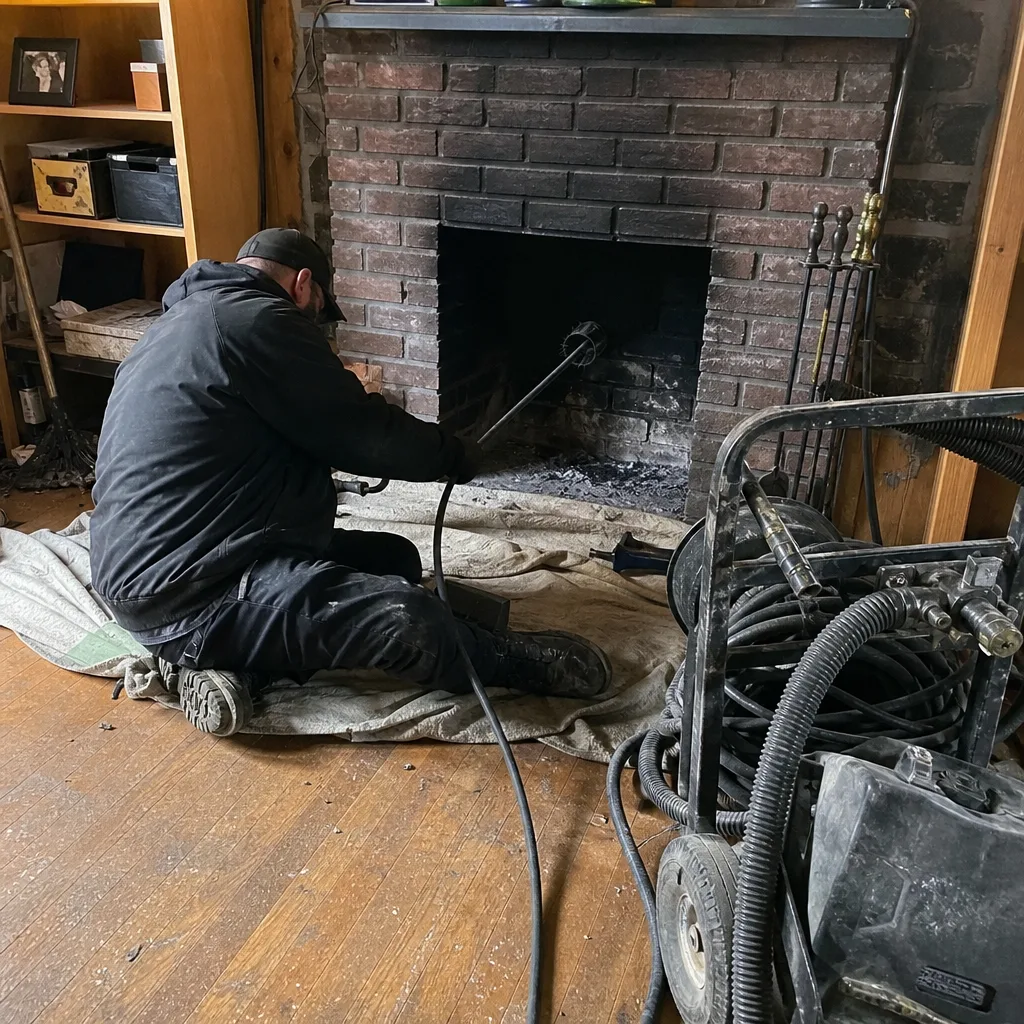 Before
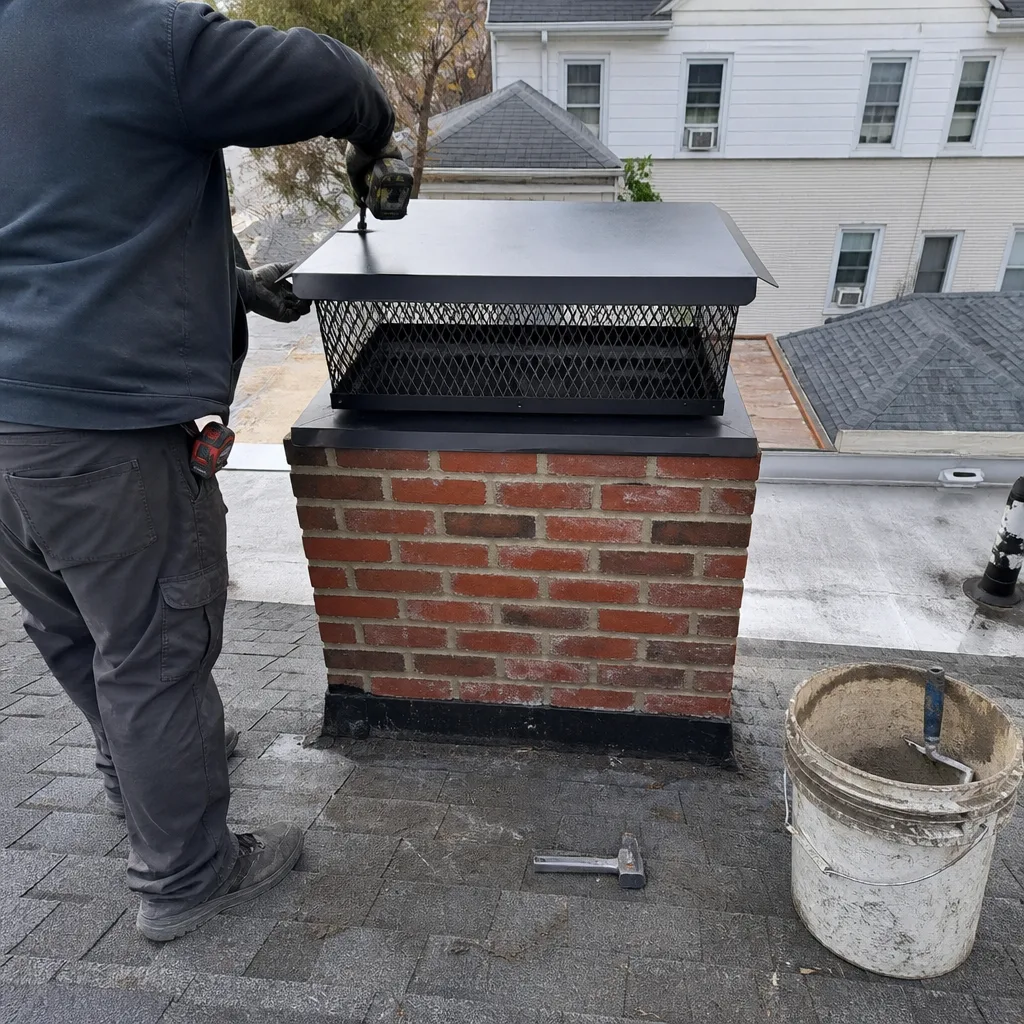 After
After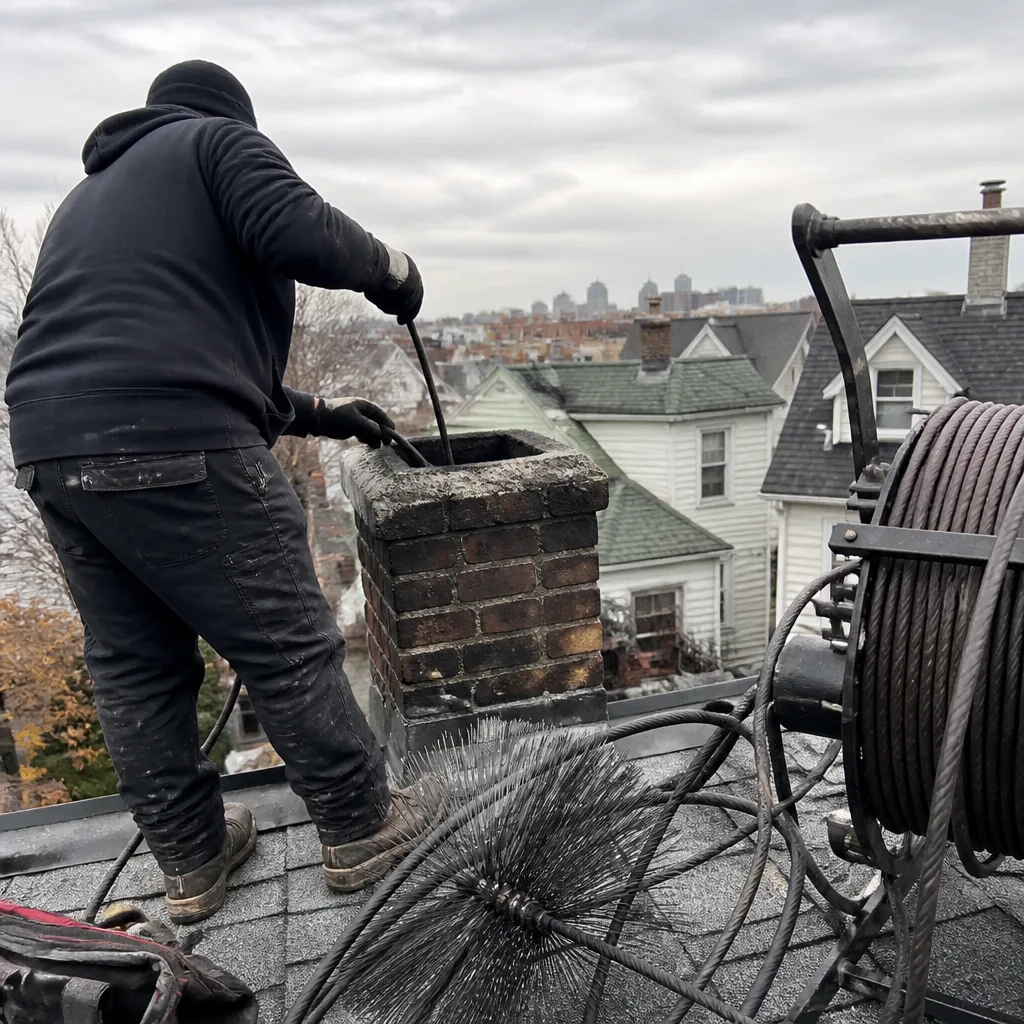 Before
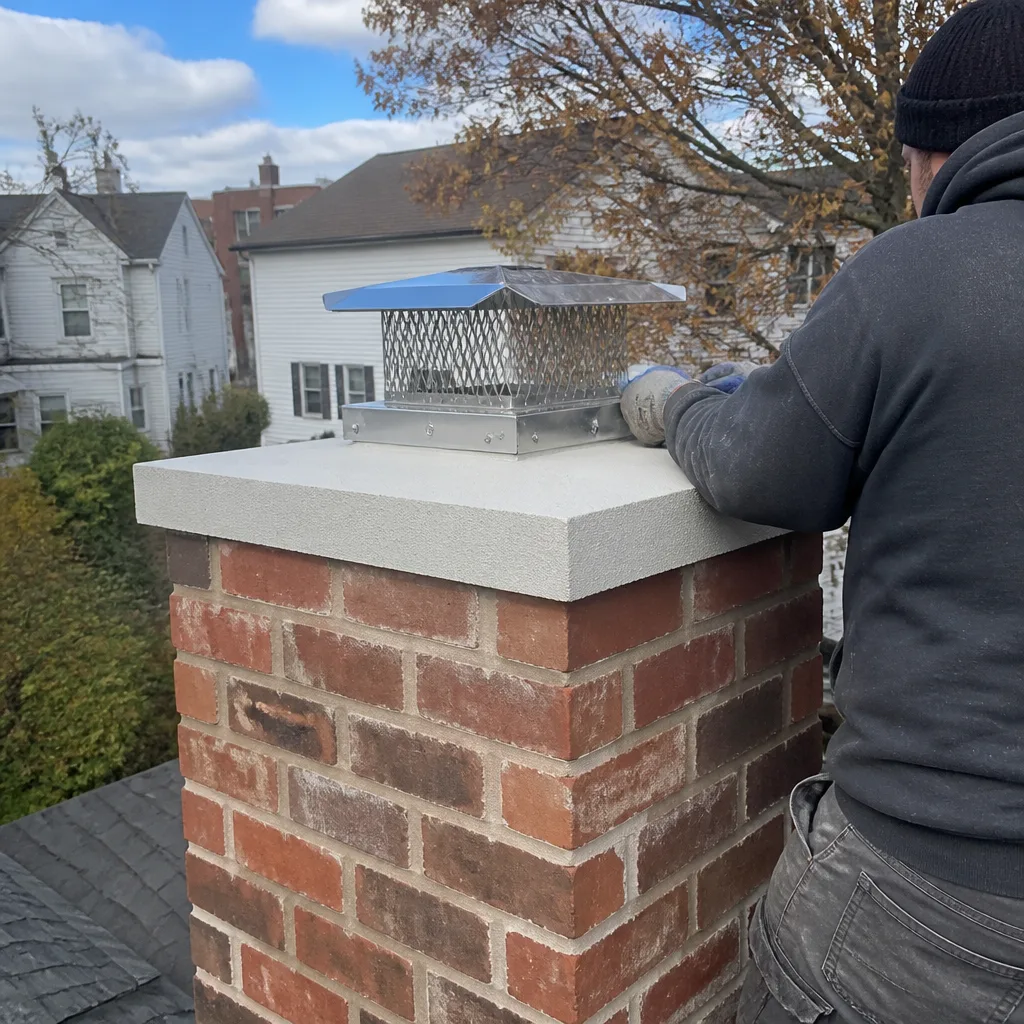 After
After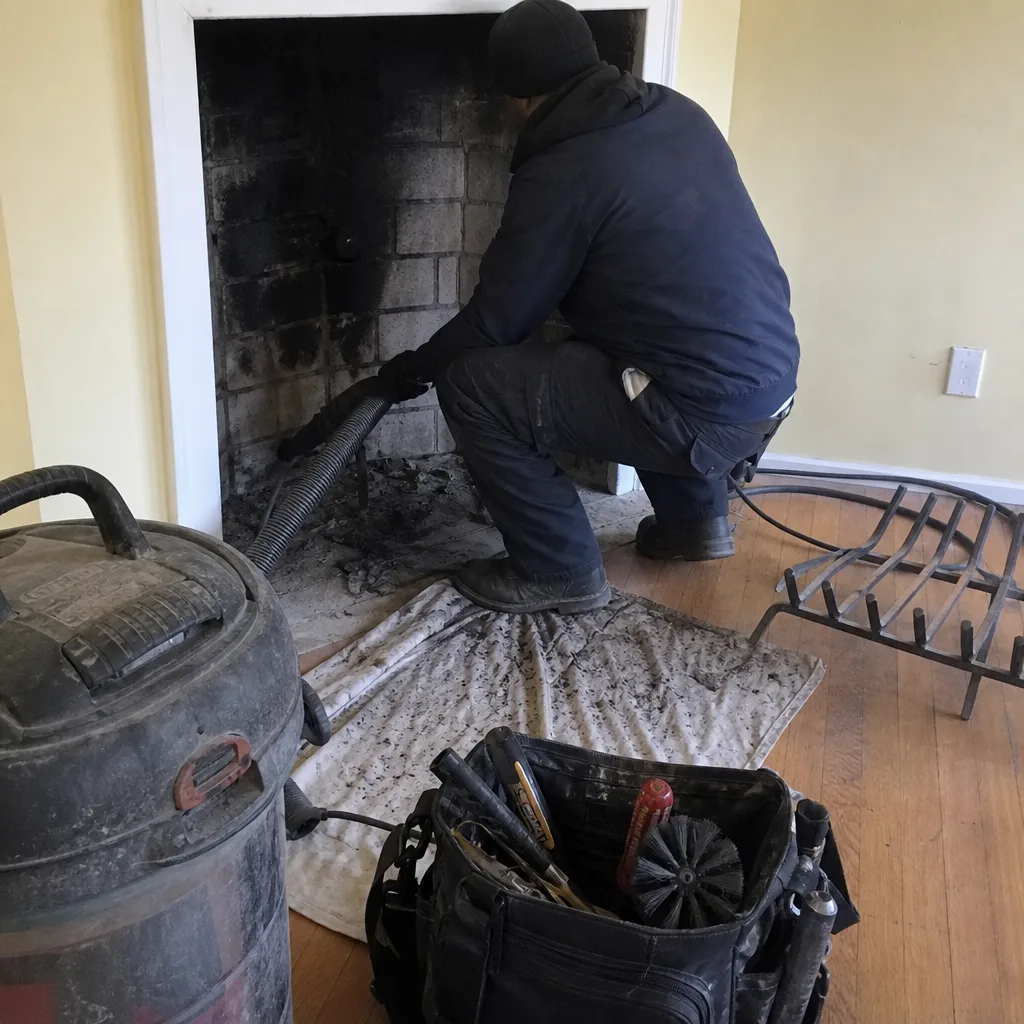 Before
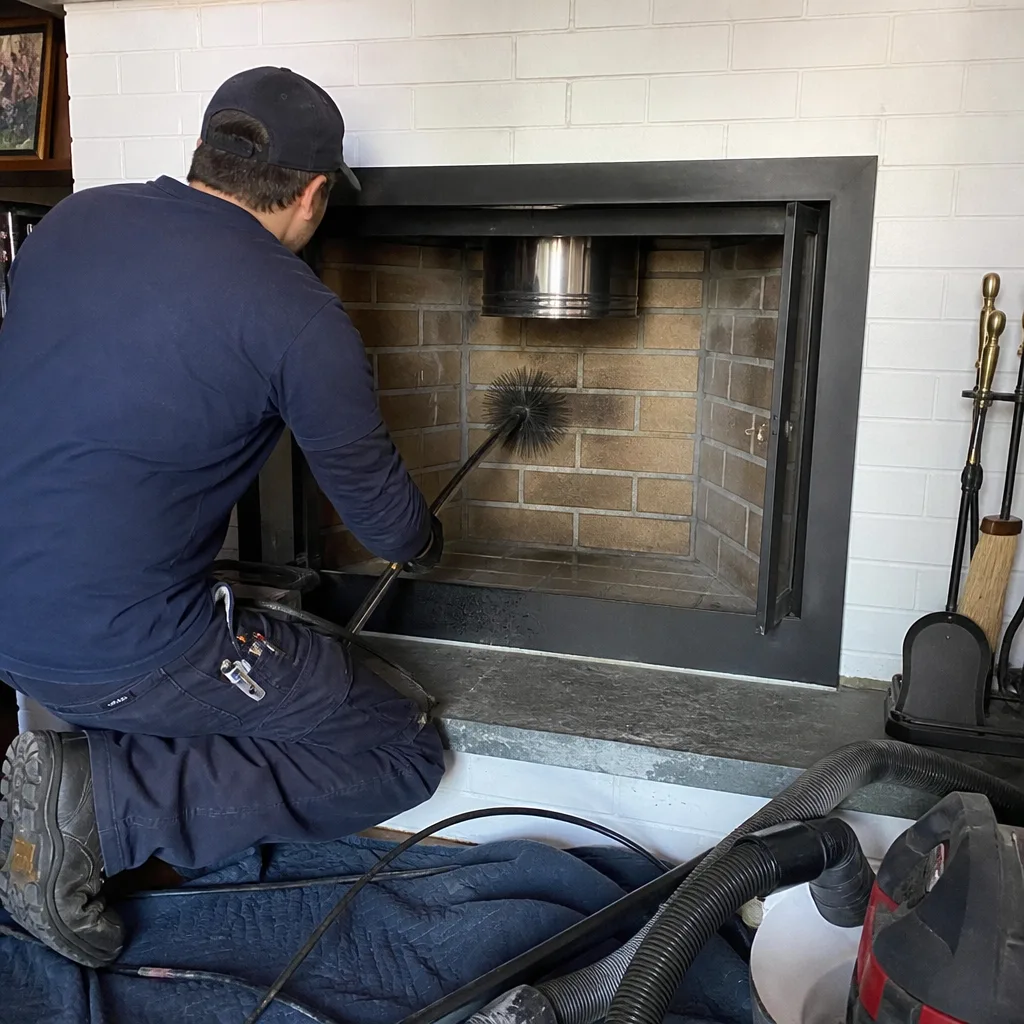 After
AfterDIY vs Professional Chimney Cleaning: The Astoria Homeowner’s Decision Guide
Here’s a number that should make every Astoria rowhouse owner pause: a chimney brush kit costs about $60 at any hardware store, and a professional chimney cleaning in Astoria runs between $189 and $340. If you’re looking at those two numbers side by side, you’re asking the wrong question. The real question isn’t what it costs to move soot around with a brush. It’s what it costs to know whether the brush actually did anything that matters, and what you’re legally and financially on the hook for if it didn’t. This guide walks through exactly what DIY chimney cleaning accomplishes, what it fundamentally cannot do, and how to make the call for your specific fireplace in Astoria’s attached housing stock, where your flue is rarely just your flue. For more guides & resources, see our blog.
Quick Answer
DIY chimney cleaning can remove loose Stage 1 creosote from accessible flue surfaces, but it cannot assess liner condition, detect blockages above the smoke shelf, or document anything for insurance or disclosure purposes. For Astoria homeowners in attached or semi-attached housing, professional cleaning with a camera inspection is the safer default because a compromised flue in a shared wall is a shared risk. The one reasonable DIY scenario is a supplemental mid-season brushing on a gas insert with a recent professional camera scan on record.
Table of Contents
- What DIY Chimney Cleaning Actually Accomplishes
- What a Brush Cannot Reach: The Limits of DIY
- The Astoria Risk Calculus: Attached Housing and Shared Walls
- The Documentation Gap: Insurance, Disclosure, and CO Liability
- Honest Cost Comparison: DIY Kit vs Professional Cleaning
- The One Scenario Where DIY Makes Sense
- Common Mistakes to Avoid
- When to Call a Professional
 Before
 After
AfterWhat DIY Chimney Cleaning Actually Accomplishes
A chimney brush on a flexible rod does exactly one thing well: it mechanically dislodges loose, powdery creosote from the flat, reachable surfaces of your flue liner. That powdery deposit is what the National Fire Protection Association classifies as Stage 1 creosote, and if that’s all you have, a $60 kit from a big-box store in Astoria will genuinely remove a meaningful portion of it. You’ll see black dust on your drop cloth and a cleaner flue when you shine a flashlight up from the firebox.
But here’s what actually happens during a DIY sweep. You’re working from inside the house, reaching up through the damper opening or down from the roof if you’re comfortable with a ladder (which, for most Astoria rowhouses, means a three-story climb from a sidewalk or a shared alley). The brush covers maybe 70 to 80 percent of the flue surface, missing the smoke chamber entirely, skipping the area directly above the damper plate, and never touching the cap assembly or crown at the top. You cannot see what you missed, because you have no camera and the geometry of a flue doesn’t cooperate with a flashlight.
What DIY brushing accomplishes, in precise terms: it removes accessible Stage 1 creosote from the vertical flue run. What it does not accomplish is anything else. It is not an inspection. It is not a diagnostic. It does not tell you whether the liner behind the deposits is cracked, spalling, or detached. It does not tell you whether a bird built a nest on the smoke shelf in April. It does not tell you whether your cap is rusted through or missing entirely. In our experience across 38,000 chimney inspections and cleanings since 2009, the majority of fire hazards we document are not in the reachable flue run. They’re in the smoke chamber, behind the damper, at the crown, or inside a liner that looked fine from the top but wasn’t.
What a Brush Cannot Reach: The Limits of DIY
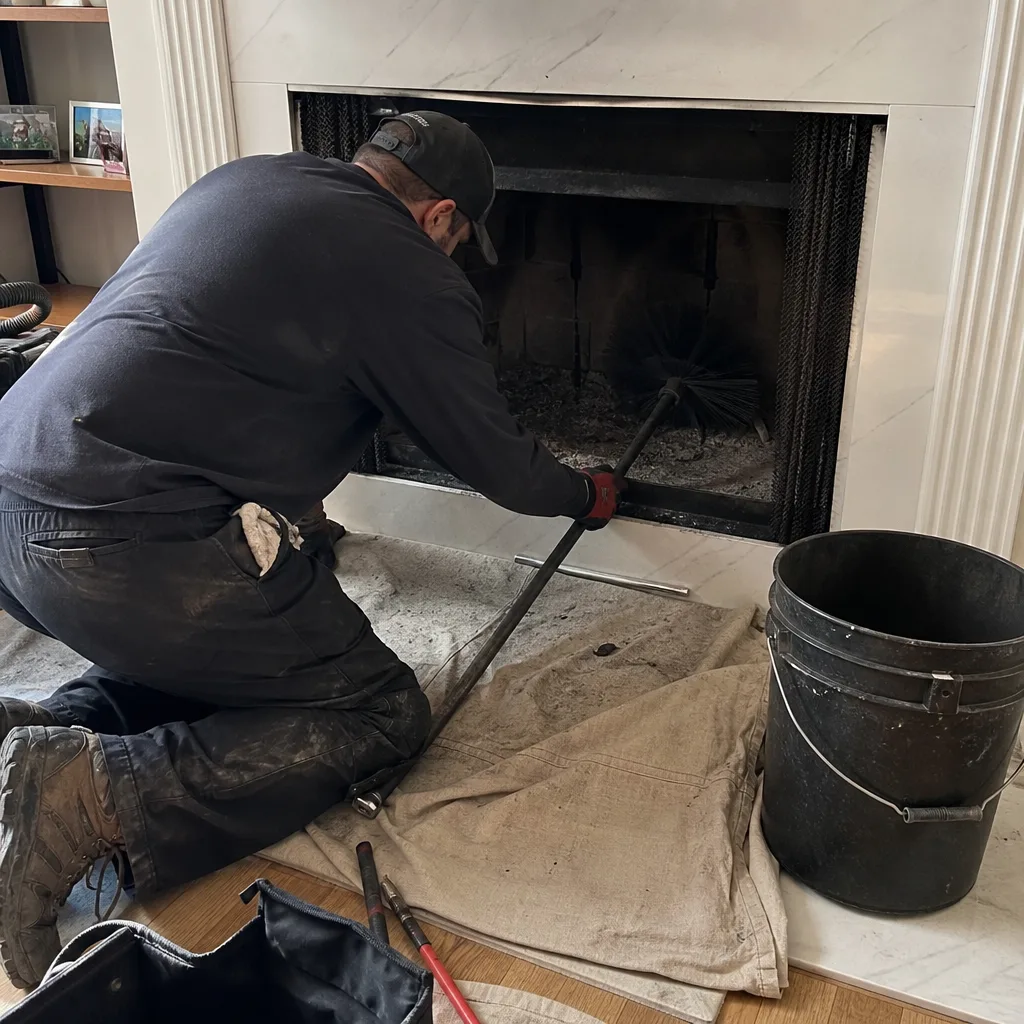
Chimney anatomy matters here. Your flue is not a simple vertical pipe. It’s a system with multiple components, and most of them are either inaccessible from the firebox or invisible without a camera. Understanding what those components are is the difference between cleaning a chimney and actually knowing whether your chimney is safe to use.
The smoke chamber. Above the damper, your flue widens into a corbelled masonry chamber that directs smoke from the firebox up into the flue. This chamber is almost always wider than the flue itself, meaning a flue brush sized for your liner passes through it without touching the walls. Creosote builds up on smoke chamber walls, especially in older Astoria homes where the chamber was parged with rough mortar. A DIY brush does not clean this area. Period. If your house was built before 1980 (which covers the majority of Astoria’s housing stock), your smoke chamber may not be parged at all, and it can hold deposits that have been accumulating for decades.
The area directly above the damper. When a brush comes up from the firebox, the damper plate deflects it. The few inches of flue directly above the damper rarely get brushed at all. In gas fireplace conversions, which are extremely common in Astoria apartments and condos, this zone accumulates a specific type of deposit from the gas combustion byproducts that bake onto the liner surface. It requires mechanical removal with tools sized for the job, not a generic brush.
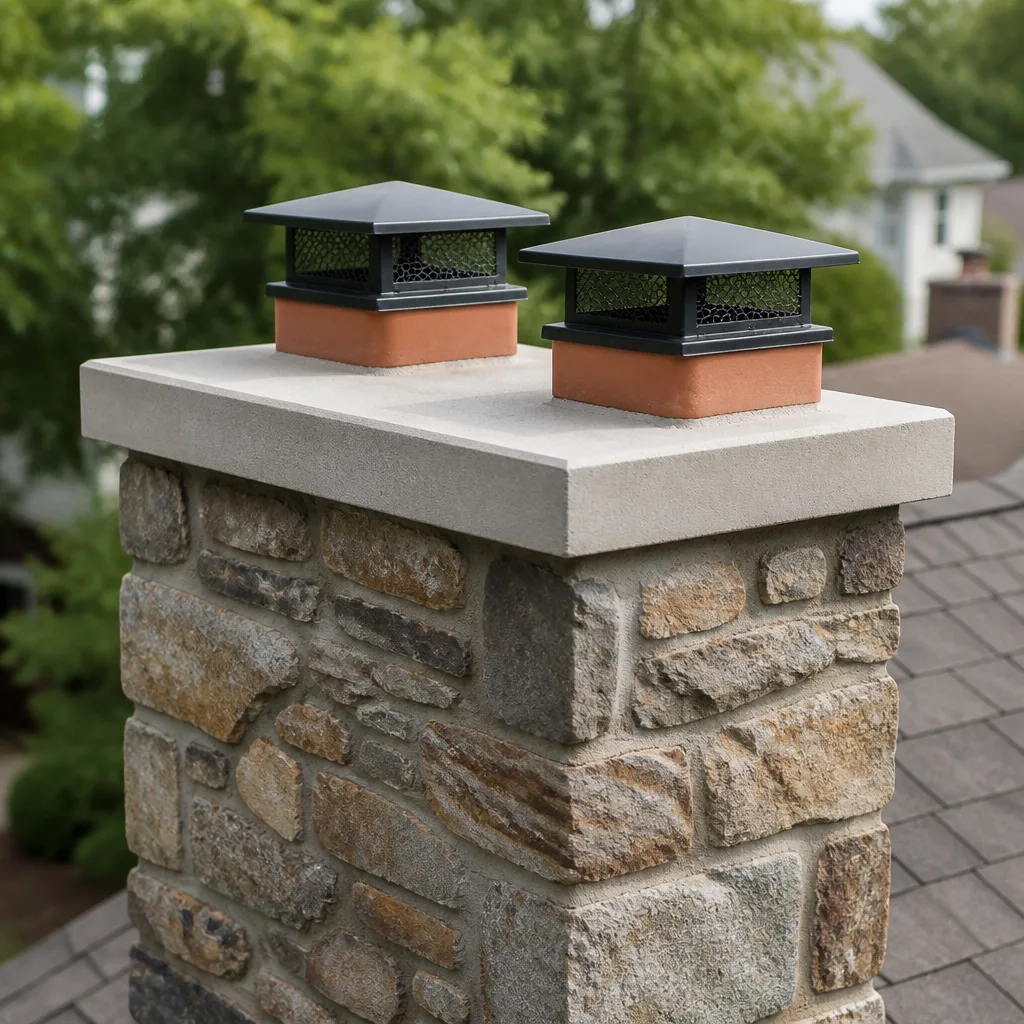
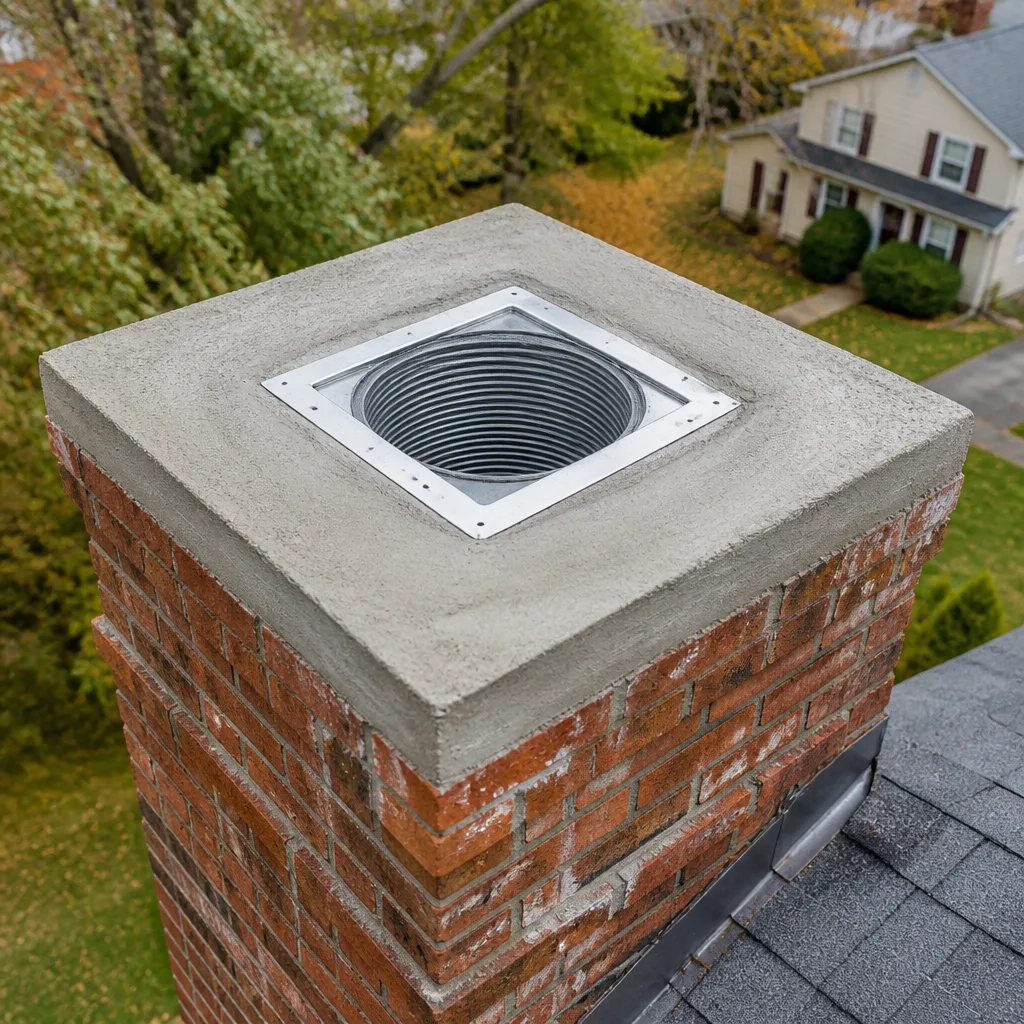
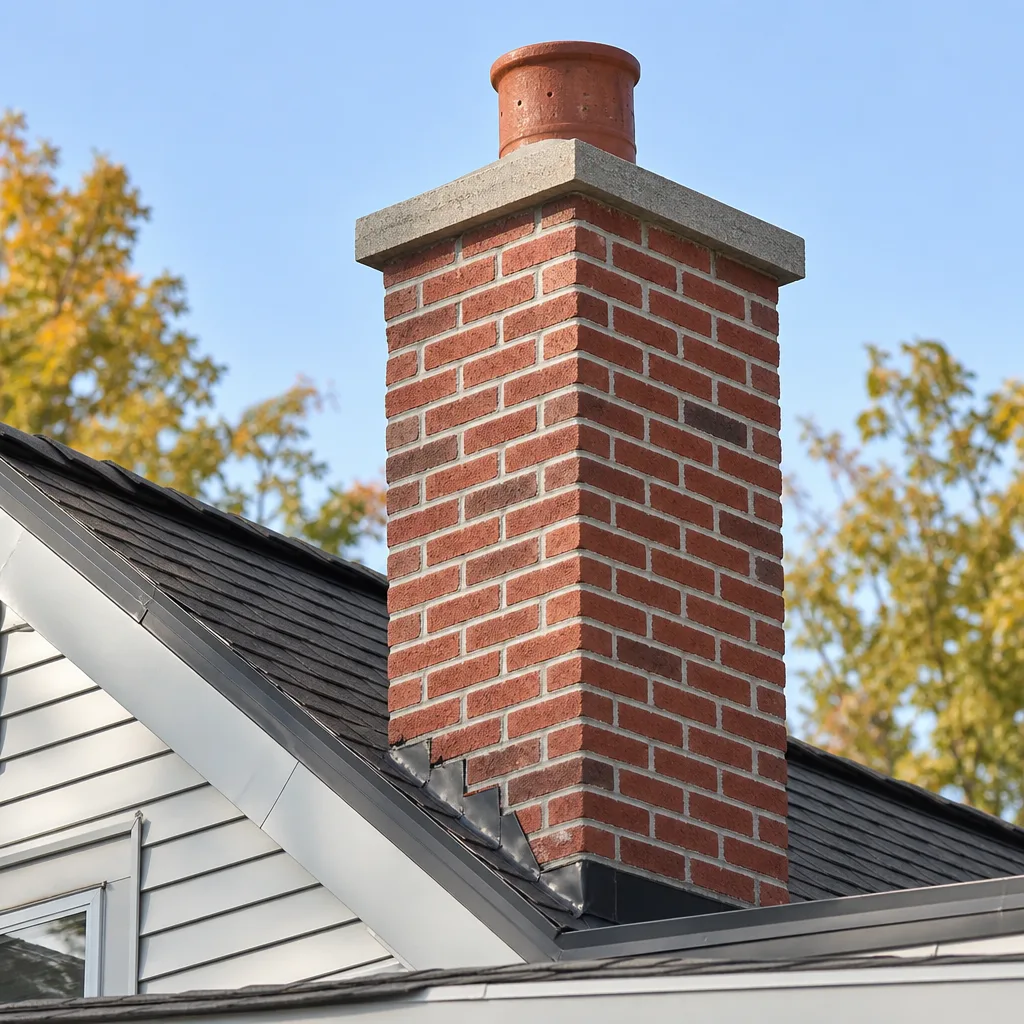
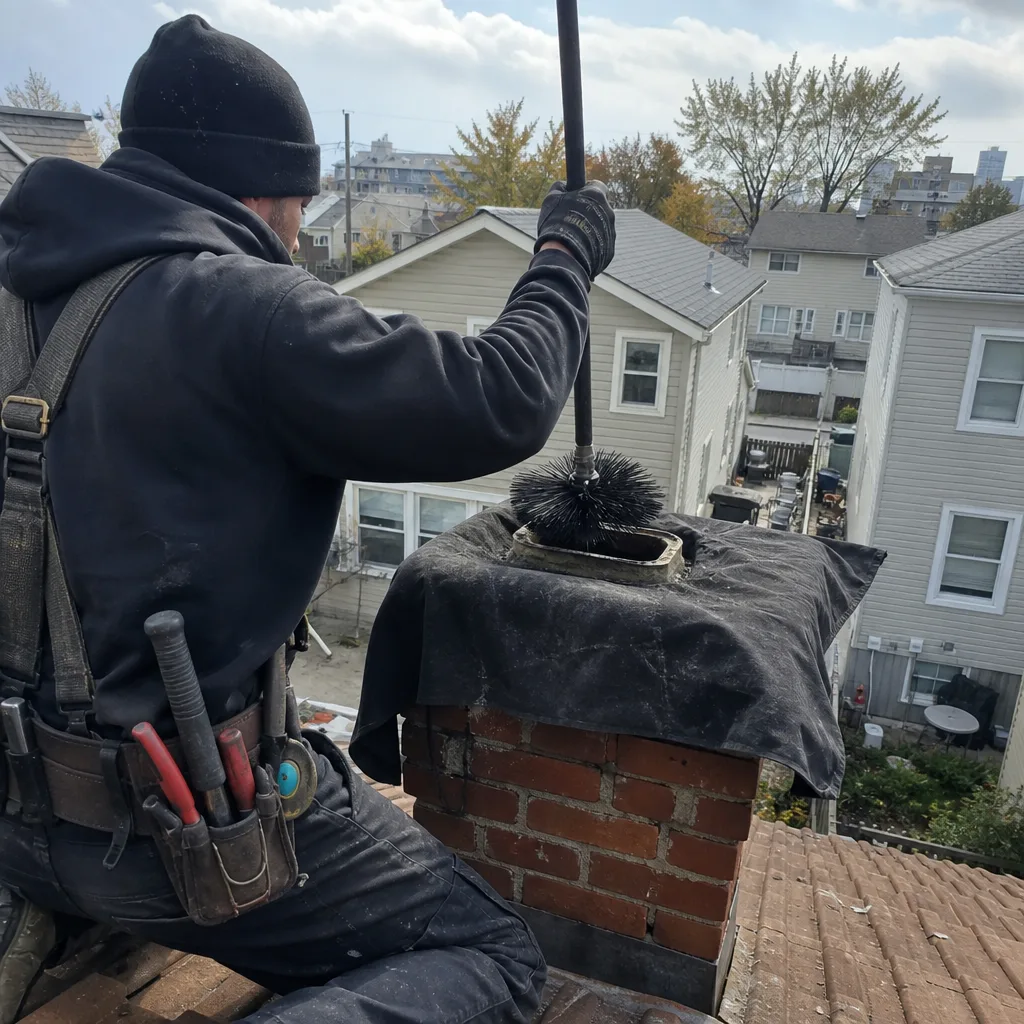
The cap and crown. Two stories up, your chimney cap keeps rain, birds, and squirrels out of your flue. The crown is the concrete slab that seals the top of the chimney structure. From inside the house with a DIY kit, you cannot see either one. From a ladder, you shouldn’t be trying. A damaged cap lets water into your flue, and water plus creosote equals an acidic slurry that eats mortar joints and eventually the liner itself. In Astoria’s freeze-thaw winters, a cracked crown expands with every cycle, and the damage compounds faster than most homeowners realize.
Stage 2 and Stage 3 creosote. Stage 2 creosote is a flaky, tar-like deposit that a wire brush will partially remove but not fully. Stage 3 creosote is a hardened, glazed coating that resembles black glass. It is functionally impossible to remove with a homeowner-grade wire brush. It requires professional rotary tools with specialized chains or chemical treatments, and in severe cases, it indicates that the flue needs replacement rather than cleaning. If your chimney has Stage 3 creosote, DIY brushing will do nothing except give you a false sense of accomplishment.
The Astoria Risk Calculus: Attached Housing and Shared Walls
Here is the part that generic online chimney advice misses entirely. Most chimney cleaning guides assume a detached single-family home where your flue is your problem alone. That’s not how Astoria works. The neighborhood’s housing stock is overwhelmingly attached rowhouses, semi-detached brick homes, and multi-unit buildings where flues run through shared walls and party walls run between residences. Your chimney is often physically connected to, or runs alongside, your neighbor’s chimney. In some older Astoria buildings, flues were even combined historically, though modern code requires separate liners.
This changes the stakes in a way that matters. If you do a DIY cleaning and miss a Stage 2 creosote buildup or a cracked liner, and that liner fails during a fire, the fire doesn’t politely stay in your unit. It spreads through the wall assembly, into the neighboring rowhouse, and potentially into the building structure above you. Your deferred maintenance is not just your risk. It’s your neighbor’s risk, and if the fire starts in your flue, it’s your legal exposure.
Astoria’s specific conditions compound this. The neighborhood sits close to the East River, and the marine air carries moisture that accelerates creosote corrosion in unlined or damaged flues. Brick rowhouses from the 1920s and 1930s often have original clay tile liners that are now 90 to 100 years old. Those liners crack. Mortar joints dissolve. When a fire goes through a cracked clay liner in a shared wall, the wall cavity becomes a chimney in its own right. We’ve documented this pattern repeatedly in Astoria: a homeowner reports a chimney that “works fine,” and a camera scan reveals a liner with multiple separations and creosote staining in the surrounding masonry indicating heat transfer into the wall.
The attached-housing reality also means your neighbor’s habits affect your flue. If the adjacent unit hasn’t been maintained, water intrusion from their side can migrate into your chimney structure. A professional camera inspection documents your side of the wall, which is exactly the documentation you want if there’s ever a dispute about where a problem originated.
The Documentation Gap: Insurance, Disclosure, and CO Liability
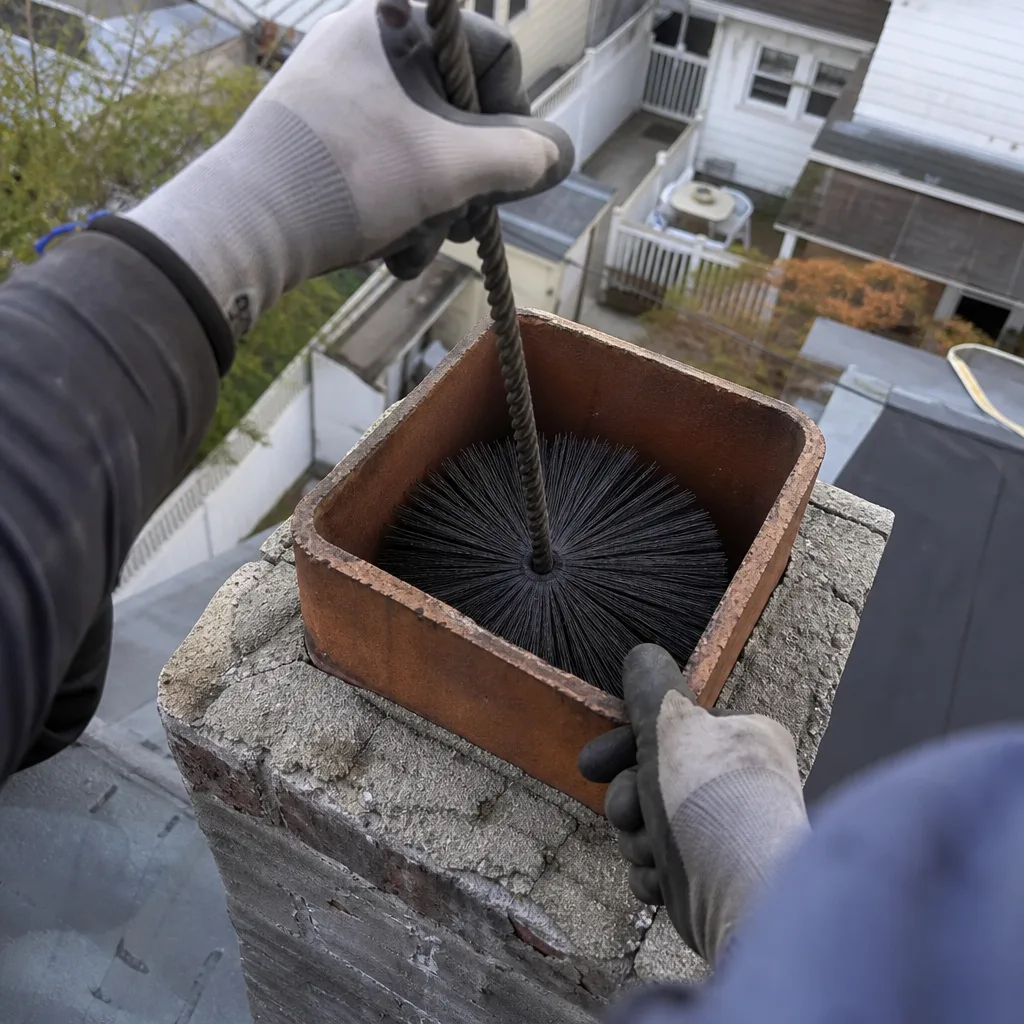
DIY chimney cleaning produces exactly zero documentation. You have no photographic record of the liner condition before or after. You have no log of when the flue was last serviced. You have no evidence that you performed any maintenance at all, beyond your own word. In a neighborhood like Astoria, where attached housing makes fire liability a shared concern, that documentation gap has real financial consequences.
Insurance claims. If a chimney fire occurs and you file a claim, your insurer will ask for maintenance records. Most homeowner policies include language requiring that the homeowner maintain the chimney in safe working order. Without documentation of professional cleaning and inspection, you may be arguing from a disadvantage. Some insurers in New York have begun requiring proof of professional chimney service for homes with wood-burning fireplaces. A receipt from a professional sweep with a written report and photo record is exactly the evidence an adjuster wants to see.
Real estate disclosure. New York state requires sellers to disclose known material defects. If you sell your Astoria rowhouse and the buyer’s inspector finds a compromised chimney liner, you may be asked when the chimney was last cleaned and inspected. “I did it myself with a brush kit” is a truthful answer, but it’s not a useful one. What a buyer wants to see is a camera scan showing the liner condition and a written report from a professional. Documentation also protects you as a seller: a clean camera report dated within the past year tells the buyer there’s nothing to negotiate over.
Carbon monoxide liability. This is the one people forget. A blocked chimney doesn’t just cause fires. It causes carbon monoxide backup. If your DIY cleaning misses a partial blockage (a bird nest, a deteriorated liner collapse, a baffle from a previous fire) and your flue starts venting CO into your home instead of up the chimney, the consequences can be fatal. If you’re in a multi-unit building and your blocked flue backs CO into a neighbor’s unit, you’re facing a liability problem far bigger than a chimney repair bill. In Astoria’s dense housing, where CO alarms in one unit can be triggered by problems in another, documentation of professional inspection is your evidence that you acted responsibly.
This is the core argument for professional cleaning, and it’s worth stating plainly: a professional sweep in Astoria is not really a cleaning service. It’s a cleaning plus an inspection plus a documentation service. The cleaning is the part you can partially replicate with a brush. The inspection and documentation are not replicable.
Honest Cost Comparison: DIY Kit vs Professional Cleaning
Let’s put real numbers on the table. A chimney brush kit costs $45 to $80 depending on the liner size and rod length. Add a drop cloth ($15), a shop vacuum if you don’t already own one ($60 to $120), and safety glasses and a dust mask ($20), and you’re realistically at $100 to $200 for your first DIY cleaning. Subsequent cleanings cost only the brush replacement, maybe $30 to $50 per year.
A professional chimney cleaning in Astoria runs $189 to $340 for a standard sweep. If you add a Level 2 camera inspection (which is the standard at Level Two Chimney Astoria and is included on every visit), the combined service typically falls between $289 and $450 depending on flue height, fuel type, and access conditions. If repairs are needed, they’re quoted separately, in writing, before work begins.
Here’s the table:
What You’re Actually Paying For
- DIY kit ($100-$200 first year): brush, rods, drop cloth, dust mask, your time. Removes accessible Stage 1 creosote. No inspection. No documentation. No liability protection. No record of liner condition.
- Professional cleaning ($189-$340): full flue brushing, smoke chamber attention, damper-area cleaning, cap and crown visual assessment from the roof. Written report. Photo record.
- Professional cleaning + Level 2 camera inspection ($289-$450): everything above plus a camera scan of the entire flue, liner condition assessment, smoke chamber inspection, and a written report with images. This is what Level Two Chimney Astoria performs on every visit - the camera scan is not an add-on, it’s the standard.
The honest framing isn’t that DIY is $100 and professional is $400. It’s that DIY is $100 for a surface cleaning, and professional is $289 to $450 for a surface cleaning plus an inspection plus documentation that holds up in an insurance conversation or a real estate transaction. Whether that additional cost is worth it depends on your situation. For a wood-burning fireplace in an Astoria rowhouse, it almost always is. For a gas insert that was professionally inspected within the last year, the calculus changes, which is the next section.
One thing worth noting in the cost conversation: the price of professional cleaning is not the price of a chimney liner. If your flue has deteriorated to the point where it needs a new liner (which runs $2,500 to $6,000 in Astoria depending on material and access), the most expensive sweep you’ll ever buy is the one you didn’t get, because it would have caught the problem at the cleaning stage instead of the replacement stage. Early detection is the entire financial argument for regular professional inspection.
The One Scenario Where DIY Makes Sense
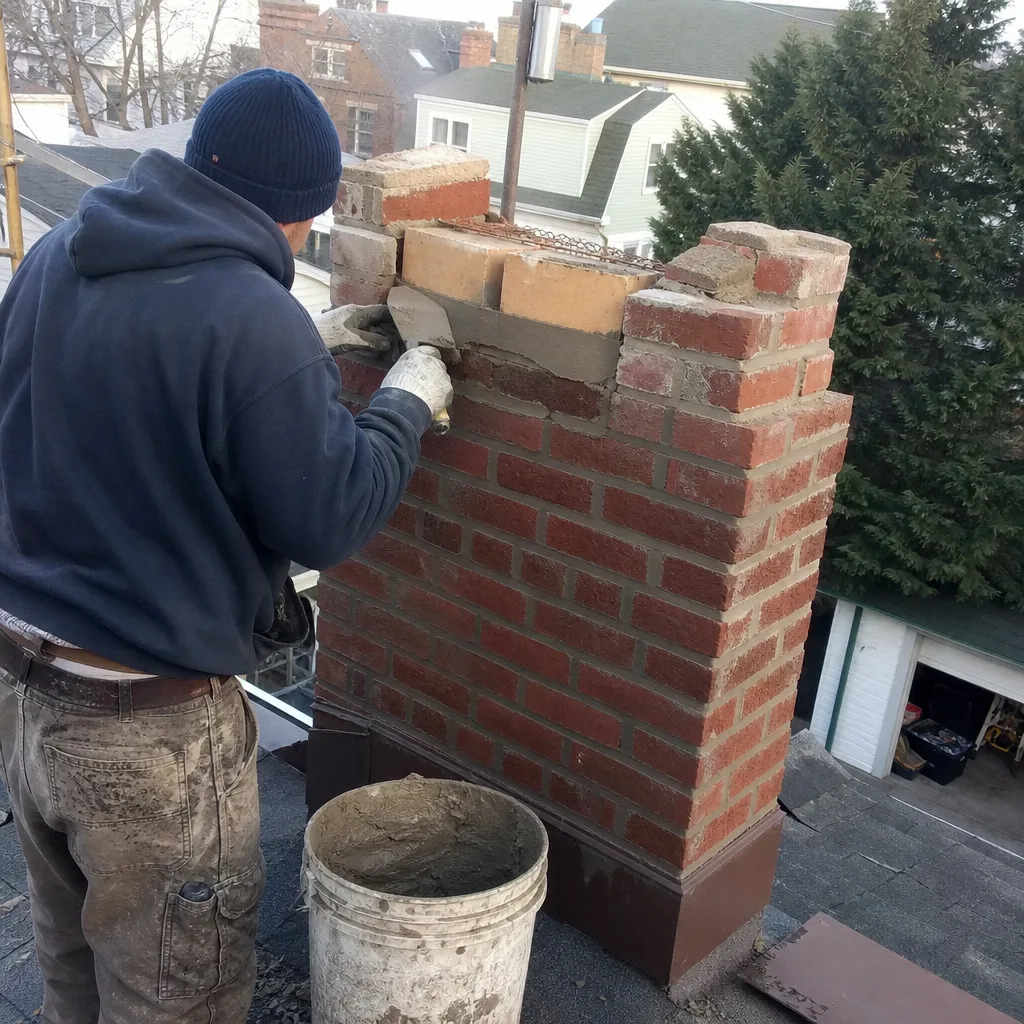
We’re not going to tell you DIY is never appropriate. That’s not honest, and it doesn’t help you make a good decision. There’s exactly one scenario where we think a homeowner-performed brushing is reasonable, and it’s narrower than most people assume.
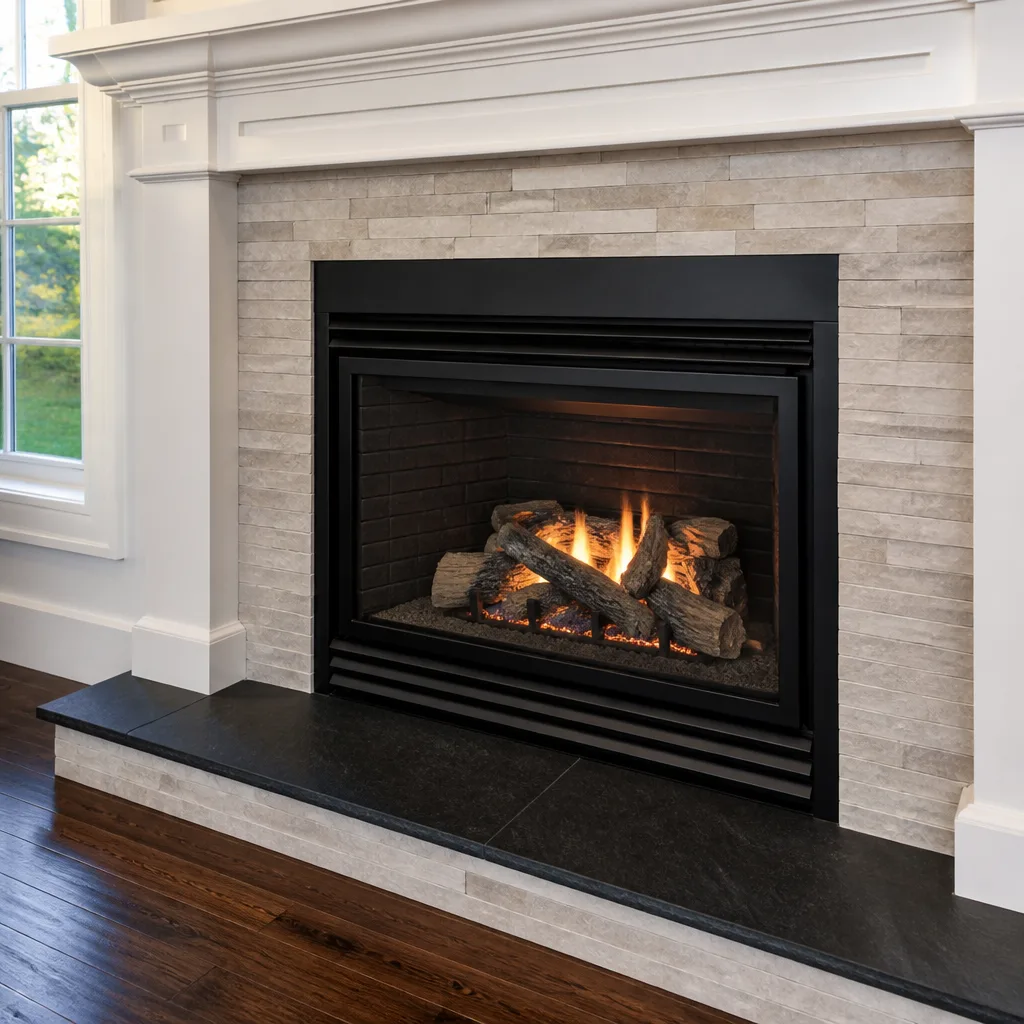
The scenario: You have a gas fireplace insert or gas log set. You had a professional camera-scan inspection (NFPA 211 Level 2) within the last 12 months that documented a clean liner, intact smoke chamber, and good cap condition. Between professional visits, you notice a light dusting of white or gray ash on the visible surfaces of your firebox, and you want to brush it off without waiting for your annual service.
In that situation, a soft-bristled brush used lightly on the firebox floor and the visible fireback surfaces is fine. You’re not touching the flue. You’re not reaching past the damper. You’re doing housekeeping, not chimney maintenance. If that’s your use case, go ahead. The key phrase is “on record.” If you don’t have a recent camera scan telling you the system is sound, you’re not doing housekeeping. You’re performing maintenance on a system whose condition you cannot see.
Here are the scenarios where DIY creates false confidence and should be avoided:
- Wood-burning fireplaces that haven’t been professionally inspected in over 12 months. The deposits you can’t see (smoke chamber, damper area, cap) are exactly the ones that cause fires.
- Homes where you’ve owned the chimney for less than a year. You have no baseline. You don’t know what the previous owner left you. A camera scan establishes the baseline.
- Any fireplace showing performance issues: smoke backing into the room, unusual odors, water stains on the ceiling near the fireplace, or chunks of masonry in the firebox. These are symptoms of problems above the reach of a brush.
- Attached housing where your flue shares a wall with another unit. The stakes are not just yours. See the Astoria section above.
- Oil-fired boiler flues. Oil combustion creates sulfur-based deposits that are highly corrosive and require specialized cleaning. A generic chimney brush is the wrong tool.
If you’re outside the one reasonable scenario, the smartest next step is a professional camera-scan cleaning. It resets your baseline, documents your liner condition, and tells you whether any DIY housekeeping between visits is even safe to attempt. Get the camera report once, then decide.
Common Mistakes to Avoid
- Assuming a visual flashlight check is an inspection. A flashlight from the firebox shows you maybe the bottom 18 inches of your flue. Most fire hazards are above that point. If you haven’t seen the full flue on camera, you haven’t inspected it.
- Brushing a flue with no idea what the liner material is. A wire brush that’s appropriate for a stainless steel liner can damage an old clay tile liner. Different liner materials require different brush types. You need to know what you’re brushing before you brush it.
- Skipping the cap and crown because they’re “too high up.” In Astoria, a significant percentage of chimney problems originate at the top: damaged caps, cracked crowns, failed flashing. If you’re not addressing the top of the chimney, you’re addressing half the system.
- Overlooking that your “cleaned” chimney still has deposits in the smoke chamber. The smoke chamber is the single most-missed area in DIY cleaning. It’s also the area where firefighters most often find the ignition source in chimney fires.
- Using chemical creosote logs as a substitute for mechanical cleaning. Creosote-burning logs can convert glazed creosote to a looser form, but they don’t remove it. They make deposits more removable during the next professional cleaning. They are a supplement, not a sweep.
- Not documenting anything. Whether you DIY or go professional, keep records. If you DIY, write down the date and what you did. If you go professional, keep the written report and photos. Future you (or the future owner of your home) will need those records.
When to Call a Professional
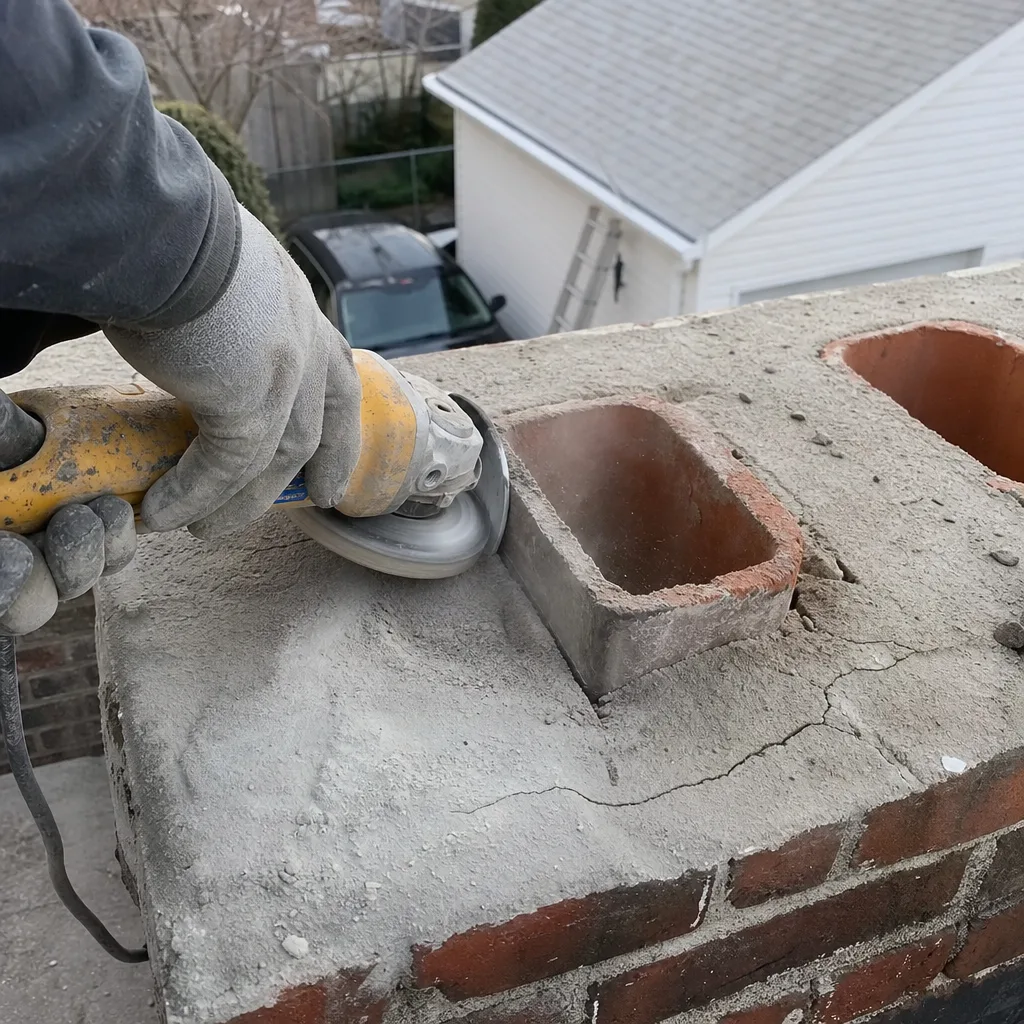
You should schedule a professional chimney cleaning and camera inspection in Astoria if any of these apply: you haven’t had a camera scan in the past 12 months, you burn wood in a fireplace that’s part of an attached rowhouse, you’ve noticed smoke backing into the room or unusual odors from the fireplace, you’ve had a chimney fire (even a small one), you recently bought the home, or you’re planning to sell and want clean documentation. Not sure where to start? Read our guide on How to Hire a Chimney Cleaning Contractor in Astoria: A Step-by-Step Guide. The cost of a professional sweep is a fraction of the cost of resolving a liner failure after the fact. Level Two Chimney Astoria offers free estimates in Astoria - call (516) 301-1549 to schedule, and a written price is delivered before anyone starts any work.
Frequently Asked Questions
A standard chimney sweep in Astoria typically costs between $189 and $340, with a full Level 2 camera-scan inspection bringing the combined service to $289 to $450 depending on flue height and access. Gas fireplace cleanings run on the lower end; wood-burning flues with significant creosote buildup run higher. Every job at Level Two Chimney Astoria includes a documented photo record, and the written price is delivered before work begins - no “call for a quote” games. Call (516) 301-1549 for an exact quote on your chimney.
A regular sweep without a camera inspection cleans the flue but doesn’t document its condition, which means you could have a cracked liner or a smoke chamber problem and walk away believing your chimney is safe. A Level 2 camera inspection (the standard at Level Two Chimney Astoria, included on every visit) sees the full flue surface, the smoke chamber, and the damper area, and gives you a photo record of what was found. For any chimney that hasn’t been inspected in over a year, the camera scan is the part that makes the cleaning meaningful.
Light DIY housekeeping on a gas fireplace is safe if you have a recent professional camera scan on record confirming the liner, smoke chamber, and cap are in good condition. Without that record, you’re brushing surfaces you cannot assess, and gas flues can develop hidden blockages or liner damage just like wood flues. If you’re unsure, schedule a camera-scan cleaning first, then ask the technician whether light touch-ups between visits are appropriate for your specific system.
The NFPA recommends an annual inspection and cleaning as needed, and that cadence works well for Astoria’s climate: marine air moisture accelerates creosote corrosion, and the freeze-thaw cycle stresses crowns and mortar joints. For year-round maintenance tips, see our Seasonal Chimney Cleaning Care for Astoria: Year-Round Homeowner’s Guide. Wood-burning fireplaces used regularly through the winter should be cleaned annually. Gas fireplace flues can often go two to three years between cleanings if the annual inspection shows clean conditions. If you’re burning more than a cord of wood per season, you may need a mid-season brushing, which is the one scenario where a light DIY touch-up can be appropriate with a recent camera report on file.
What happens depends on what’s in your flue, and the problem with skipping professional service is that you don’t know what’s in your flue. Best case, you’re burning with accumulated Stage 1 creosote that increases fire risk modestly. Worst case, you have a hidden Stage 3 creosote glaze, a blocked flue, a cracked liner you cannot see, and a chimney fire or carbon monoxide event waiting for the right burn. In Astoria’s attached housing, either outcome affects your neighbors, not just you. The cost of knowing is the cost of a sweep ($189 to $340), which is a fraction of what you’d pay to repair a liner after it fails. Call (516) 301-1549 for a free estimate.
Chimney cleaning logs can loosen glazed creosote deposits and make them easier to remove during a professional cleaning, but they do not remove the deposits on their own. Using a chemical log every month will not replace mechanical brushing, and it does nothing for blockages, liner condition, cap damage, or smoke chamber deposits. Think of it as a treatment that prepares your flue for a proper sweep, not a substitute for one.
Maintaining documentation of professional chimney cleaning and inspection is one of the strongest things you can do to protect yourself in an insurance claim. If a chimney fire occurs, insurers look for evidence of regular maintenance, and a written report with a photo record from a professional camera scan is exactly what they want to see. Some New York insurers have begun requiring proof of professional service for wood-burning fireplaces. A receipt from a $60 brush kit does not carry the same weight.
The Bottom Line
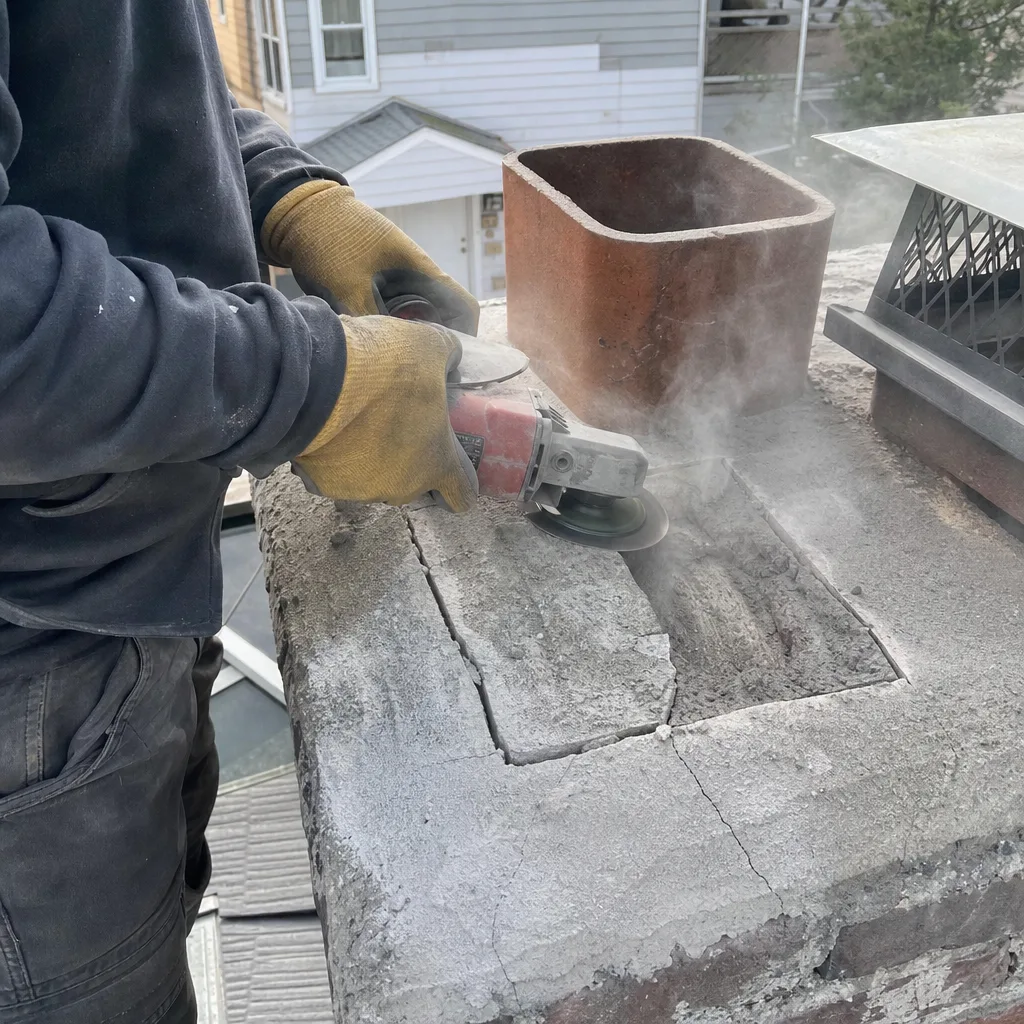
DIY chimney cleaning removes surface soot. It does not inspect, document, or assess the system behind the soot, and in Astoria’s attached rowhouses, the system behind the soot is a shared risk. The reasonable path is this: if you haven’t had a camera-scan cleaning in the past year, schedule one. It establishes a baseline, documents your liner condition, and tells you whether any supplemental DIY housekeeping is even appropriate. From there, maintain the annual cadence, keep the records, and use a light touch-up brushing only in the narrow scenario where it makes sense. Your chimney is part of your home, but in Astoria, it may also be part of your neighbor’s wall. Treat it accordingly.
Written by Corrine Halstead, Owner at Level Two Chimney Astoria, serving Astoria since 2009.