
Level 1 sweep and inspection to the NFPA 211 annual standard - flue, crown, cap, and flashing checked and photographed
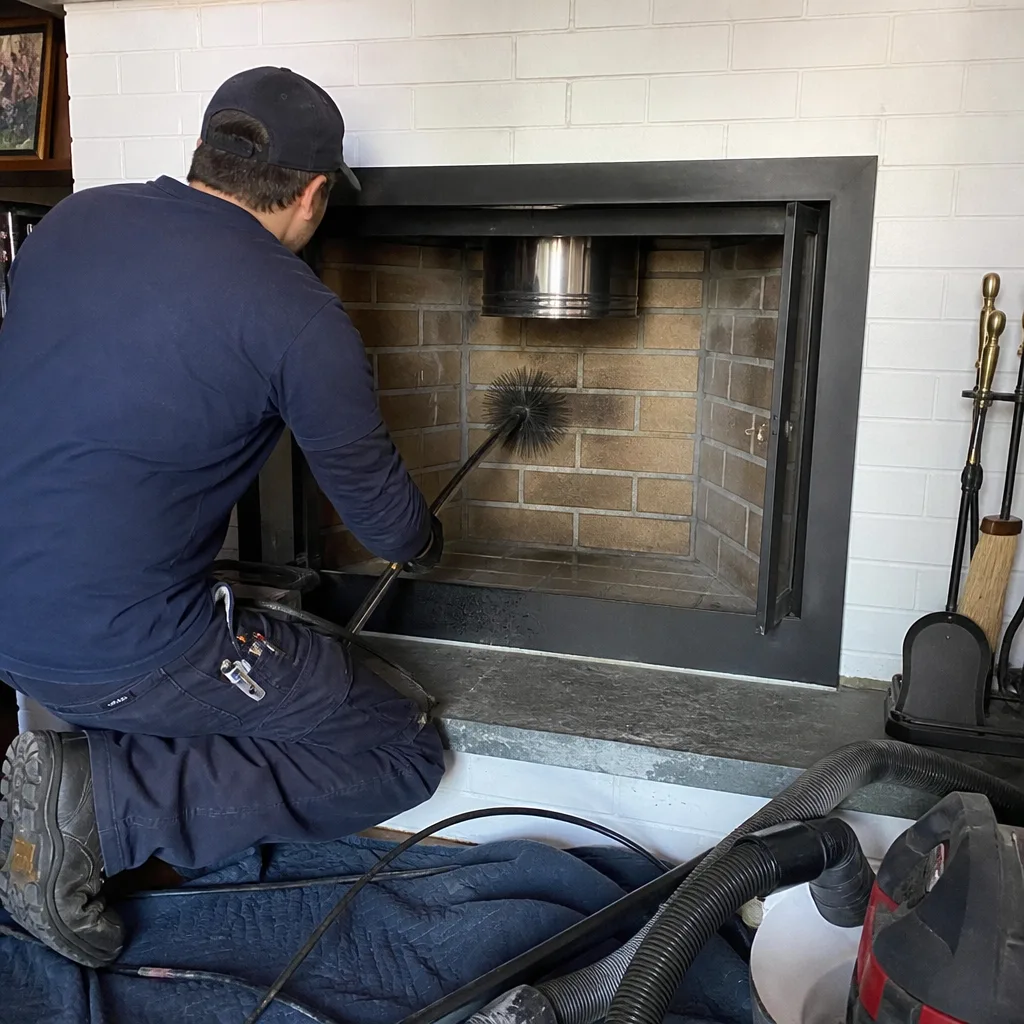
Chimney sweep logs do not sweep chimneys. They loosen some creosote - which then falls where a brush and vacuum still have to collect it.
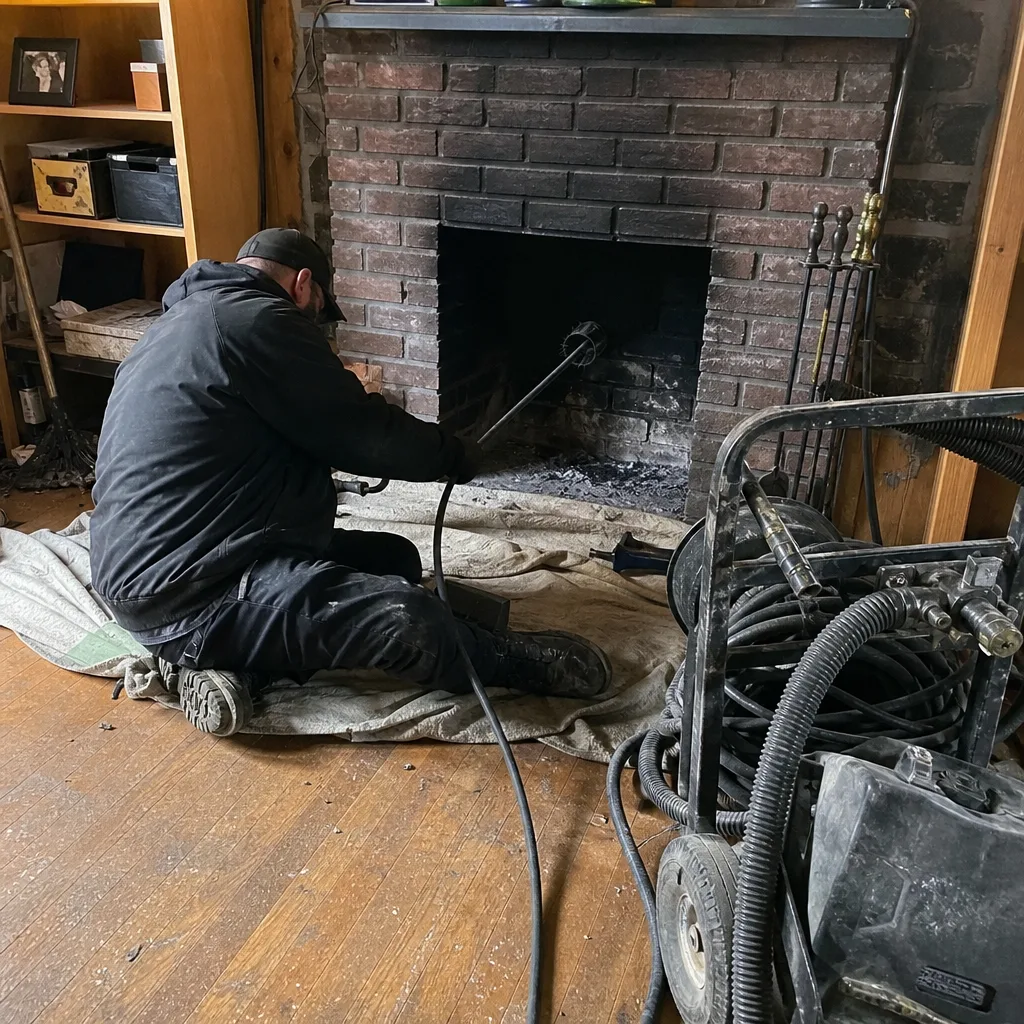 Before
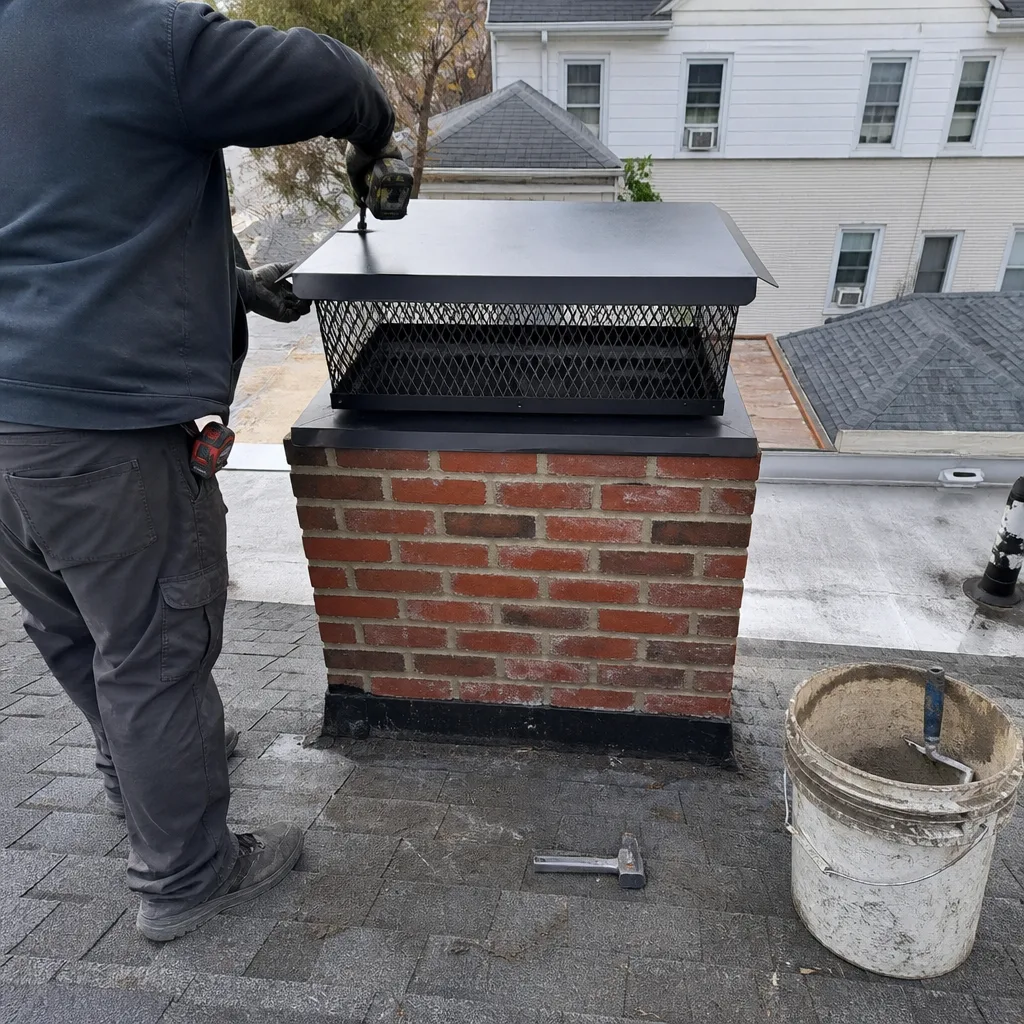 After
After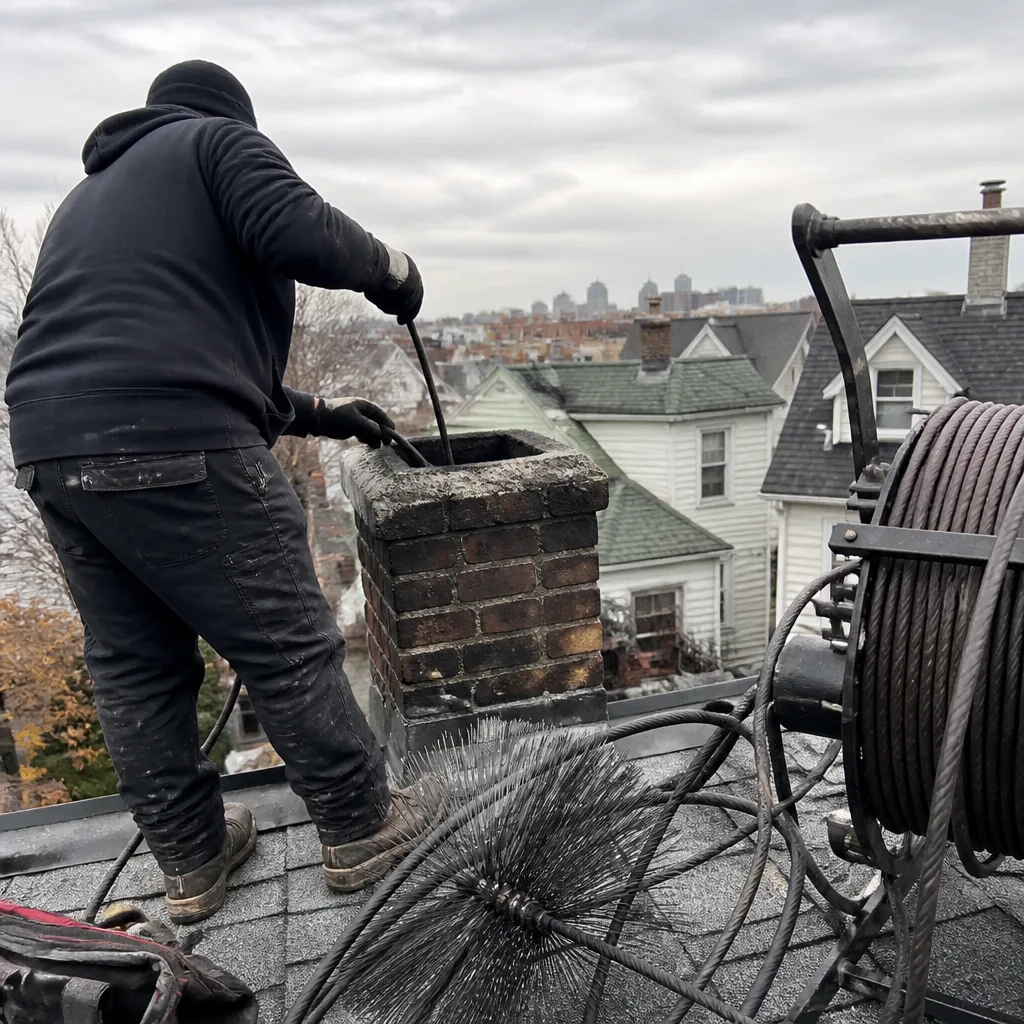 Before
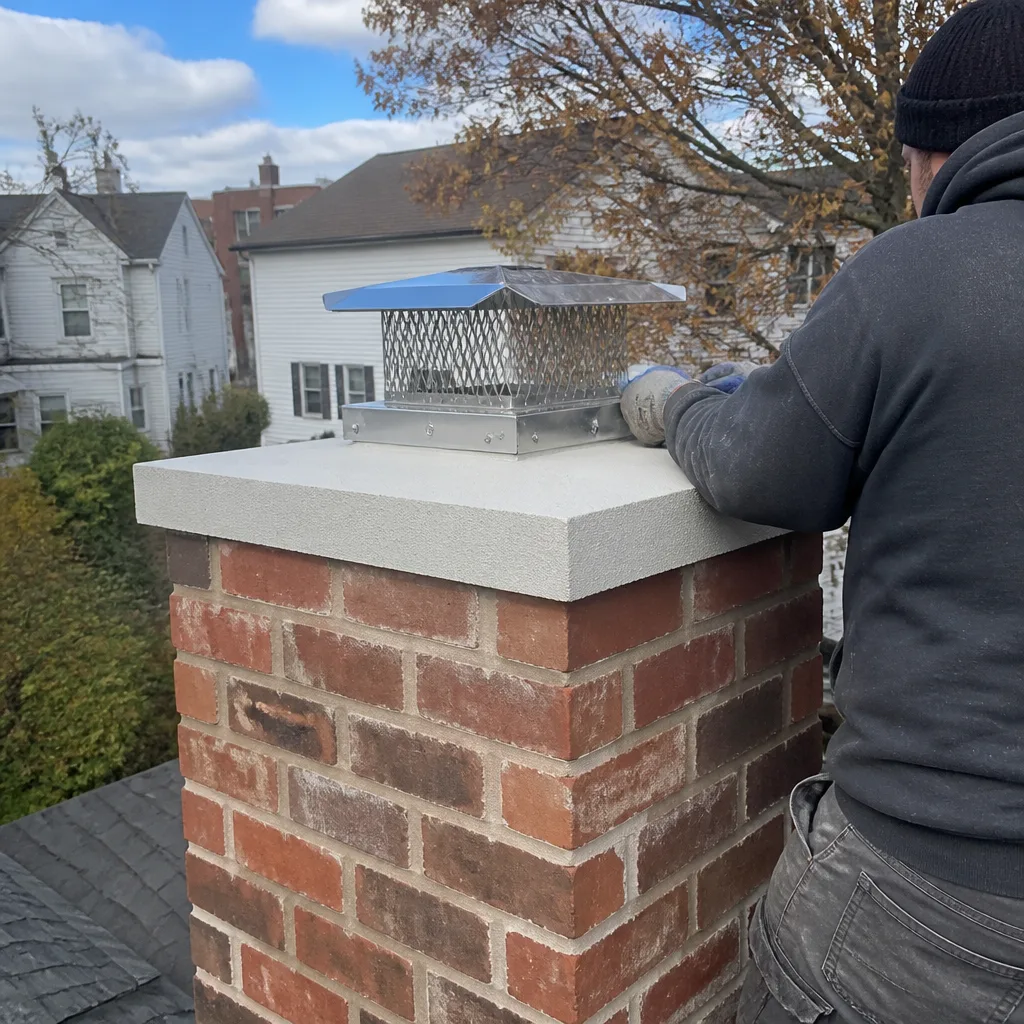 After
After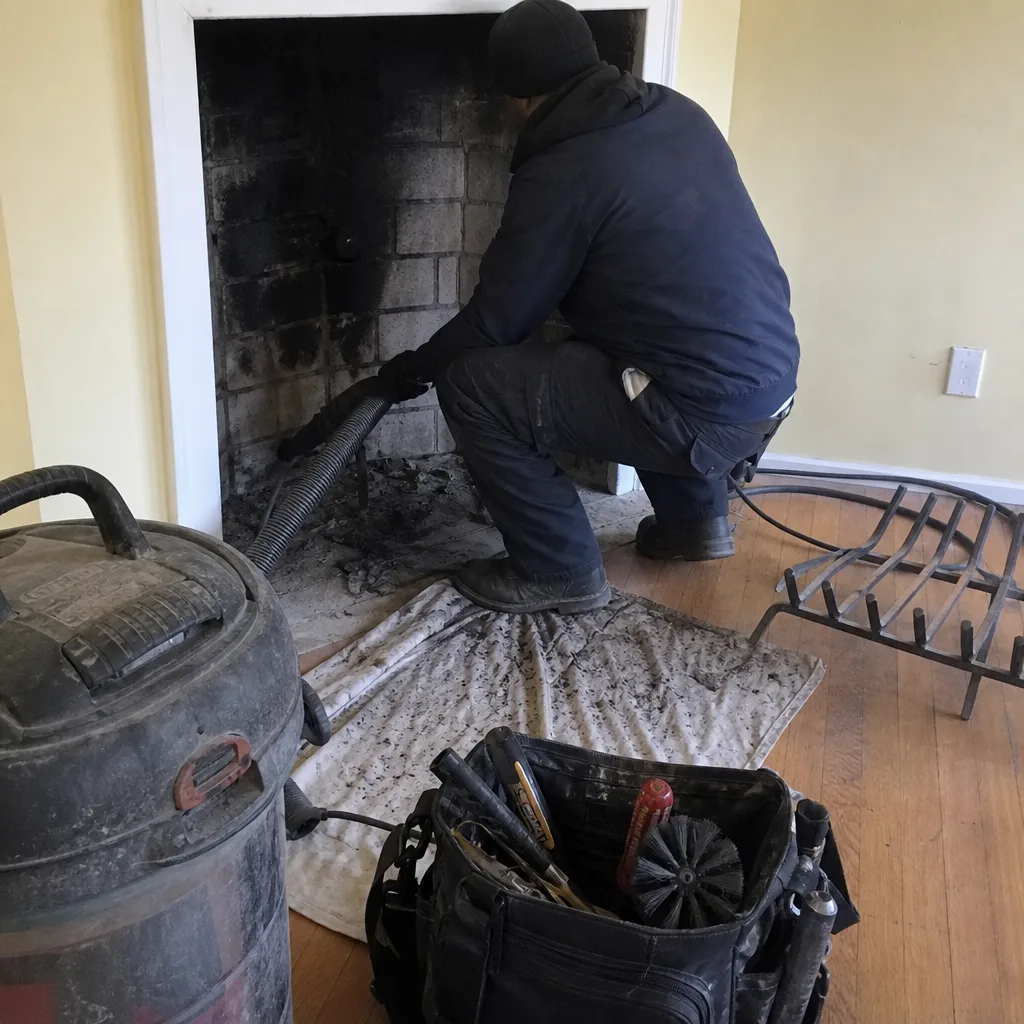 Before
 After
AfterHeatShield Chimney Cleaning in Long Island City, NY | Level Two Chimney Astoria
We provide independent HeatShield chimney cleaning and repair across Long Island City, from the Hunters Point rowhouses to the converted lofts on Jackson Avenue. The thing that makes our HeatShield work here different is simple: Long Island City’s older building stock was never designed for modern gas appliances, so HeatShield liners fail differently here than anywhere else in Queens. Our crews run camera-scanned Level 2 inspections on every visit, and we write down the price before any work starts. Call (516) 301-1549 for a free estimate.
We’re not manufacturer-affiliated or authorized. We’re an independent HeatShield service provider, which means we tell you when a liner is worth repairing and when it isn’t. Corrine Halstead has spent the better part of two decades running chimney work across Queens, and she’s cleaned enough HeatShield systems in Long Island City to know exactly what this neighborhood’s river air does to cerfractory material.
Why Long Island City Residents Choose Us for HeatShield Service
Because we work on HeatShield systems in Long Island City every week, not once a season. The Hunters Point Historic District alone keeps us busy with chimney configurations that simply don’t exist in newer towers. We know which HeatShield liner applications hold up on river-facing exposures and which ones start flaking inside five years.
Corrine learned the diagnostic side of this work at LaGuardia Community College, where she trained to read flue conditions and log what the camera actually shows. She’s known around Astoria and Long Island City for writing down the price before she starts and leaving a copy of the inspection photos whether the customer books a repair or not. That practice has been standard for us since 2009, and it’s now Clause 4 of the Haven Standard: a documented photo record on every visit.
Every technician who shows up at your door is background-checked and uniformed. Your call gets answered by a live person, 24 hours a day. And every job, from a simple cleaning to a full HeatShield resurfacing, gets a written scope, written price, and written warranty before we touch the flue. If it’s not done right, we make it right. That’s the 365-Day Done Right Promise, and it’s stamped on every job under the Haven Standard.
Common HeatShield Chimney Cleaning Problems We Solve in Long Island City
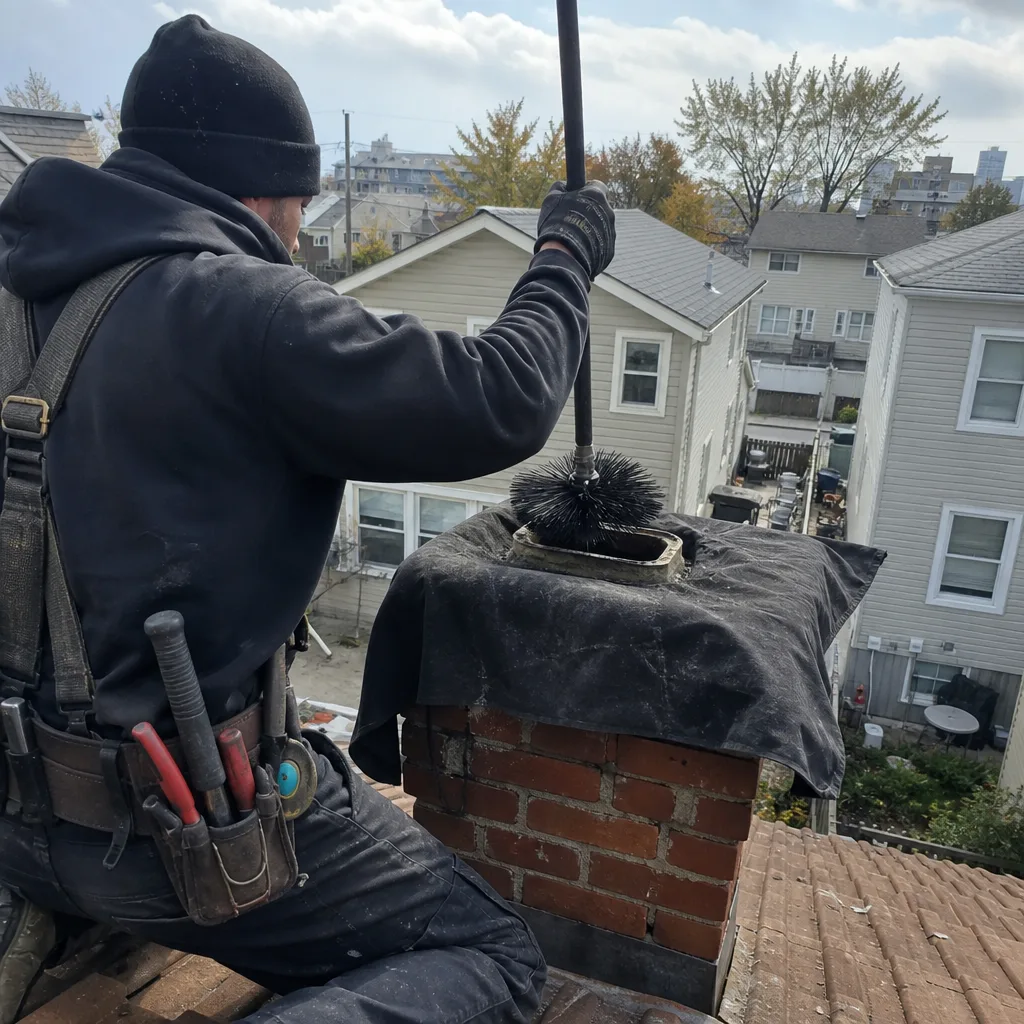
- Cerfractory delamination in unlined Hunters Point flues. HeatShield Cerfractory sealant loses adhesion where salt-laden East River moisture has already caused micro-spalling of the clay tile beneath it. The result is flaking and re-exposed gaps in the flue wall. We see this constantly in the 1890s-1910s rowhouses around 47th Avenue and 45th Road.
- Vertical hairline cracking in 1990s-era HeatShield Resurfacing applications. When Long Island City rowhouses converted from oil to gas, many got HeatShield liners installed. On west- and north-facing exposures, freeze-thaw cycles on the East River side shift the underlying mortar joints. The liner cracks within five to seven years. Flushing and Astoria don’t get this the same way because they’re a mile or more inland.
- Joint repair erosion on the breeching side. Oversized coal-era chimneys in Long Island City have tall chases where hot gas condenses before it exits. That condensation saturates the cerfractory material at the breeching side and causes localized erosion we rarely see in shorter residential flues elsewhere.
- Full delamination over old creosote on converted loft stacks. Former industrial buildings converted to residential lofts have brick stacks built for factory exhaust, not home heating. Some older HeatShield liner applications went in over existing creosote residue or unstable parging. During routine cleaning, the entire liner can delaminate in sheets. That’s a full removal and reapplication job.
- Two appliances, one unlined chase. Technicians regularly open a cleanout in a Hunters Point rowhouse and find a single unlined brick flue serving both an active gas boiler vent connector and a long-abandoned fireplace. That’s an immediate NYC DOB compliance flag, and it turns a $200 cleaning into a liner conversation fast.
 Before
 After
AfterHeatShield Service in Long Island City: What Local Conditions Mean for Your Equipment
Here’s the thing that separates Long Island City from every other neighborhood we serve. The Hunters Point Historic District holds one of western Queens’ densest concentrations of 1890s to 1910s brick rowhouses whose chimneys were originally sized for coal. They were later adapted for oil burners. Then gas boilers. Almost none of them were properly relined during those fuel conversions. A routine cleaning here often uncovers unlined or cracked clay-tile flues that NYC DOB rules flag as immediate hazards.
What that means for HeatShield owners specifically: in the newer residential towers along Center Boulevard or Jackson Avenue, a chimney cleaning is usually just a cleaning. Liner conversations are rare. But in the Hunters Point rowhouse blocks, a HeatShield cleaning appointment becomes a liner-compliance conversation nearly every time. The camera doesn’t guess. Neither do we. We photograph what’s there, show you the footage, and then tell you plainly whether the liner can wait or whether DOB rules require action now.
Our crews have spent enough time in these buildings to know the difference between a HeatShield liner that’s failing from cheap material and one that’s failing because the underlying masonry never got the repointing it needed first. In Long Island City, it’s usually the second one.
HeatShield Models & Products We Service in Long Island City
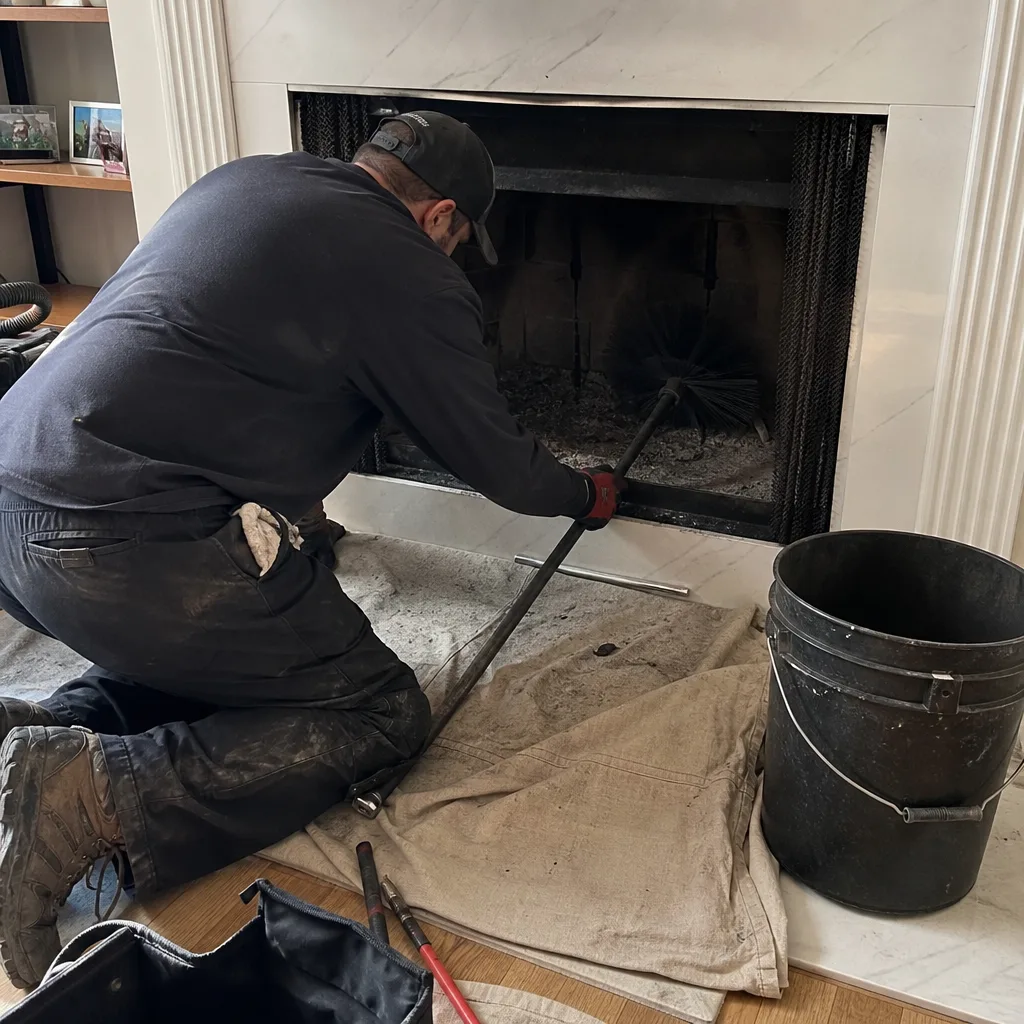
We service the full HeatShield product line: the Cerfractory Flue Sealant, Joint Repair System, Resurfacing System, and Eco-Fix. We stock genuine HeatShield cerfractory materials, applicator tooling, and OEM mixer paddles so we get proper thickness and cure on every application. That’s not negotiable when you’re working with a resurfacing product.
For structural components like stainless caps and top-mount dampers, we source from independent manufacturers matched to the flue size. We never resell partial jobs. If a HeatShield liner in Long Island City is degraded beyond spot repair, we quote full removal and reapplication. That’s the honest answer, and it’s the only answer that holds up under a camera inspection.
Beyond HeatShield work, this page also covers what we do most often alongside it: HeatShield sales & service, Level 2 inspection, creosote removal, and mortar repointing. All three matter in Long Island City because the moisture and the old masonry create conditions where a liner is only as good as the brick behind it.
HeatShield Service Pricing in Long Island City
A HeatShield chimney cleaning in Long Island City typically runs $189 to $325 depending on flue condition and access. Here’s how the numbers break down:
- Standard chimney sweep and Level 2 camera inspection: $189-$249
- Creosote removal (Class II or III buildup): add $75-$150
- HeatShield Cerfractory joint repair (spot): $350-$600 per repair location
- HeatShield Resurfacing System (full flue): $2,800-$5,500 depending on flue height and access
- Mortar repointing (before any liner work on river-facing exposures): $40-$65 per square foot
Every estimate is written before work starts. No exceptions. If you have a written quote from another HeatShield contractor, bring it in. We’ll give you a free second opinion on it. Call (516) 301-1549 and ask for Corrine or anyone on the crew. We’ll schedule a camera inspection and get you a written number.
Serving Long Island City, NY - Our Local Coverage Area
We’re based in the Long Island City area and know this community well. Use the map below to see our service coverage - if you’re nearby, we can almost certainly help.
FAQs - HeatShield Chimney Cleaning in Long Island City
Because the brick stacks in Long Island City’s converted industrial buildings were built for factory exhaust, not residential heating appliances. The flue geometries are often non-standard, and older HeatShield liners were sometimes applied over existing creosote or unstable parging. East River moisture then works its way into the masonry, and the cerfractory loses its bond. We see full delamination in sheets during routine cleanings in these buildings. If you’re in a converted loft, get a camera inspection before you assume a “cleaning” is all you need. Call (516) 301-1549 and we’ll show you exactly what’s inside your flue.
Yes, in most cases. HeatShield Joint Repair System is designed for targeted crack repair, and we use it regularly in Long Island City rowhouses. The catch is what’s behind the crack. If the underlying mortar joints are still shifting from freeze-thaw cycles on river-facing exposures, spot repair won’t hold. That’s why we always repoint first where the masonry is compromised, then apply the cerfractory. Our crew on 47th Avenue did exactly that: removed loose cerfractory, repointed with hydraulic lime mortar, then re-applied HeatShield Resurfacing in two passes. Call us for a camera look and we’ll tell you which path applies to your flue.
Long Island City sits directly on the East River. West- and north-facing chimneys absorb more salt-laden wind and moisture than Astoria chimneys a mile inland. That accelerates freeze-thaw spalling of mortar joints, which means the masonry behind a HeatShield liner shifts more in Long Island City than it does in Astoria. The result is more hairline cracking and faster adhesion loss. We account for this by prioritizing mortar inspection during every cleaning and by recommending repointing before resurfacing on river-facing exposures.
NYC Department of Buildings rules require that chimneys serving gas appliances be properly lined and structurally sound. Many older HeatShield installations in Hunters Point rowhouses were applied over flues that were never relined during successive fuel conversions. When we open a cleanout and find a single unlined brick flue serving an active gas boiler and an abandoned fireplace, that’s a DOB flag. We document it with camera footage, give you a compliance note, and quote the repair in writing. Call (516) 301-1549 for a free estimate on getting your flue into compliance.
Because the camera shows what it shows. In Hunters Point, the original coal-era chimneys were never sized for modern gas venting. The flues are oversized, the clay tile is cracked or missing, and the masonry is stressed from East River moisture. A cleaning uncovers these conditions immediately. When we see a degraded HeatShield liner behind a boiler connector, we don’t polish it and walk away. We tell you what we found, show you the footage, and give you a written number for resurfacing. You decide. But you decide with the facts in front of you. Call us at (516) 301-1549 and we’ll put the camera down the flue.
Service Areas Near Long Island City
We run HeatShield service throughout western Queens and the adjacent Manhattan neighborhoods. If you’re in Long Island City service area or nearby, we’re likely already working on your block. We also provide HeatShield service in Astoria, where Corrine has deep roots, and HeatShield service in Upper East Side for Manhattan clients across the Queensboro Bridge. Jackson Heights and East Harlem are also in our regular rotation.
Book Your HeatShield Service in Long Island City Today
We answer the phone 24/7 and we’ll give you a written price before any work starts. That’s the whole point. Call (516) 301-1549 for a free estimate on your HeatShield chimney cleaning in Long Island City. We’ll bring the camera, show you what’s in there, and write it all down.
Written by Corrine Halstead, Owner at Level Two Chimney Astoria, serving Long Island City since 2009.