
Last updated September 20, 2026
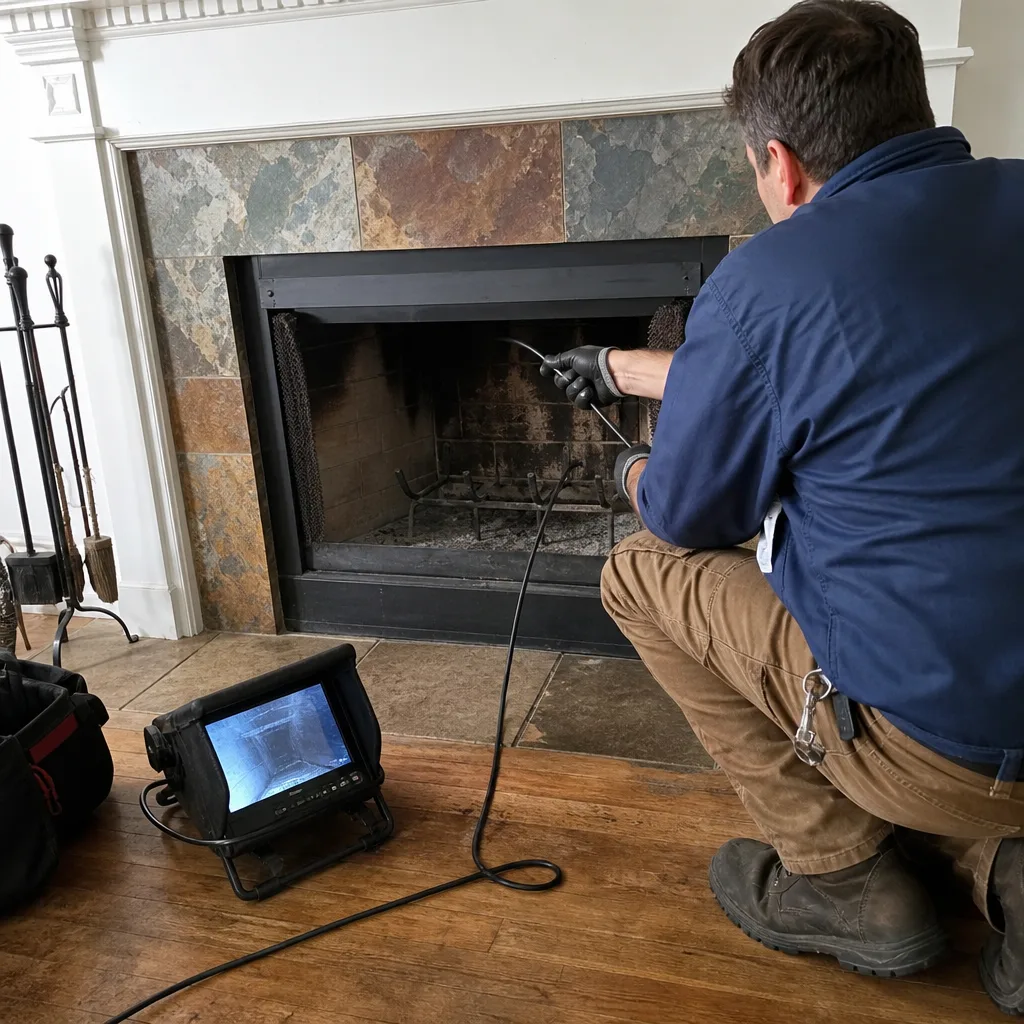
Level 1 sweep and inspection to the NFPA 211 annual standard - flue, crown, cap, and flashing checked and photographed
Chimney sweep logs do not sweep chimneys. They loosen some creosote - which then falls where a brush and vacuum still have to collect it.
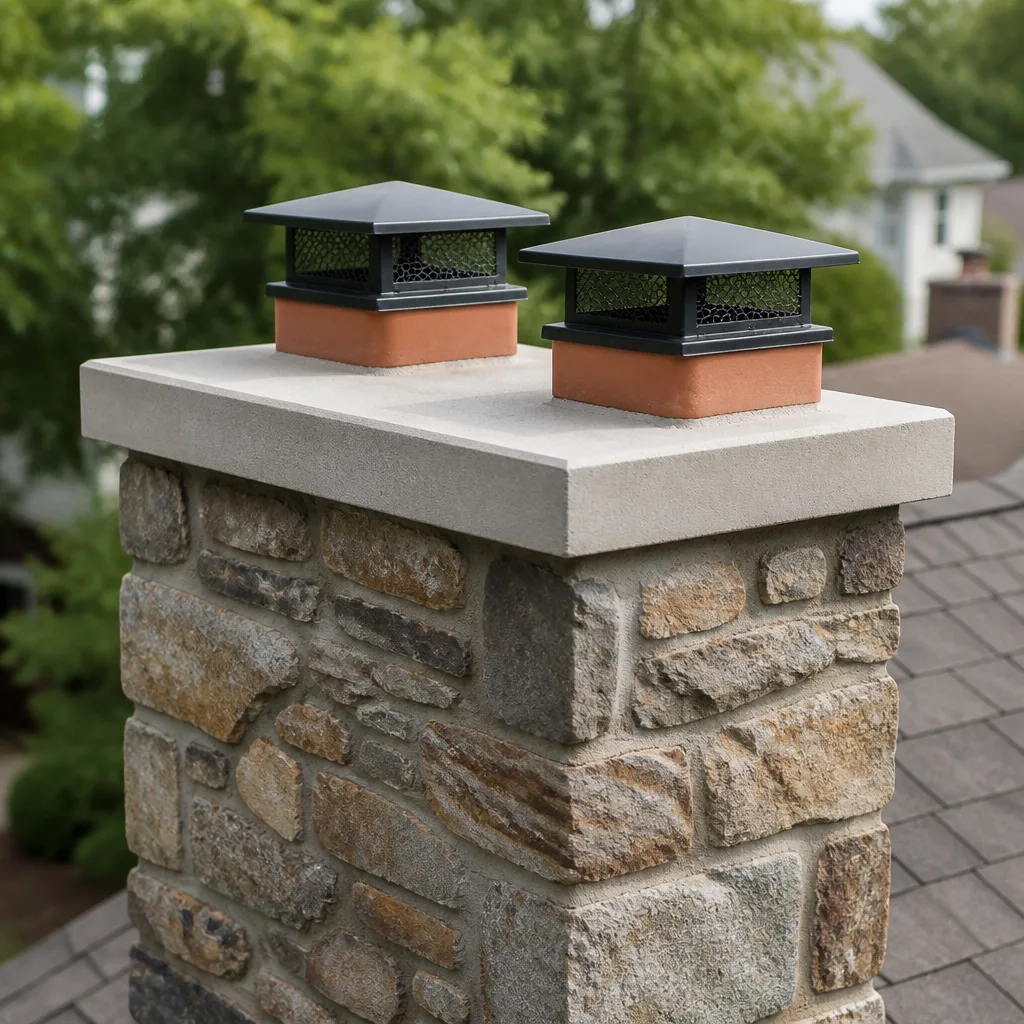
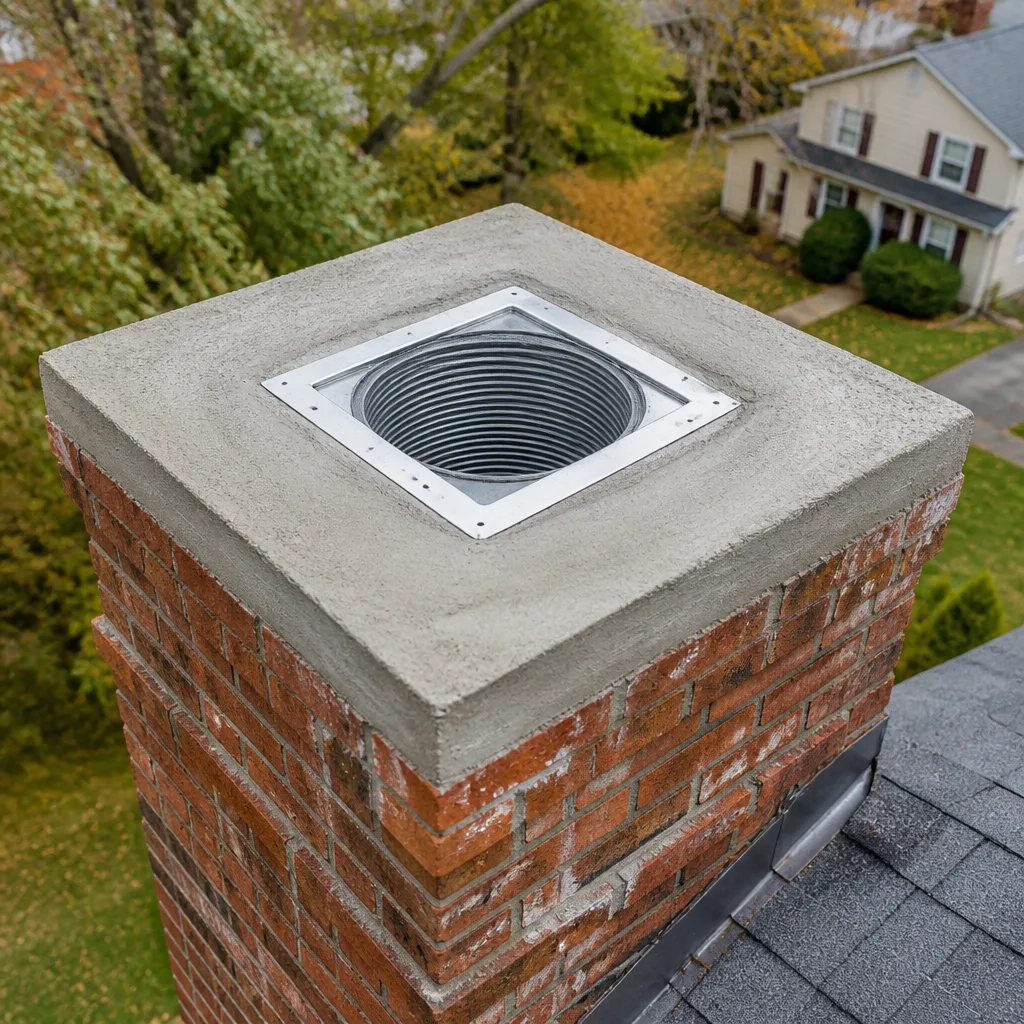
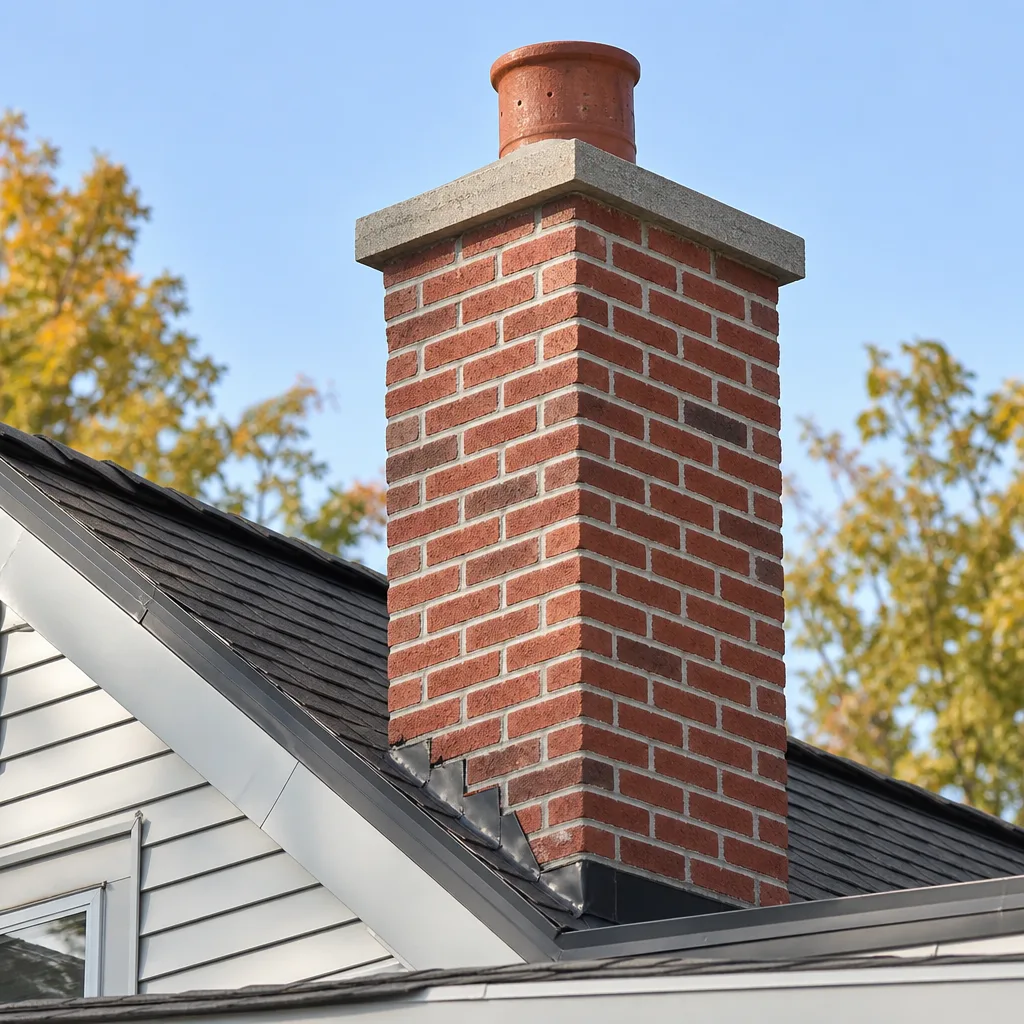
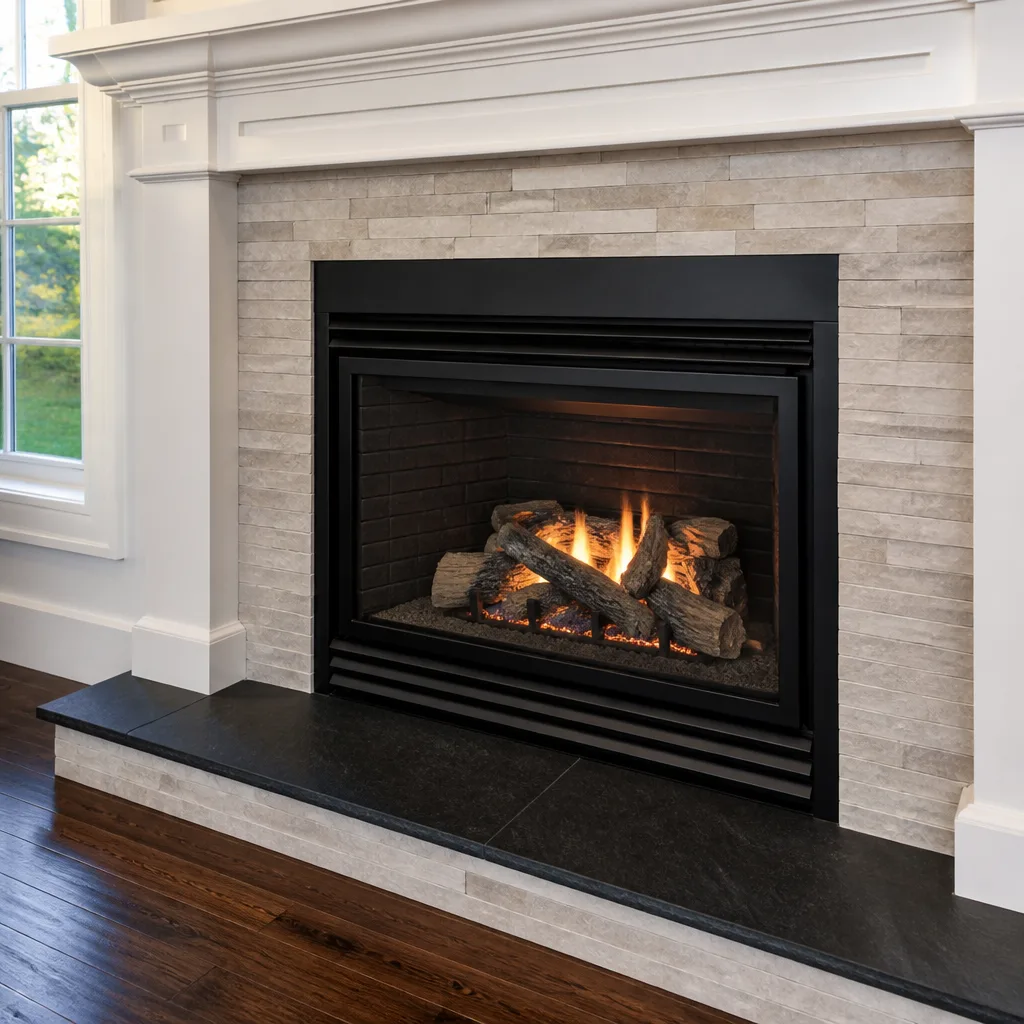
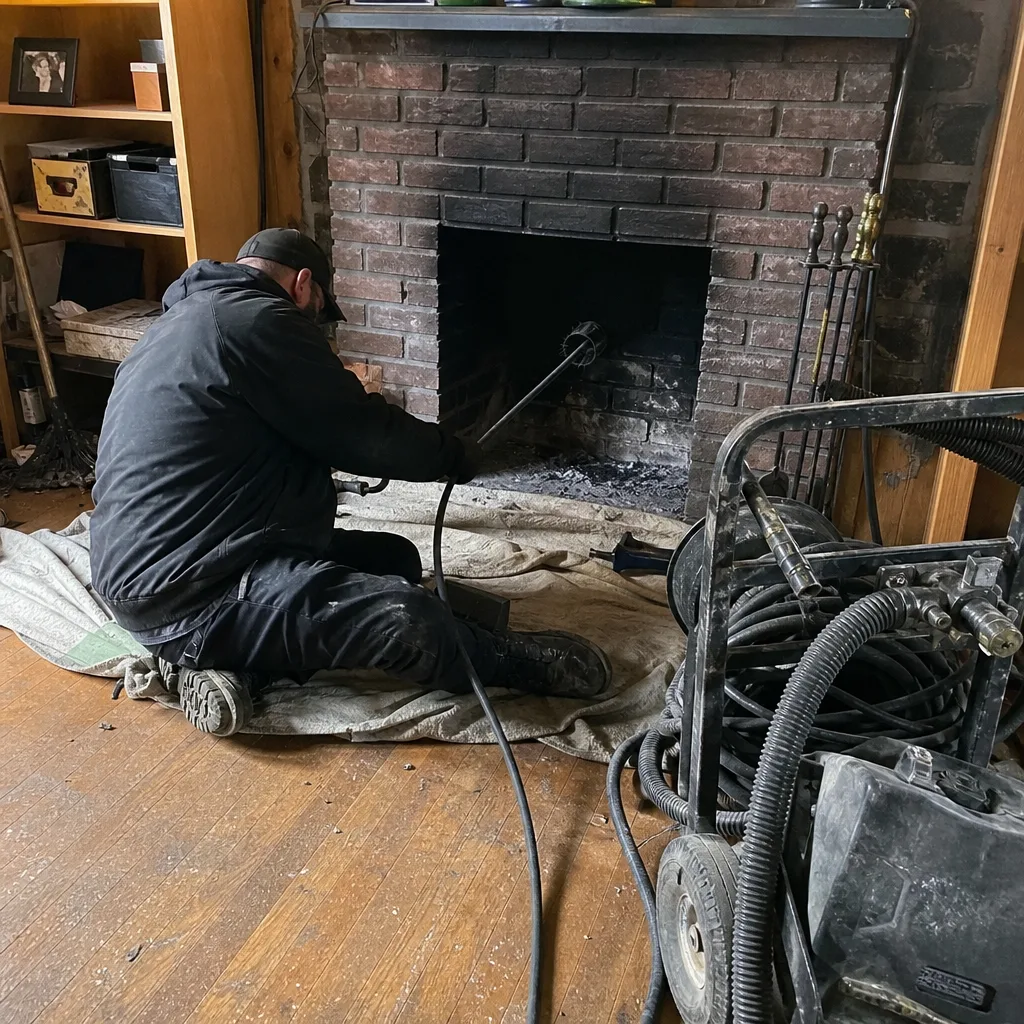 Before
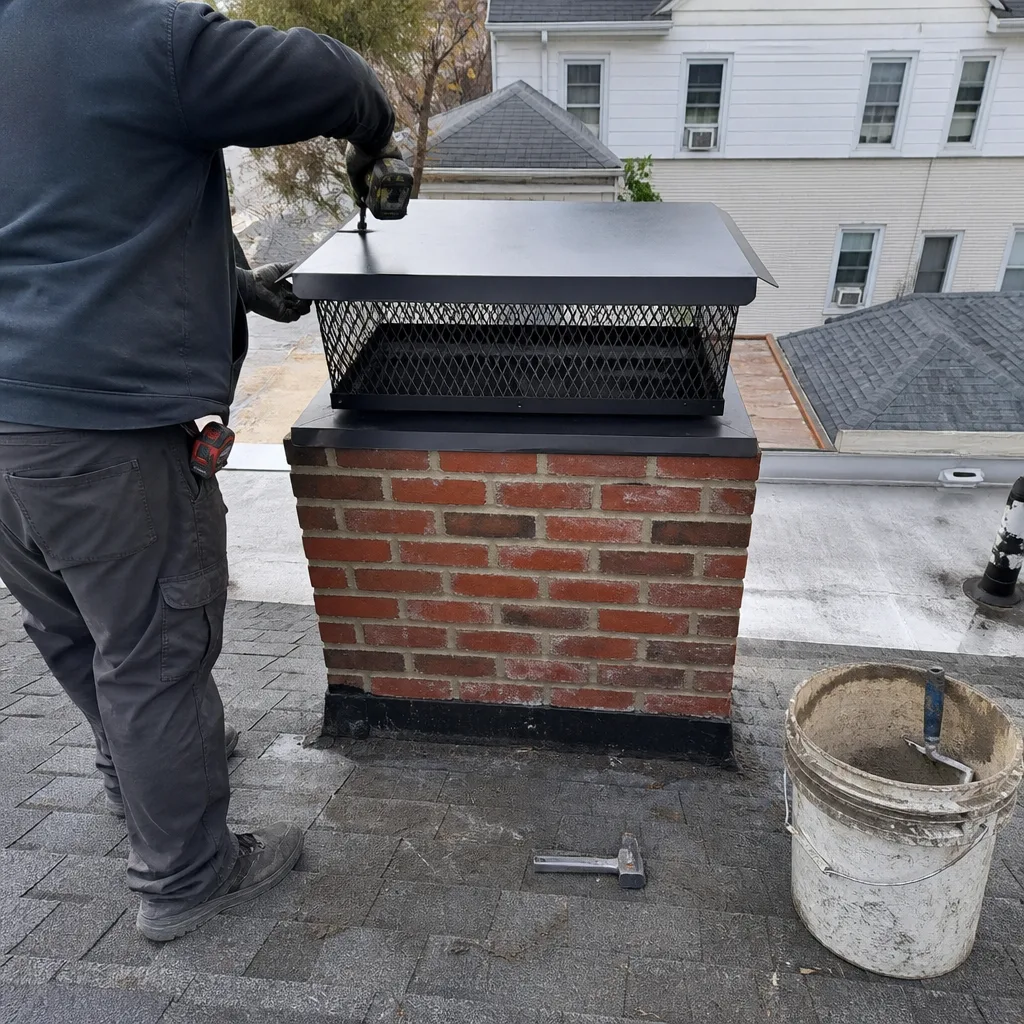 After
After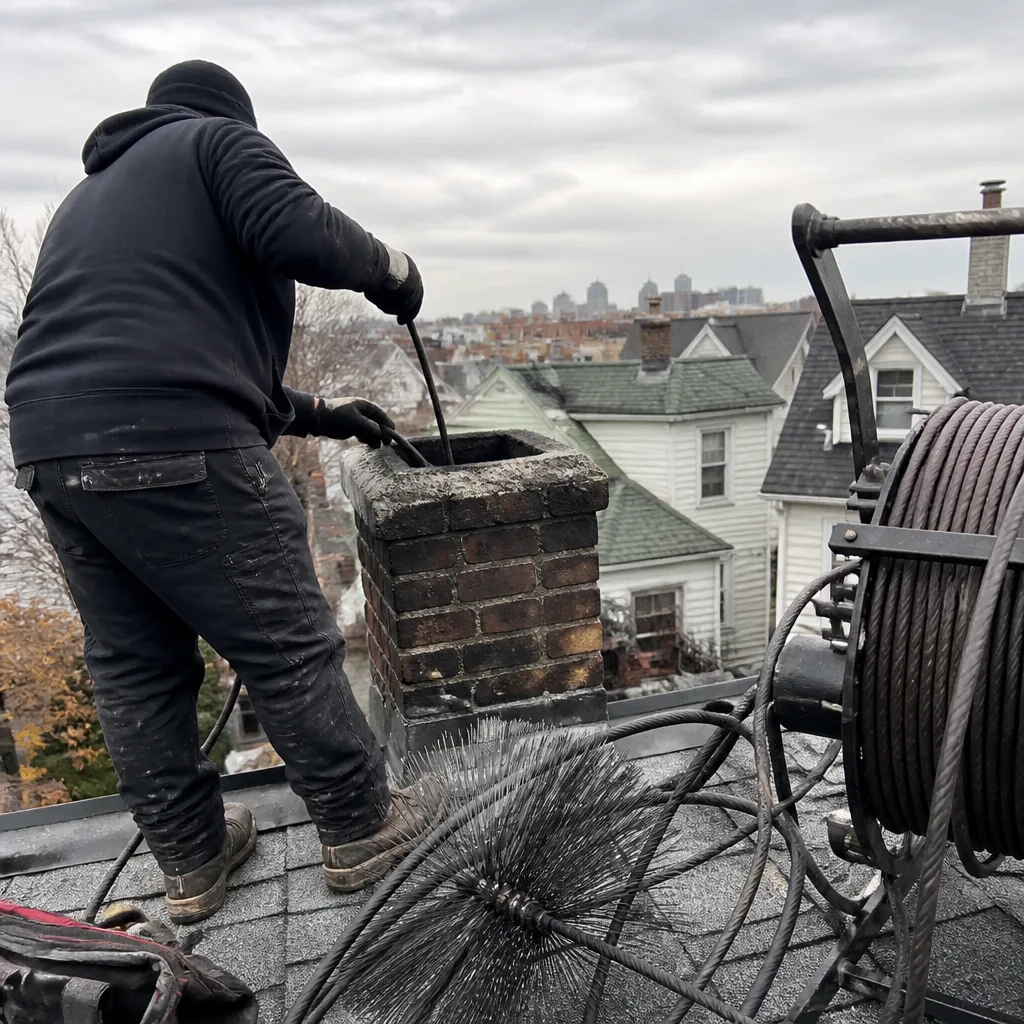 Before
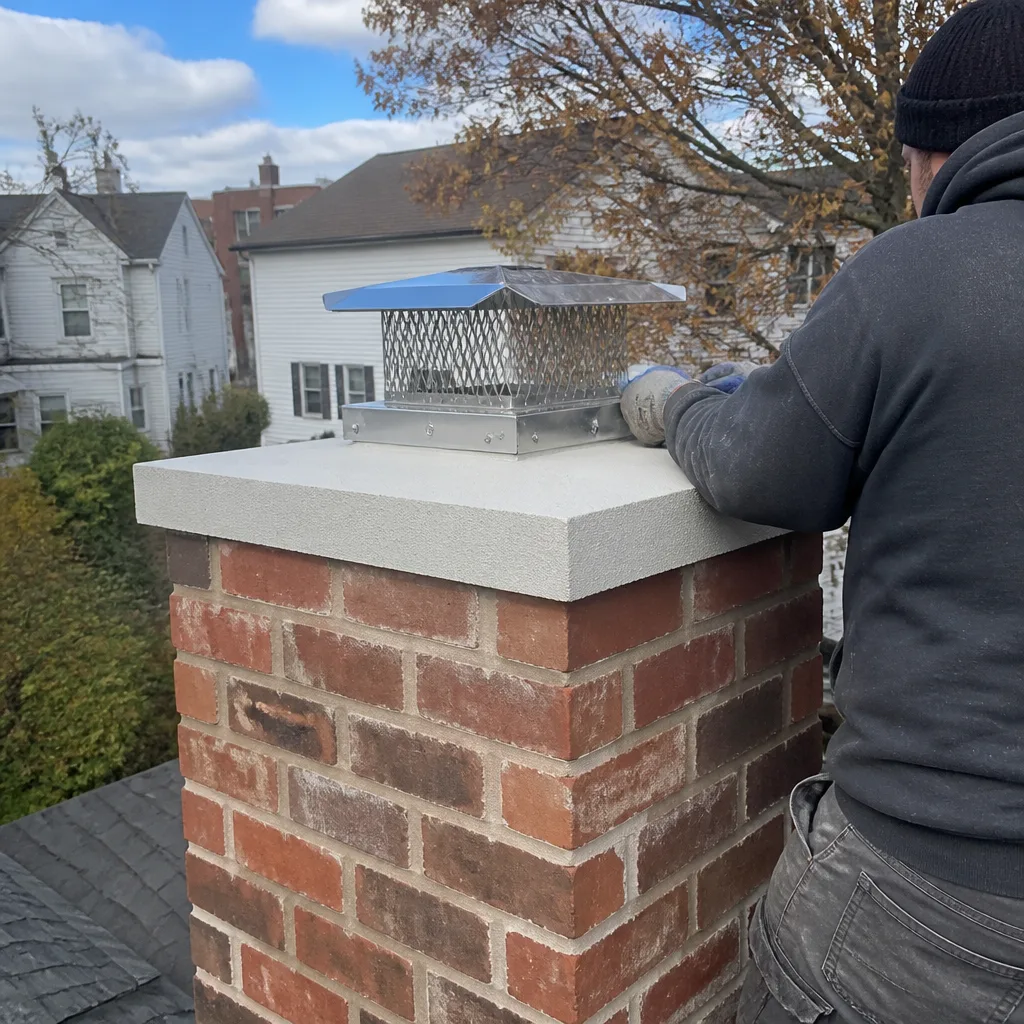 After
After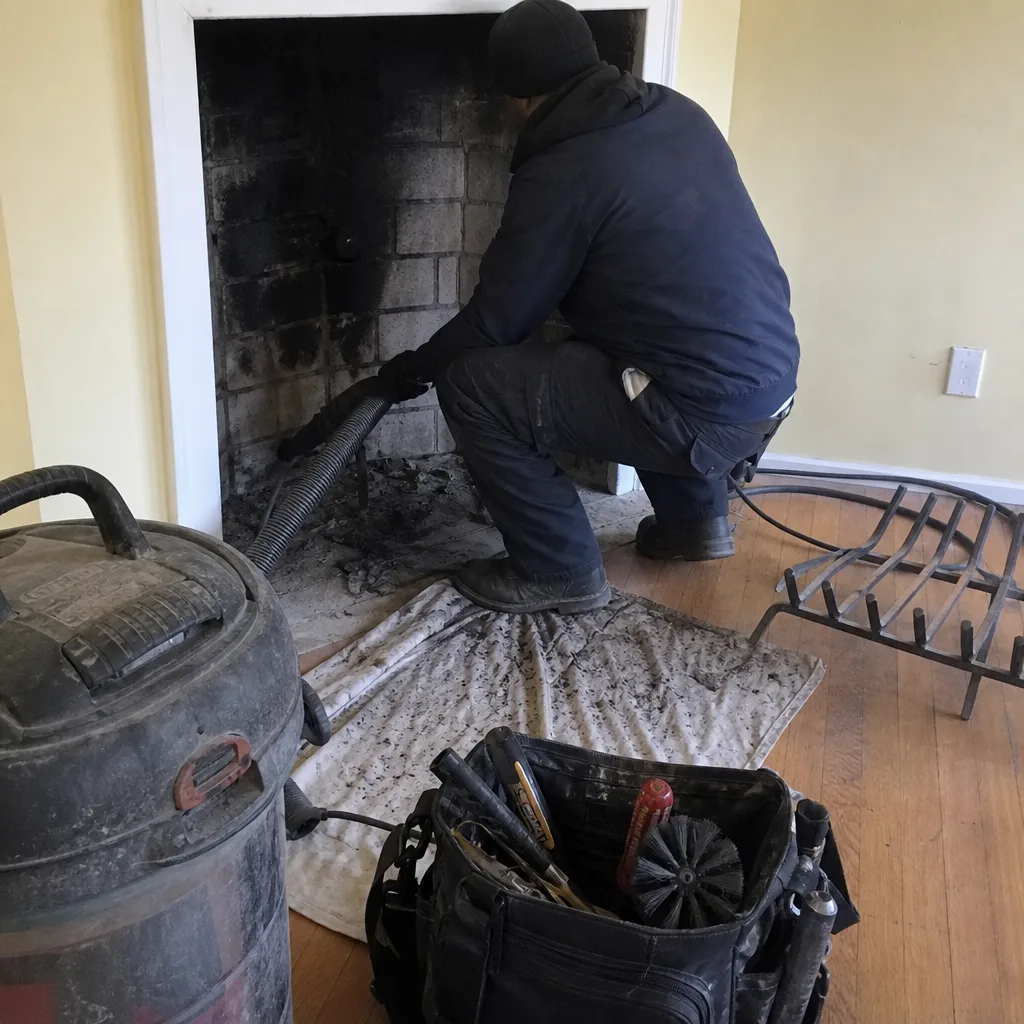 Before
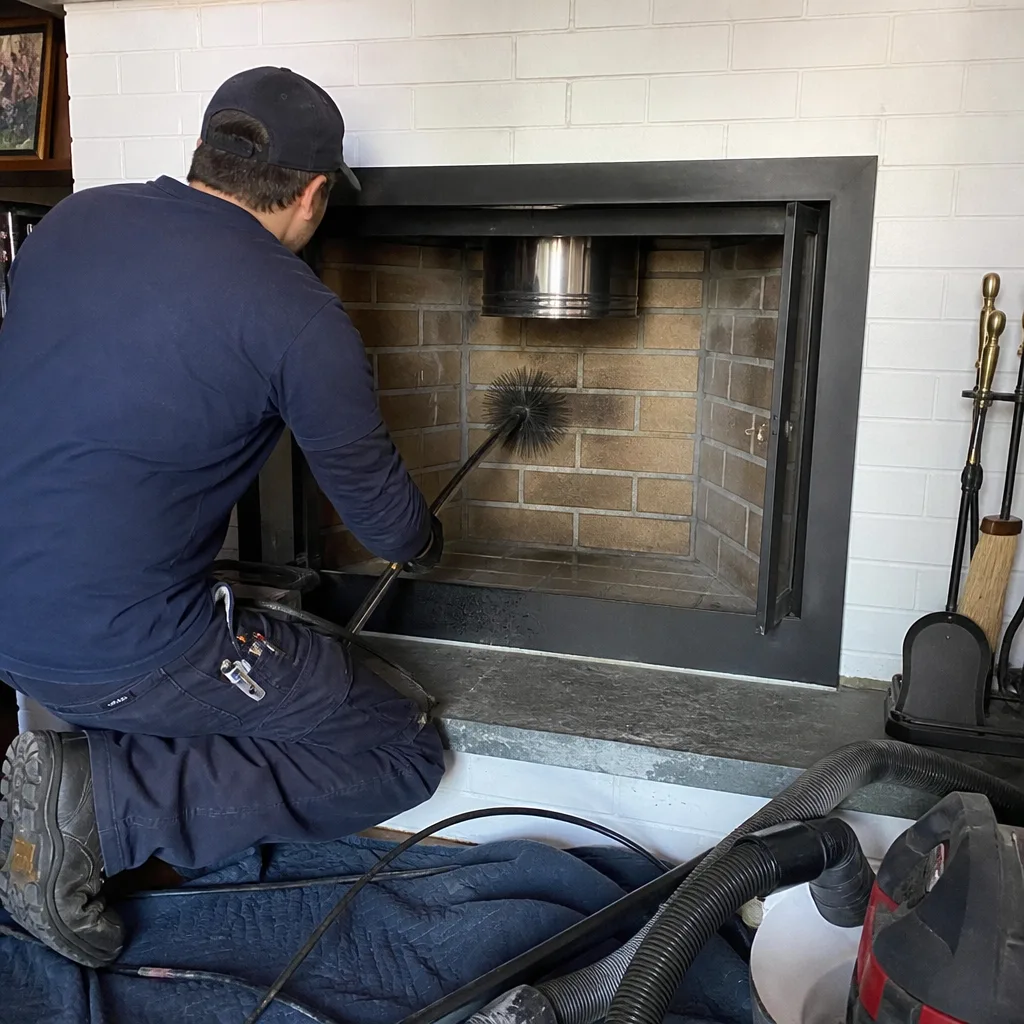 After
AfterHow to Hire a Chimney Cleaning Contractor in Astoria: A Step-by-Step Guide
New York State does not license chimney sweeps. There is no state board, no required apprenticeship, no mandatory exam. The CSIA credential is voluntary. What that means for you, a homeowner in Astoria, is that the only thing standing between your flue and a flashlight-and-receipt operation is the questions you ask before you book. This guide walks you through a specific vetting sequence, not a generic list of soft questions, so you can separate camera-inspection contractors from flashlight-inspection contractors before a single appointment is scheduled.
Quick Answer
To hire a chimney cleaning contractor in Astoria, ask three questions before booking: Will you provide a written price before work starts? Does your inspection include a camera scan of the flue? Will I receive a documented photo record when the job is done? A contractor who answers yes to all three, in writing, is the contractor you want on your roof.
Table of Contents
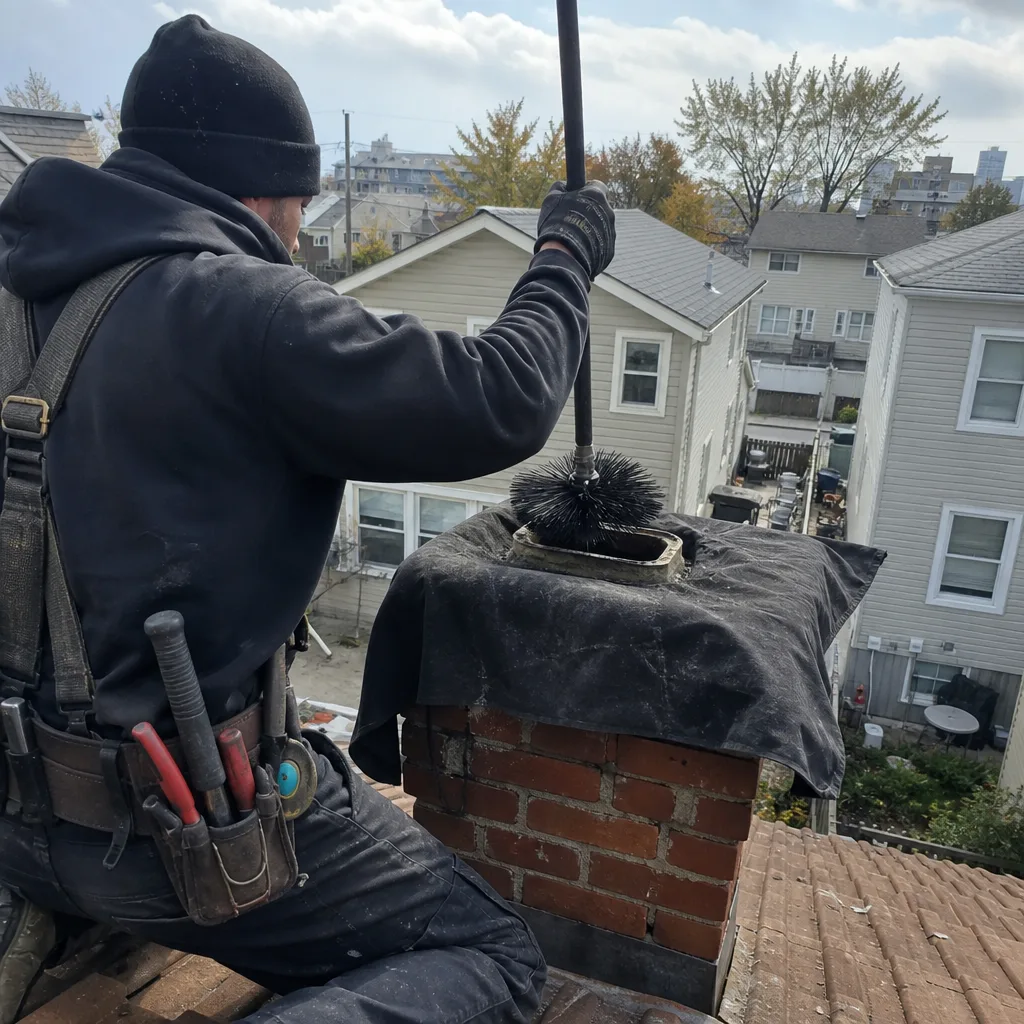
- Why Licensing Doesn’t Protect You in Astoria
- What Credentials Actually Tell You (and What They Don’t)
- The Three-Question Phone Script
- Written Price vs. Verbal Estimate: What the Difference Looks Like
- What a Legitimate Post-Service Document Package Contains
- Red Flags That Signal Low-Documentation Operations
- Astoria-Specific Considerations
- Common Mistakes to Avoid
 Before
 After
AfterWhy Licensing Doesn’t Protect You in Astoria
Most homeowners assume that hiring a chimney sweep is like hiring an electrician or a plumber. You check the state license, verify it’s active, and move on. That assumption fails the moment you search for a chimney sweep in Astoria, because New York State has no licensing requirement for chimney sweeps. Zero. The Department of State, which handles home improvement contractor licensing for much of New York, does not include chimney services in its regulated categories. New York City does not issue a chimney sweep license either. The Department of Buildings regulates chimney work that involves structural changes or rebuilds, which requires a general contractor or home improvement contractor license, but routine chimney cleaning sits in an unlicensed gray zone. For details on chimney cleaning permits, codes & inspections in NY: what you need to know, see our compliance guide.
What does that mean practically? Any person with a ladder, a brush set, and a willingness to climb onto a Queens roof can call themselves a chimney sweep tomorrow. They can print business cards, run ads, and start booking appointments. No state agency will stop them. The barrier to entry is not competence, insurance, or equipment. The barrier to entry is nothing.
This is why Astoria homeowners who bought their homes between 2015 and 2025, and who research before they contact anyone, need a different filter. The filter is documentation. A contractor’s willingness to put things in writing, show you images, and provide a paper trail is the real license check in a market where no license check exists.
We’ve cleaned chimneys in Astoria, Long Island City, Sunnyside, and Woodside long enough to know what the unlicensed market looks like. The pattern is consistent: a low quote, a quick visit that doesn’t involve a camera, a verbal recommendation for thousands of dollars of work, and no written record of anything. The homeowner has no way to verify what was found, and no documentation to use for insurance or resale.
What Credentials Actually Tell You (and What They Don’t)
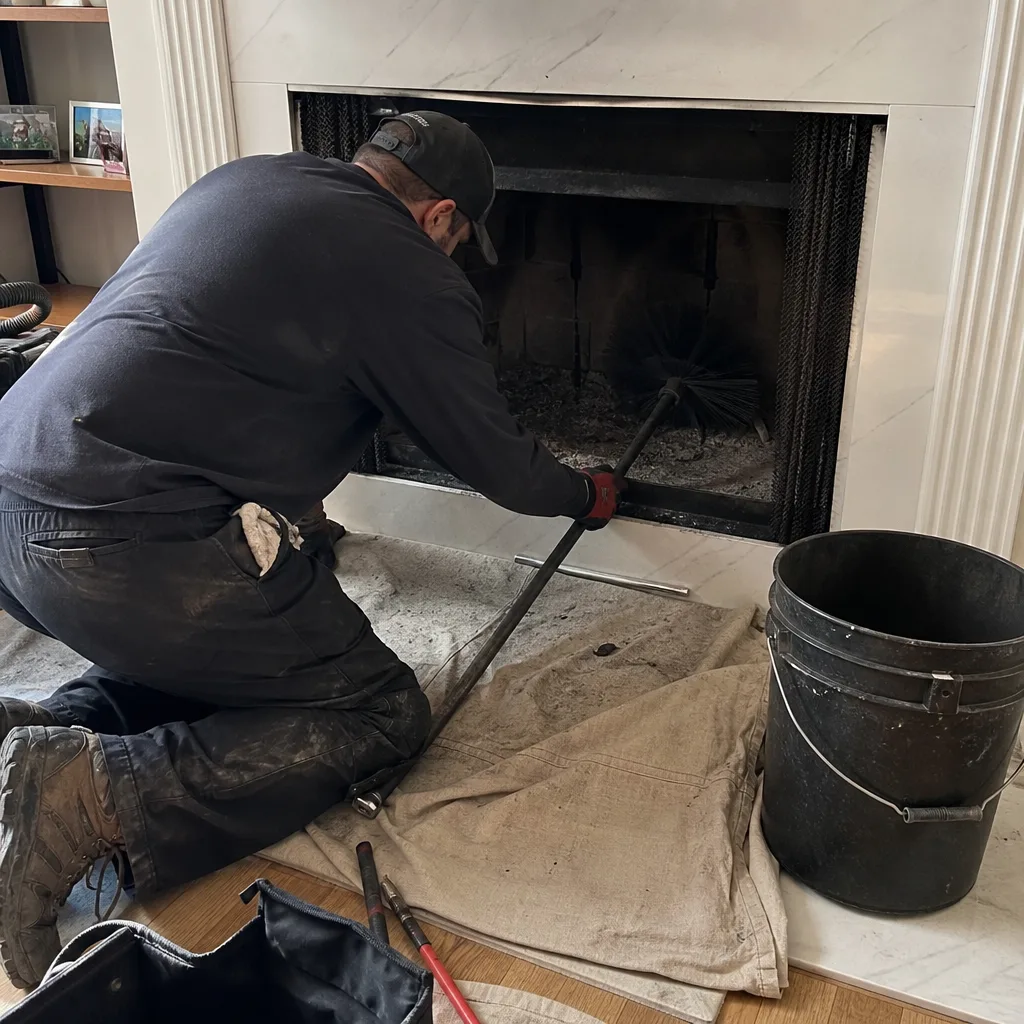
The two main credentials you’ll see in chimney service marketing are CSIA and NFI. CSIA stands for Chimney Safety Institute of America. NFI stands for National Fireplace Institute. Both are real organizations with real training programs and real exams. Both indicate that someone in the company, at some point, studied industry standards and passed a test. What they don’t guarantee is that the person who shows up at your Astoria rowhouse is the person who earned the credential, that the company follows any particular inspection standard in the field, or that you’ll get documentation of anything.
What CSIA Indicates
CSIA-certified sweeps have passed an exam covering chimney science, safety, and cleaning methodology. The certification is earned by individuals, not companies. A company can advertise “CSIA certified” while sending an uncertified employee to the job. There is no requirement that the certified person be on site.
What NFI Indicates
NFI offers specialist credentials, including Woodburning Specialist and Gas Specialist. These indicate knowledge of specific fuel types and appliance installation. Useful, but again, individual certifications, not company guarantees.
What Neither Credential Indicates
- Whether the company uses a camera. CSIA and NFI both recommend Level 2 camera inspections under certain conditions, but neither requires a camera on every job. A certified sweep can legally perform a flashlight inspection and call it a sweep.
- Whether you’ll get a written price before work starts. The credentialing organizations don’t regulate pricing practices. A certified company can still give you a verbal estimate that balloons after the tech is on the roof.
- Whether you’ll get a photo record. Neither organization requires photo documentation as a matter of course. Many certified companies don’t provide it.
- Whether the company follows NFPA 211. NFPA 211 is the National Fire Protection Association standard that governs chimney inspection and cleaning. It defines three levels of inspection. Level 1 is a visual check of accessible portions. Level 2 adds video scanning of the flue interior and is required when conditions change, including a property sale or a change to the system. Level 3 is invasive, opening walls or masonry. A company can be CSIA certified and still perform only Level 1 inspections as its default.
So what do you do with this information? You use it to ask better questions. Credentials are a baseline signal, not a guarantee. The questions that matter are about process and documentation, which we cover next.
The Three-Question Phone Script
Before you schedule a chimney cleaning in Astoria, call the company and ask these three questions. The answers separate camera-inspection contractors from flashlight-inspection contractors in under three minutes. You’ll hear resistance, hedging, or “we don’t usually do that” from low-documentation operations. A contractor who answers clearly and without defensiveness is the one you want.
- “Will you give me a written price before you start any work?” The answer should be an immediate yes. Not “we’ll see when we get there,” not “I can give you an estimate after the inspection.” A written price, with a written scope, delivered before work begins, is the minimum standard. If the company can’t commit to that on the phone, what else can’t they commit to?
- “Does your standard cleaning include a camera scan of the flue?” The answer should be yes, on every job, not just on special inspection visits. A camera scan is the only way to see what’s actually inside the flue, including cracks, gaps, and creosote buildup that’s invisible from the top or bottom. Contractors who don’t camera-scan are working blind. They can’t show you what they found because they never looked.
- “Will I receive a photo record of the inspection when you’re done?” The answer should be yes, with images you can keep. Not “you can look at my phone,” not “I’ll show you while I’m there.” A documented photo record, provided as a file or printed report, is what you need for homeowner’s insurance claims, for proving maintenance if you sell, and for your own records.
These three questions, asked on the phone before you book, will eliminate most of the low-documentation contractors in the Astoria market. We’ve built our entire process around these answers. Every Level Two Chimney Astoria visit includes a camera scan under Chimney Cleaning & Sweep in Astoria, a written price before work starts, and a documented photo record when the job is done. That’s been our default since 2009, not an add-on.
Written Price vs. Verbal Estimate: What the Difference Looks Like
The difference between a written price and a verbal estimate is the difference between a binding commitment and a negotiation that starts after the contractor is already on your roof. A verbal estimate, no matter how confidently delivered, can expand. The contractor says $199 on the phone, finds “unexpected issues” during the inspection, and suddenly you’re looking at a $2,000 liner recommendation. For a detailed chimney cleaning cost breakdown: the Astoria homeowner’s reference for 2026, see our pricing guide. You have no leverage because the worker is already at your house, and you’ve already taken time off work. That’s not a coincidence. It’s a business model.
What a Written Price Looks Like
- The price is given before work starts. Not after the inspection, not after the roof access is set up. Before any tool touches your chimney.
- The price is tied to a written scope. “Sweep, camera inspection, photo report: $249 flat.” The work is itemized. You know exactly what you’re paying for.
- The price is written down. A piece of paper or a digital document, not a sentence spoken aloud and later denied. If it’s not written down, it doesn’t exist.
- The price doesn’t move unless you approve a change in writing. If the inspection finds a cracked flue liner, the recommendation comes with a written quote for the additional work, with images showing what the camera found, and you decide what to do. The original sweep price stands.
What a Verbal Estimate Looks Like
- Pricing given only after the “free inspection.” The inspection is free, but the quote that follows is surprisingly high, and the “inspection” was a flashlight look that took 20 minutes.
- The price described as “starting at.” “Cleanings start at $99.” Start at. The final price is always higher, and the reasons are always discovered after the work has begun.
- The scope is impossible to pin down. “We’ll clean it and let you know what else we find.” That’s not an inspection. That’s an invitation to a negotiation you didn’t sign up for.
- No written record at the end. No receipt with itemized services, no report, no warranty. If there’s a problem later, you have nothing to point at.
Astoria homes are old. Many were built between 1900 and 1940. Chimneys in these homes have seen a century of fires, weather, and deferred maintenance. That’s exactly why a written price before work starts matters. You’re not buying a commodity service. You’re buying an inspection that might reveal real problems, and you need to know, in writing, what the inspection costs before the findings are in front of you. This is why our standard is simple: a written price, written scope, and written warranty delivered before anyone starts. That’s Haven Standard Clause 1, and it’s never been waived.
What a Legitimate Post-Service Document Package Contains
When a chimney cleaning in Astoria is done properly, you don’t just get a clean flue. You get a paper trail. That paper trail matters for three reasons: homeowner’s insurance claims, real estate disclosure, and simple accountability if something goes wrong.
Here’s what a legitimate document package contains after a professional chimney cleaning.
The Written Scope
A document that lists exactly what was done. “Mechanical sweeping of the flue from the roof. Camera inspection of the full flue liner. Inspection of the smoke chamber, damper, and firebox. Removal of creosote debris from the smoke shelf. Reinstallation of the chimney cap.” Each line item is something you can verify, either visually or through the photos.
The Camera Scan Record
Images from inside the flue, before and after cleaning if possible. These are not optional in a serious operation. A camera scan is the difference between “trust me, it’s clean” and “here’s what your flue looked like before, and here’s what it looks like now.” This is what NFPA 211 Level 2 inspection calls video scanning. We’ve included this on every visit since 2009, which became Clause 4 of the Haven Standard, and we’ve seen firsthand what homeowners do with these images: they file insurance claims with them, they show them to buyers, they use them to hold contractors accountable.
The Written Price Record
A receipt that shows what you paid and what you paid for. This sounds basic, but you’d be surprised how many “professional” operations in Queens don’t provide an itemized receipt. Without it, you have no proof of maintenance for insurance purposes. If you ever file a chimney fire claim, the first question the insurance adjuster asks is “when was it last cleaned, and do you have documentation?” The answer “uh, last year, I think” gets you denied or delayed. The answer “here’s the report from March 2025, with photos” gets you processed.
The Written Warranty or Guarantee
Any promise made about the work should be in writing. If the work isn’t done right, what’s the recourse? A written warranty says what’s covered, for how long, and what happens if there’s an issue. Our standard is the 365-Day Done Right Promise: if it’s not done right, we make it right, and that’s stamped on every job under the Haven Standard.
If a contractor in Astoria tells you they don’t provide written documentation, or offers to “just send you a photo on your phone,” you’re not getting a professional service. You’re getting a guy with a brush. The difference matters. Ask for the document package up front, before you book.
Red Flags That Signal Low-Documentation Operations
Most low-documentation contractors in Astoria follow predictable patterns. Once you know what to look for, you’ll see them from the first phone call. Here are the behaviors that signal an operation that doesn’t want a paper trail.
- No written scope offered during the booking call. You ask what’s included in the cleaning and get vague language: “full cleaning, top to bottom.” That phrase means nothing. A professional operation can list its scope item by item. If they can’t, they’re either hiding something or don’t know what a proper scope is. Either way, move on.
- Pricing given only after the “free inspection.” The free inspection is a free sales visit. The tech arrives, looks at the chimney, and delivers a quote that’s three times what you expected. The “inspection” is a flashlight and a story about cracks, creosote, and danger. Without a camera, the story is unverifiable.
- No before and after imagery offered. Every serious chimney cleaning operation owns a camera. If they don’t offer to show you images of your flue, it’s because they don’t have images. They never looked inside. What did you pay for?
- Refusal to put anything in writing. Any resistance to written pricing, written warranty, or written scope is a red flag. If a contractor wants to keep everything verbal, they want room to maneuver later. In our experience, the companies that won’t write things down are the companies that know what they’d have to write wouldn’t look good.
- Tech shows up in an unmarked vehicle, no uniform, no identification. You don’t know who’s on your roof. A professional contractor sends background-checked, uniformed technicians with license information available. If the person on your roof can’t tell you their name or show you any company ID, who’s going to be accountable if something goes wrong?
- Cash-only pricing, or a discount for skipping the receipt. This is the low-documentation business model in its purest form. No receipt, no record, no accountability. Never pay cash for chimney work in Astoria unless you receive a written receipt at the time of payment.
If you see two or more of these red flags in a single phone call, don’t book. There are better options. This is the entire point of the vetting process: you’re not looking for the cheapest quote. You’re looking for the contractor who can prove what they did.
Astoria-Specific Considerations
Astoria’s housing stock creates specific chimney conditions that homeowners in newer developments never think about. If you live in a prewar rowhouse near Ditmars Boulevard, 30th Avenue, or Broadway, your chimney has likely been attached to your home since before the Queensboro Bridge was built. That means you’re dealing with materials and construction methods that are no longer used, and your chimney needs more than a basic sweep.
Age and Construction of Astoria Chimneys
Homes built in the 1920s and 1930s typically have masonry chimneys with clay tile flue liners. Those liner tiles crack over time. Thermal expansion and contraction, freeze-thaw cycles from Queens winters, and simple age all contribute. A cracked liner in an Astoria chimney is not rare. It’s the expected condition of a 90-year-old fireplace system that’s been heating a home since the Hoover administration. The question is never “is the liner cracked” but “where is it cracked, how badly, and what does the camera show.”
Weather Exposure
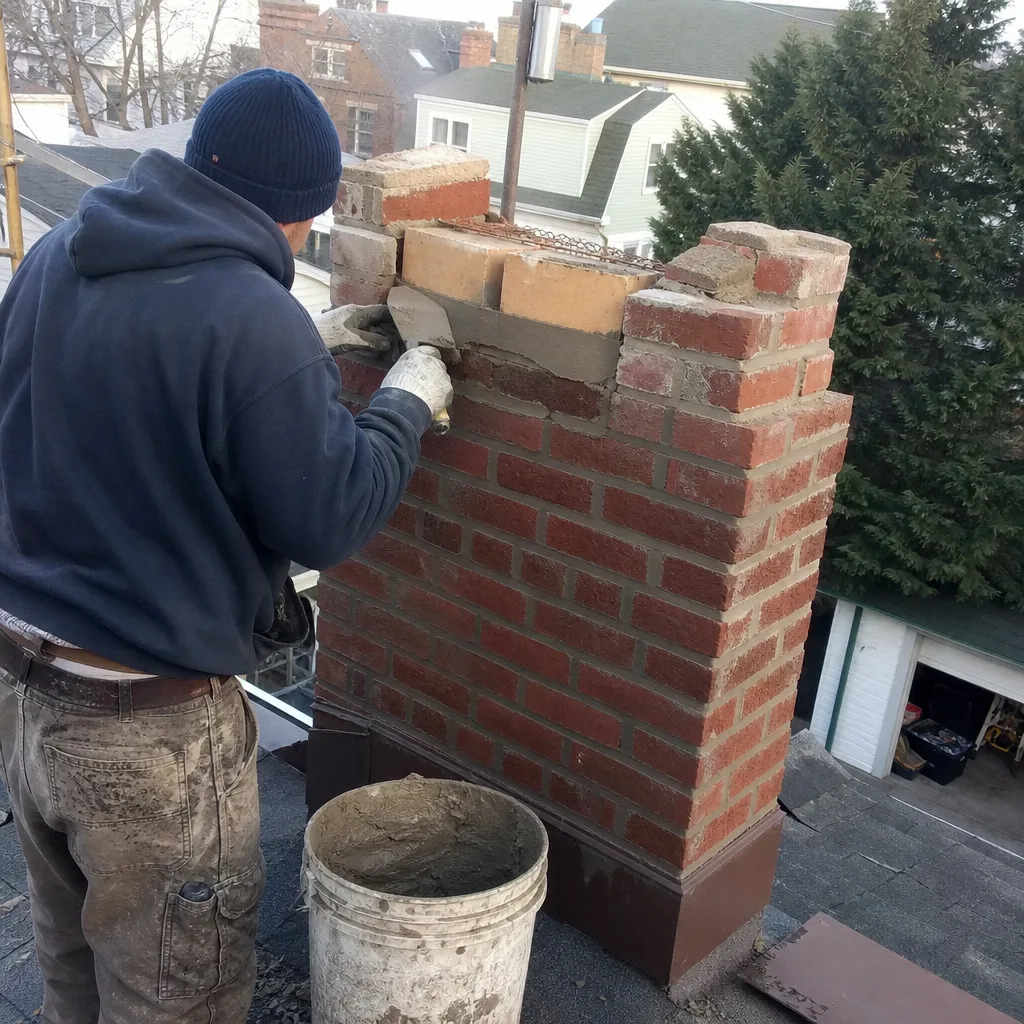
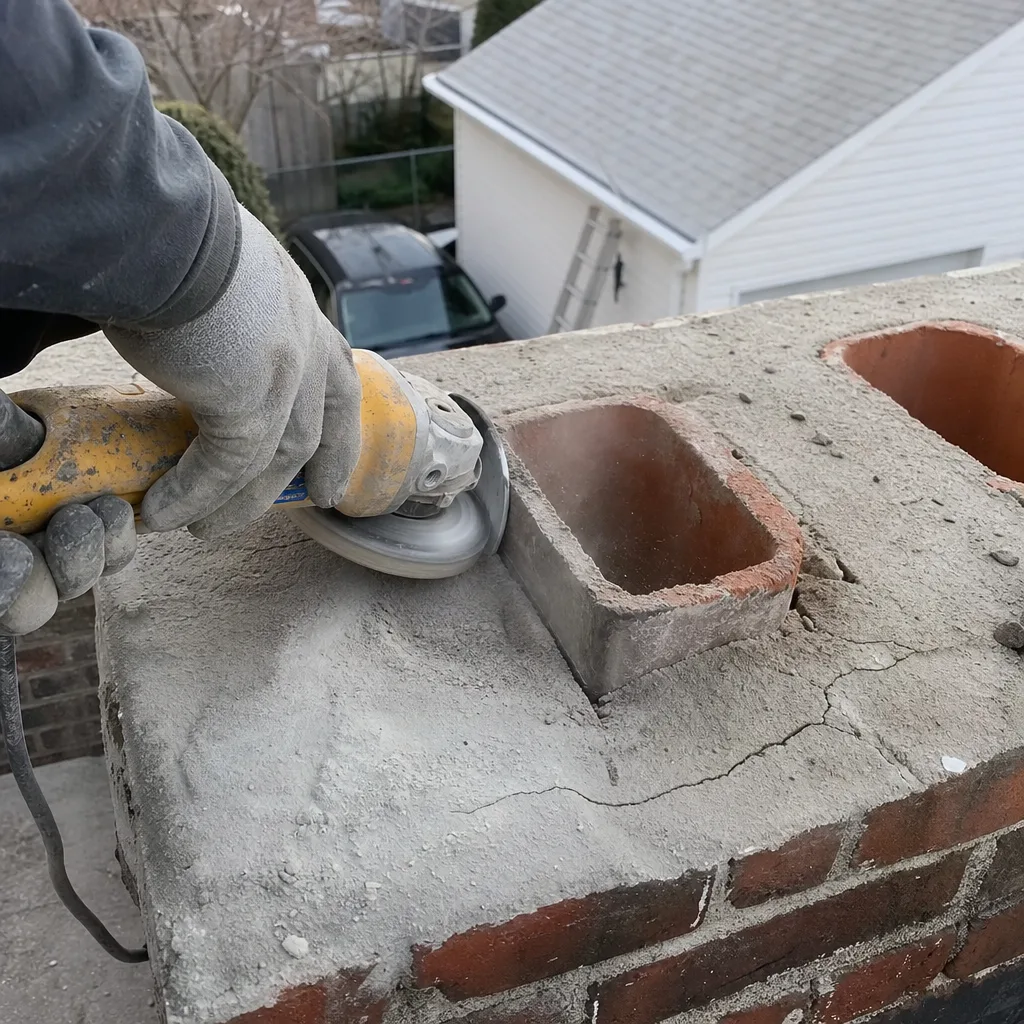
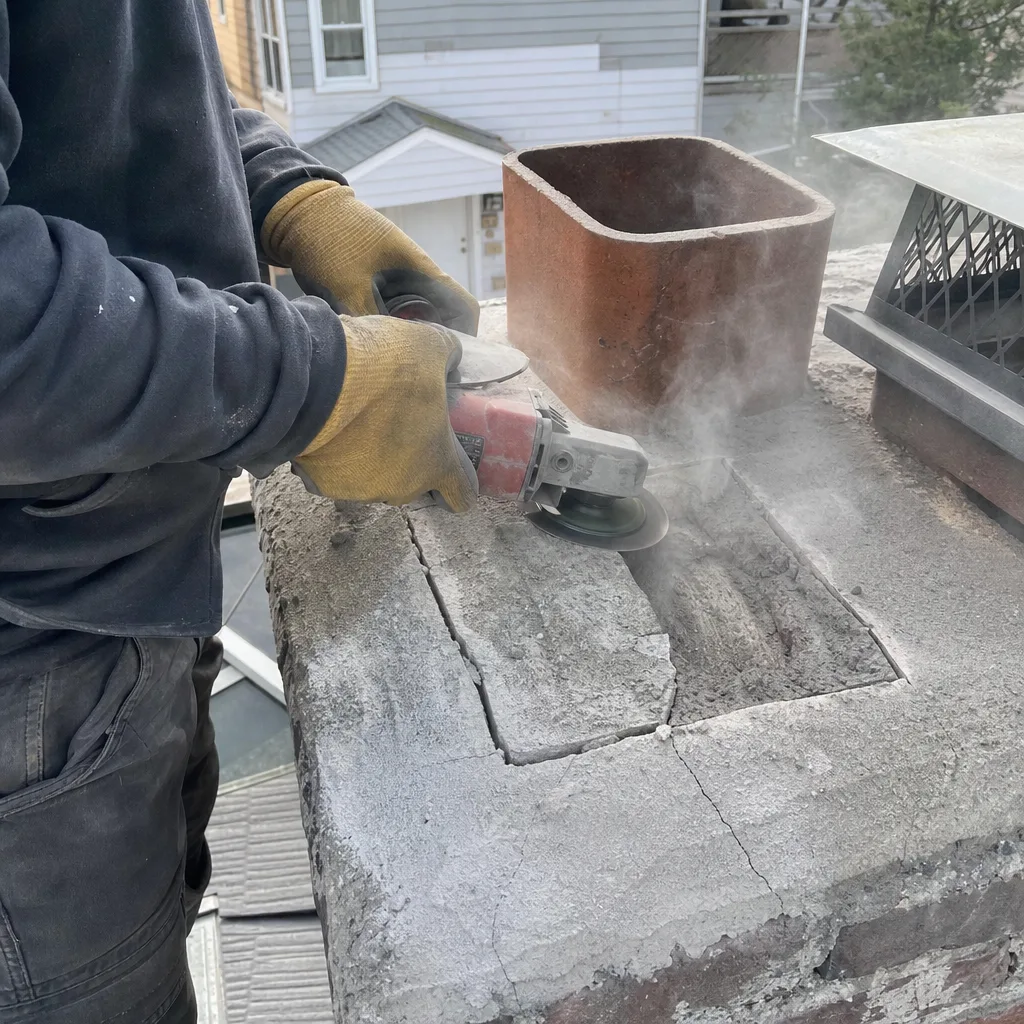
Queens gets hard winters. Snow, ice, and freeze-thaw cycles all take a toll on exposed masonry. The crown, which is the concrete cap at the top of the chimney, is particularly vulnerable. In Astoria, we regularly see crowns with spalling, the flaking and crumbling that happens when water penetrates the concrete and freezes. A cracked crown lets water into the chimney system, which accelerates liner deterioration and can damage interior walls and ceilings below.
Proximity to Salt Air
Astoria sits on the East River, and the salt air from the river and Long Island Sound, just a few miles away, contributes to faster corrosion of metal components like chimney caps and dampers. We see caps rusted through years earlier in Astoria than the same cap would last inland. This is an argument for materials like stainless steel caps, and for having the cap inspected as part of every cleaning.
Attached Homes and Shared Chimneys
Many Astoria homes are attached. If you share a party wall with a neighbor, your chimney may be part of a shared structure. This matters when it comes to repair work: if the shared chimney needs work, you may need to coordinate with your neighbor. It also matters for cleaning: a chimney fire in one unit can affect the shared chimney. This is one more reason to have a camera scan, because the condition of the shared flue is relevant to your safety even if you never use your fireplace.
None of this means every Astoria chimney is dangerous. It means your chimney is old, exposed to salt air and winter weather, and attached to a home that’s been through nearly a century of use. A professional inspection with a camera tells you exactly what condition your system is in, and what, if anything, needs to be done. We cover these specifics in more detail on our Chimney Repair in Astoria page.
How to Verify a Contractor Before They Arrive
Once you’ve asked the three questions and gotten the right answers, there’s a short vetting sequence you can run before the appointment. It takes about 15 minutes and it catches most of the remaining risks.
Step 1: Check Insurance
Any contractor working on your Astoria home should carry general liability insurance. Ask for the insurance company name and policyholder name. Reputable contractors have this ready. If they can’t name their insurer immediately, that’s a problem. You want to know that if the tech drops a brush into your flue and damages your fireplace, the insurance carrier is responsible, not you.
Step 2: Check the Company’s Physical Presence
Look for a real street address, not a P.O. Box. A contractor who won’t tell you where they’re based probably doesn’t want you to find them. This is particularly important in Queens, where fly-by-night operations can vanish between boroughs.
Step 3: Read the Negative Reviews
Don’t read the five-star reviews. Read the three-star and two-star reviews. What are the complaints? If the complaints are about communication or scheduling, that’s manageable. If the complaints are about pricing that changed after the work started, missing documentation, or pressure tactics, walk away. The pattern in the complaints is the truth about the operation.
Step 4: Ask About the Follow-Up
What happens if something goes wrong after the cleaning? Is there a warranty? Is there someone to call? A real operation has an answer. Our answer is the 365-Day Done Right Promise. If it’s not done right, we make it right. That’s the standard, not a marketing line.
What a Proper Chimney Cleaning Actually Includes
Many Astoria homeowners are surprised to learn what a thorough chimney cleaning involves. A proper sweep is not a brush run up the flue and a receipt scribbled on a carbon copy. It’s an inspection and a cleaning, done together, documented as one record.
The Components of a Proper Sweep
- Roof access and cap removal. The chimney cap is removed to access the flue from above. If the cap is damaged, that’s noted and documented.
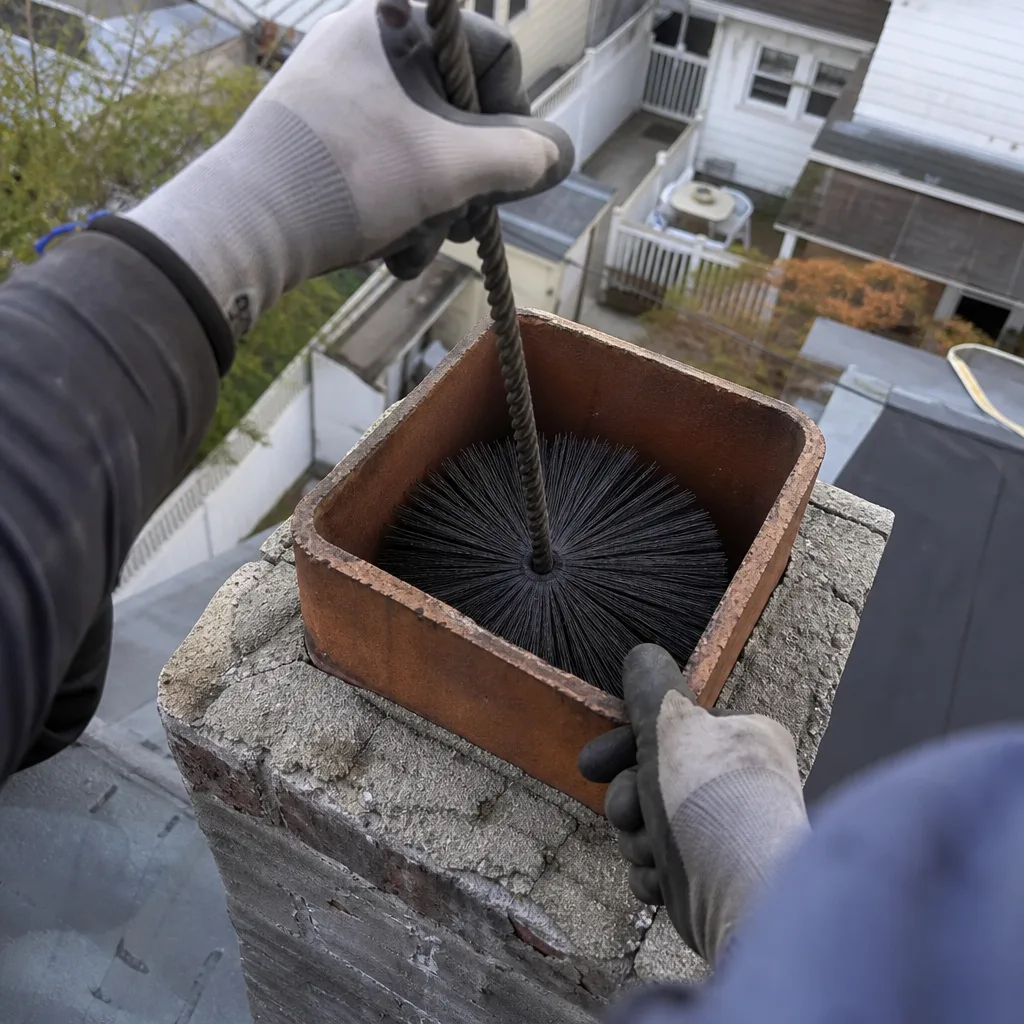
- Mechanical sweeping of the flue. Brushes sized to the flue dimensions remove creosote and soot from the liner walls. The creosote falls to the smoke chamber and firebox for removal.
- Camera scan of the flue interior. A video camera descends the flue to inspect the full length of the liner. This is the only way to verify the liner’s condition and confirm the cleaning was complete.
- Smoke chamber and damper inspection. The smoke chamber, the area above the firebox where smoke compresses before entering the flue, is inspected and cleaned. The damper is checked for operation and seal.
- Firebox inspection. The firebox, where the fire burns, is checked for cracked bricks, deteriorated mortar, and other signs of damage.
- Debris removal. All creosote and soot removed from the flue during sweeping is collected and bagged. It should never be left in the firebox or smoke chamber.
We use materials from established manufacturers including DuraFlex for liners and Copperfield for caps and dampers, procured through Haven’s buying network to keep customer prices honest. The specific components matter less than this fact: every step should be documented, and the documentation should be yours to keep.
What happens when you call
- 1
A real person answersNo phone trees - you reach a local pro.
- 2
You get an upfront price rangeHonest numbers before anyone is dispatched.
- 3
A background-checked tech heads outLicensed & insured, dispatched right away.
- 4
You approve before work beginsNothing starts until you say go.
What to Do When the Inspection Finds Real Problems
Here’s a scenario we see regularly in Astoria. You schedule a cleaning. The tech arrives, does the sweep, runs the camera, and then shows you something on the screen: a cracked flue liner, or a gap between liner tiles, or Class III creosote, which is the glazed, tar-like creosote stage that’s difficult to remove by standard sweeping and increases fire risk. Now what?
The correct answer is not “replace the liner immediately or your house will burn down.” The correct answer is a written quote for the recommended work, with the camera images as evidence, and a plain-language explanation of what the finding means. You should be able to look at the images yourself and see what the tech is describing. If the contractor recommends a liner replacement and can’t show you images of the damaged liner, you’re being sold, not informed.
We’ve had customers come to us after another company recommended a full liner replacement based on a flashlight look and refused to provide images. We ran the camera. In some cases, the liner was fine, and no replacement was needed. In other cases, the liner was genuinely compromised, and the camera images from our inspection were the first time the homeowner had seen proof with their own eyes. Either way, the homeowner got the evidence. That’s what a professional operation provides.
For legitimate liner issues, materials matter. We use DuraFlex and HeatShield systems for liner repair and replacement because they’re proven in the field and their warranties are enforceable. The specific recommendation depends on the condition of your flue, and you should only accept a recommendation you can see with your own eyes.
Common Mistakes to Avoid
- Booking the cheapest quote without asking about process. In Astoria, the cheapest chimney sweep is usually the one with no camera, no written price, and no documentation. You save money on the sweep and lose it ten times over on repairs that should have been caught earlier.
- Assuming licensing protects you. New York State does not license chimney sweeps. The CSIA credential is voluntary and doesn’t guarantee the person on your roof is the credentialed individual. Your protection is the documentation you demand.
- Skipping the chimney because you don’t use the fireplace. Even an unused chimney can harbor creosote, and the condition of the flue matters for the structural integrity of the chimney and the safety of the home. Gas appliances often vent through the chimney. An unused fireplace is not an unmaintained chimney.
- Accepting a verbal estimate. A verbal number is not a price. It’s a suggestion with no obligation. Get it in writing before work starts, every time.
- Not asking for before and after photos. A camera scan is the only way to verify the condition of the flue. If the contractor can’t show you images, they didn’t look, and you can’t know what you paid for.
- Paying cash without a written receipt. No receipt, no proof of maintenance, no warranty, no recourse. You need the document package.
- Waiting until fall to schedule. Chimney cleaning in Astoria is heavily seasonal, with peak demand from September through December. Book in spring or summer to get your choice of appointment times and avoid the rush.
When to Call a Professional
You should call a professional chimney contractor in Astoria if you’ve owned your home for more than a year without a chimney inspection, if you’ve recently bought a home and don’t have maintenance records from the previous owner, if you burn fires regularly during the winter, or if you notice any of the following: a fireplace smell in the house even when the fireplace isn’t in use, visible staining on the walls or ceiling near the chimney, difficulty starting or maintaining a fire, or animals sounds coming from the chimney. Any of these indicate a system that needs professional attention. Level Two Chimney Astoria offers free estimates in Astoria, call (516) 301-1549.
Frequently Asked Questions
Chimney cleaning in Astoria typically costs between $180 and $350 for a standard sweep and inspection. The range reflects differences in chimney height, roof access difficulty, and whether the chimney has a cap that needs to be removed and reinstalled. A company that charges significantly less than this range is probably not running a camera or providing documentation. Call (516) 301-1549 for an exact quote, estimates are free.
A chimney should be swept at least once per year if you burn fires regularly, and inspected annually even if you don’t. The National Fire Protection Association says chimneys should be cleaned when there’s 1/8 inch or more of creosote buildup, and the only way to check is through an annual inspection. In Astoria, where most chimneys are attached to homes built before 1940, the annual check matters more, not less.
Only if the camera scan shows damage that compromises the liner’s function. A cracked clay tile liner, gaps between tiles, or deteriorated mortar joints can allow heat and gases to escape into the chimney structure, which is a fire and carbon monoxide risk. If a contractor recommends a liner replacement, ask for the camera images showing the damage. If they can’t show you images, get a second opinion. We offer a free second opinion on any written estimate, and we’ve seen too many liner replacements sold on a flashlight look to take these recommendations at face value.
Yes. Astoria’s housing stock is older, with many chimneys built in the 1920s and 1930s using clay tile liners that crack over time. Proximity to the East River means more salt air exposure, which accelerates corrosion of metal components. And winters bring freeze-thaw cycles that damage crowns and masonry. These factors mean Astoria chimneys need closer monitoring than chimneys in newer developments.
Creosote builds up on the flue walls. Creosote is a byproduct of wood combustion, and it’s highly flammable. If it ignites, you have a chimney fire, which can crack the flue liner, damage the chimney structure, and potentially spread to the house. Even without a fire, neglected chimneys develop liner damage that allows carbon monoxide, an odorless gas, to enter living spaces. The risks are real, and the cost of prevention is a fraction of the cost of repair after a fire.
You should receive a written scope of work, a written price record showing what you paid, camera scan images from inside the flue, and a written warranty or guarantee covering the work. These documents matter for insurance claims, for proving maintenance when you sell your home, and for holding the contractor accountable. If the contractor won’t provide them, book with a company that will. Call (516) 301-1549 for a free estimate, and you’ll receive the full document package with your service.
The Bottom Line
Hiring a chimney cleaning contractor in Astoria means navigating a market where no state license protects you. The CSIA credential is voluntary, and the person on your roof may not be the credentialed professional you saw on the website. The solution is documentation. Demand a written price before work starts. Demand a camera scan as part of every cleaning. Demand a documented photo record when the job is done. The contractors who can meet that standard are the ones worth hiring, and they’re the ones who prove their work with evidence rather than reassurance. That filter, applied consistently, will protect your home, your budget, and your family.
Written by Corrine Halstead, Owner at Level Two Chimney Astoria, serving Astoria since 2009.