
Last updated September 20, 2026
Level 1 sweep and inspection to the NFPA 211 annual standard - flue, crown, cap, and flashing checked and photographed
Chimney sweep logs do not sweep chimneys. They loosen some creosote - which then falls where a brush and vacuum still have to collect it.
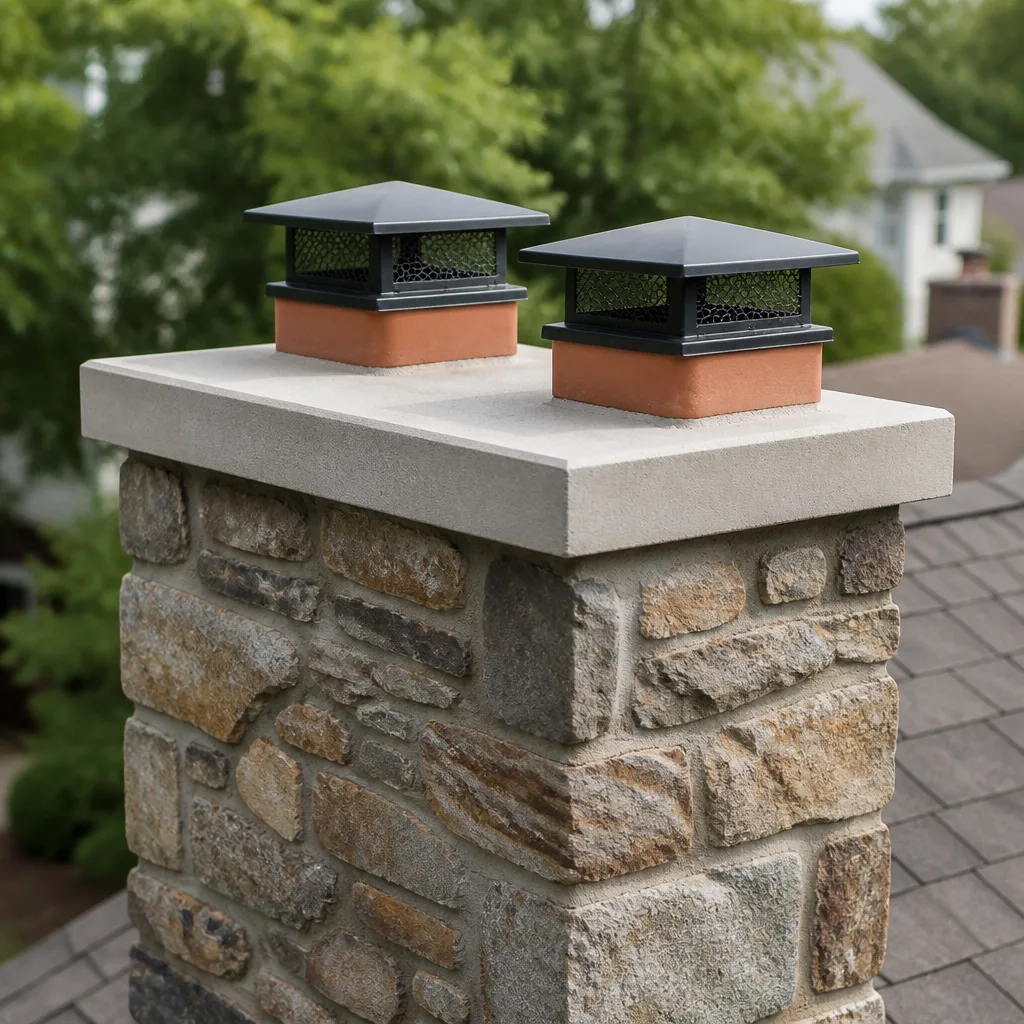
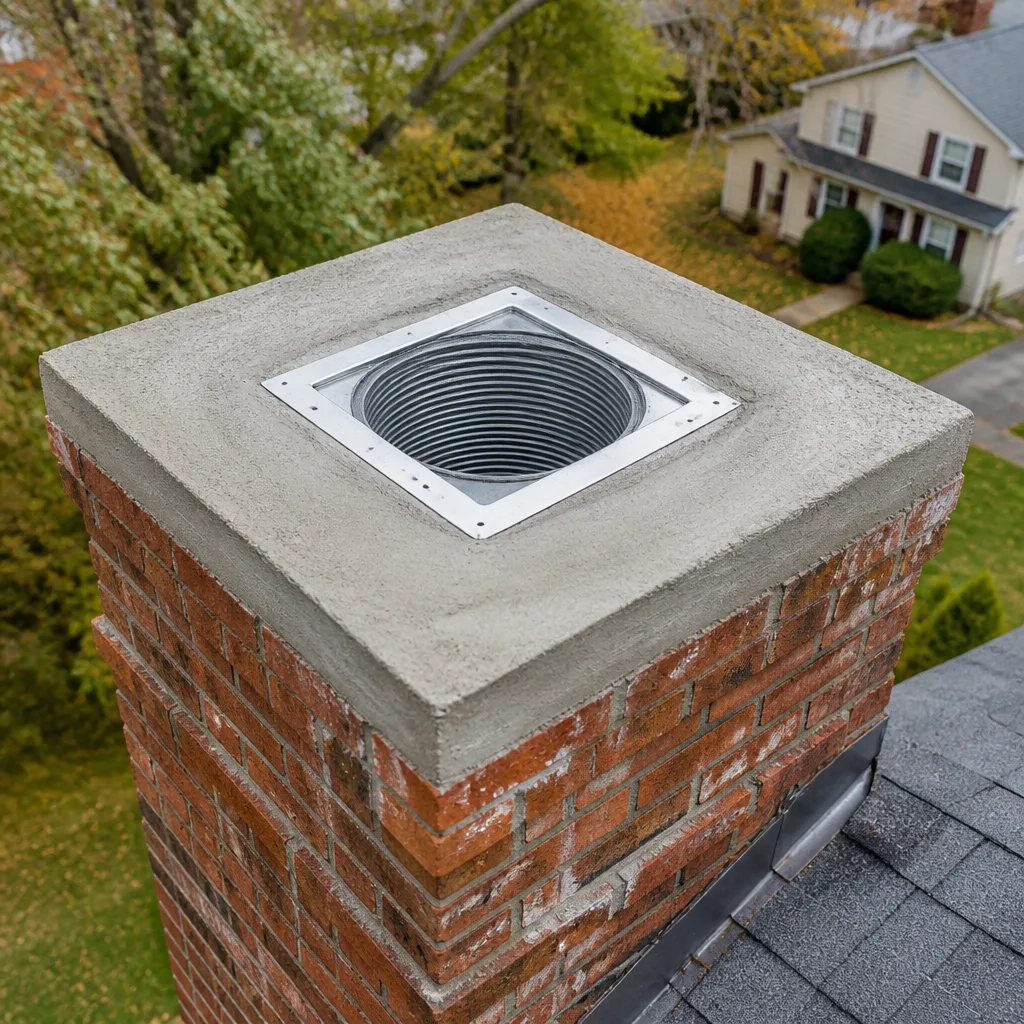
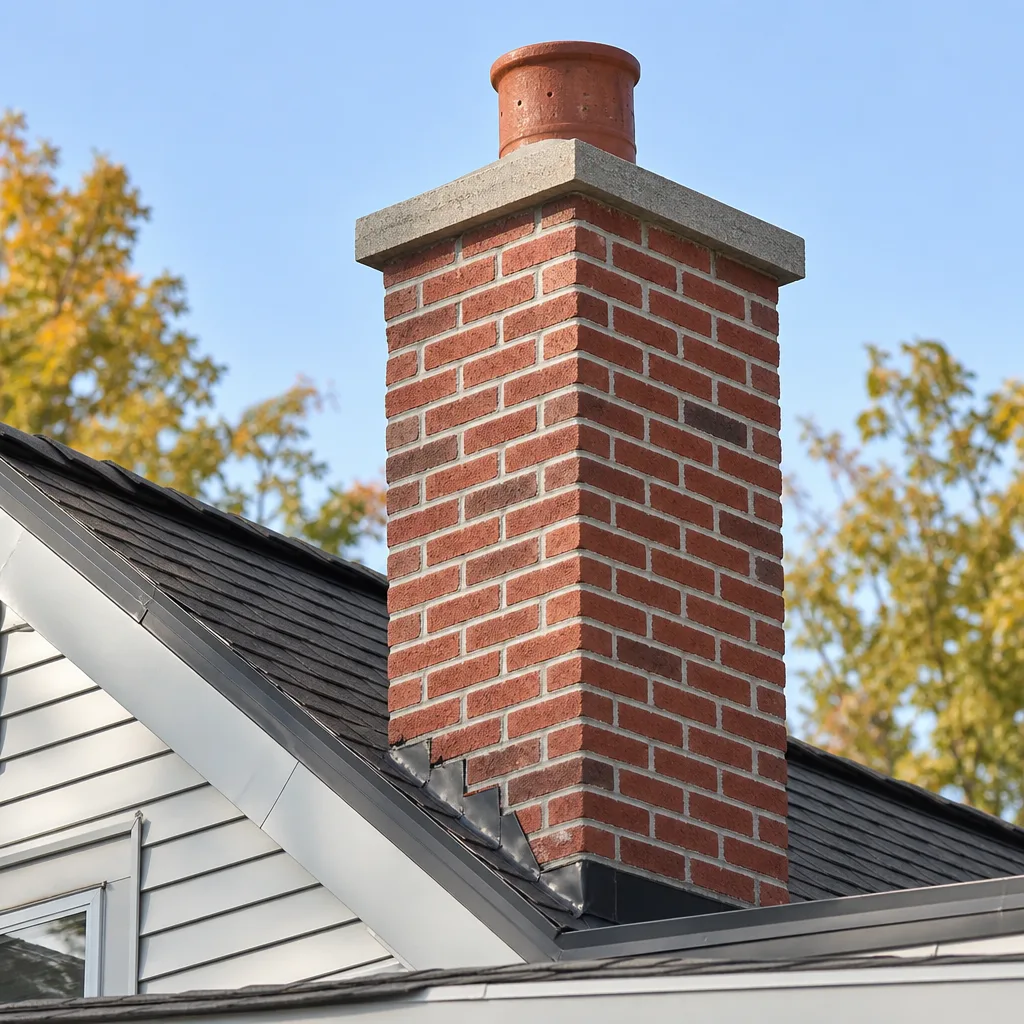
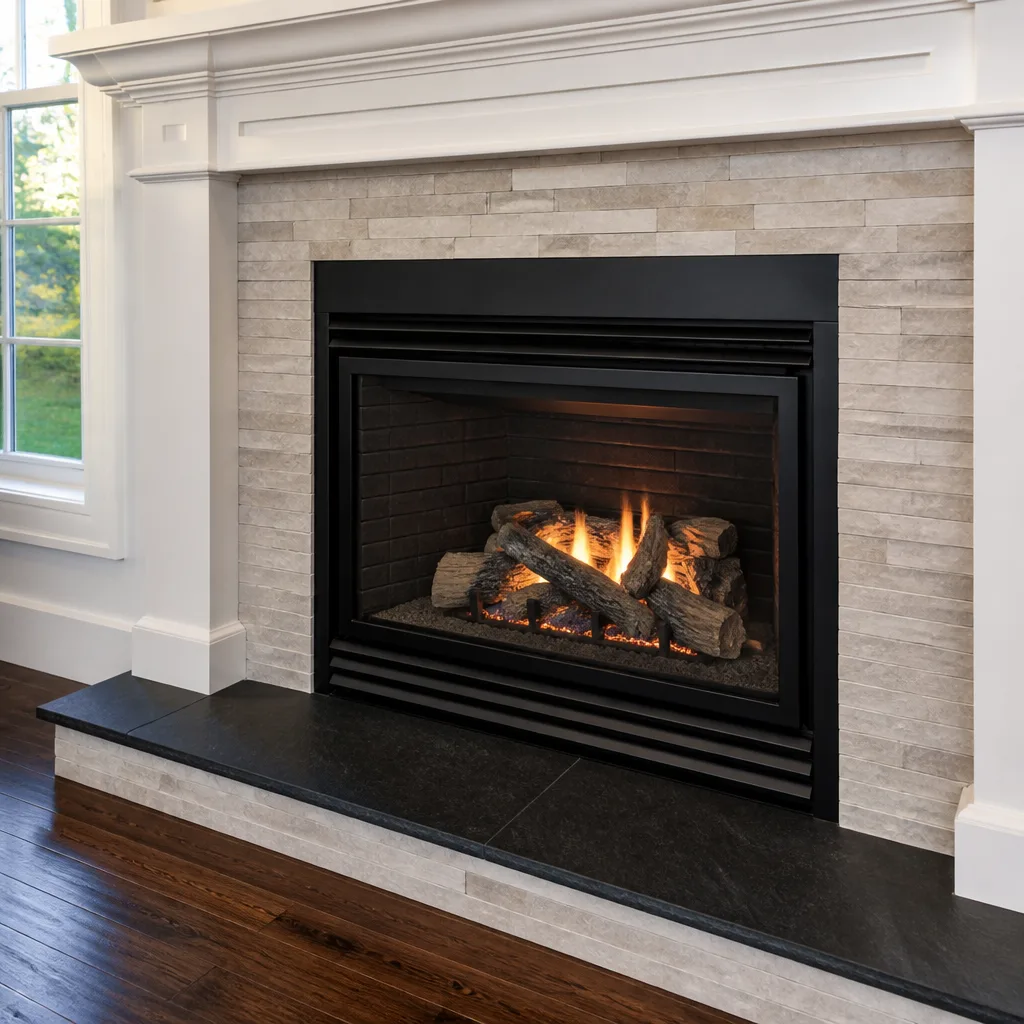
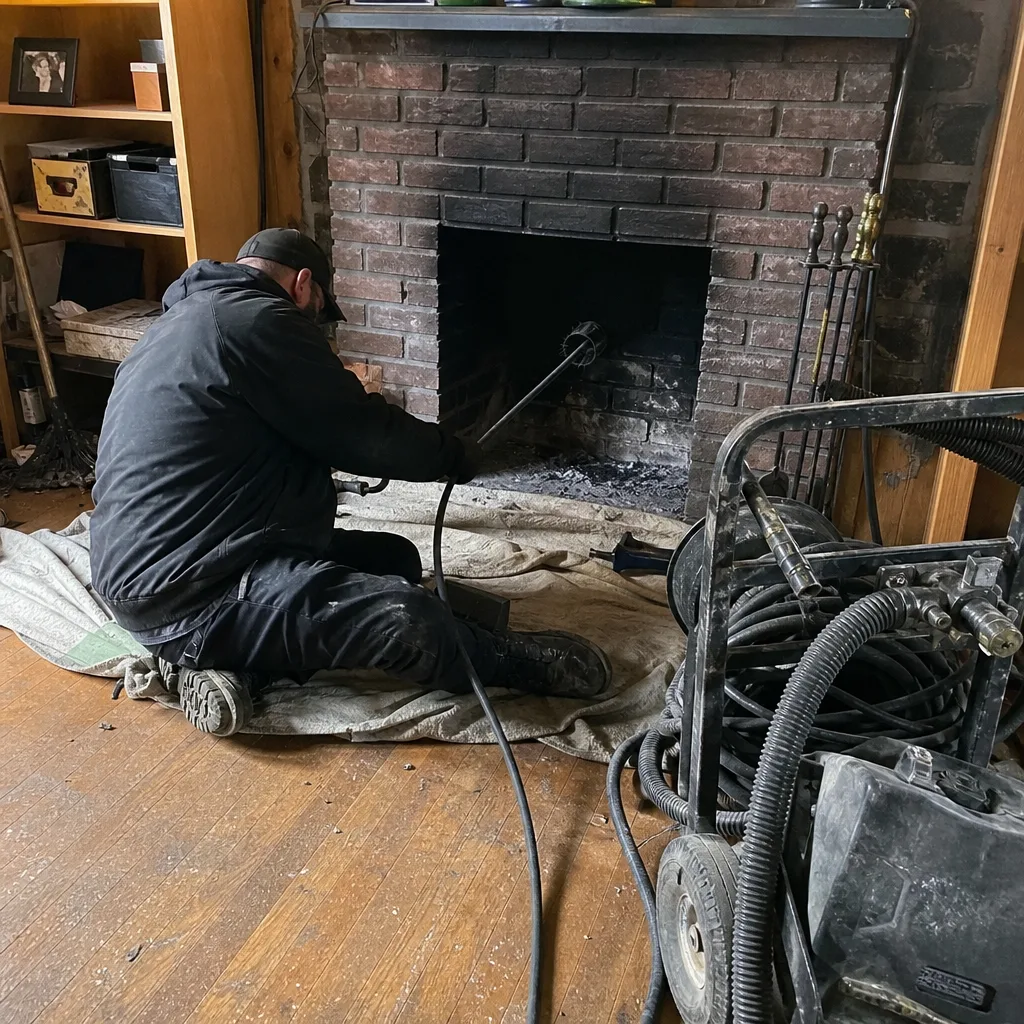 Before
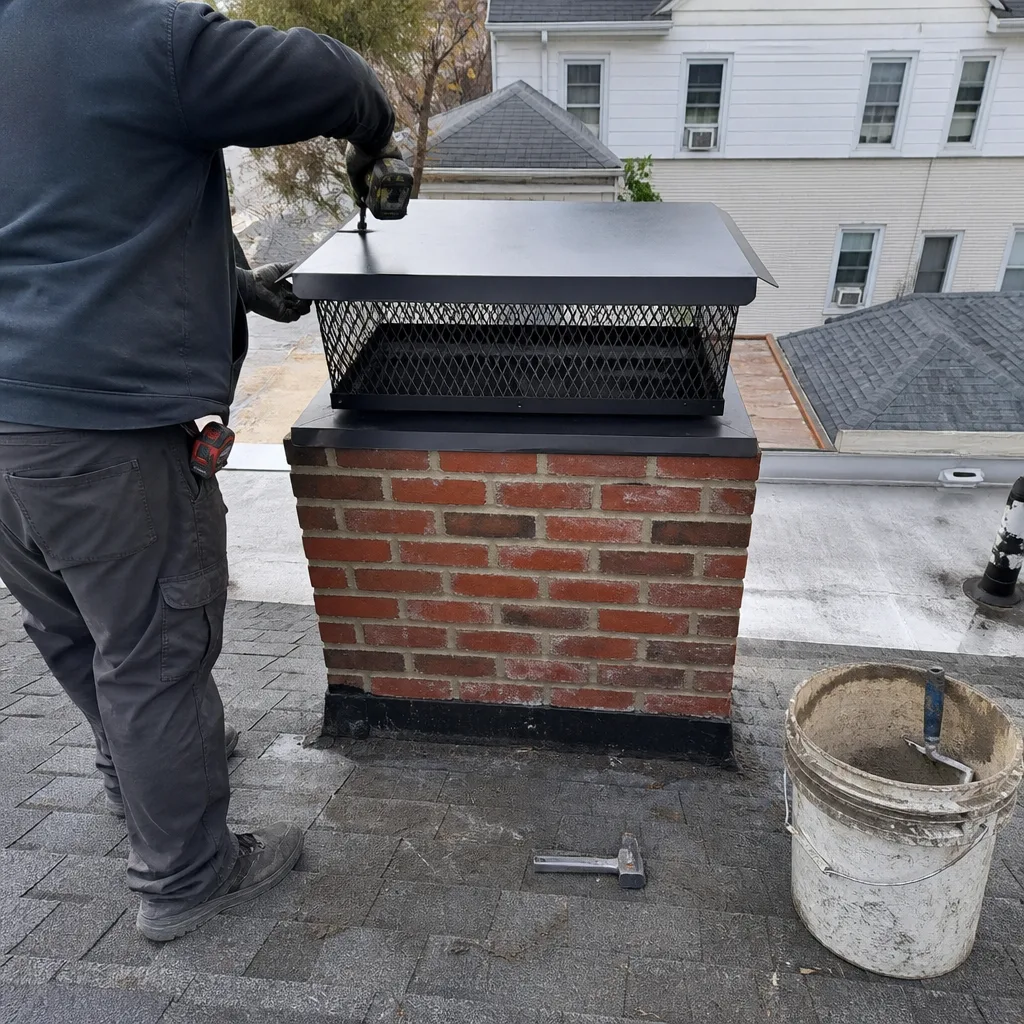 After
After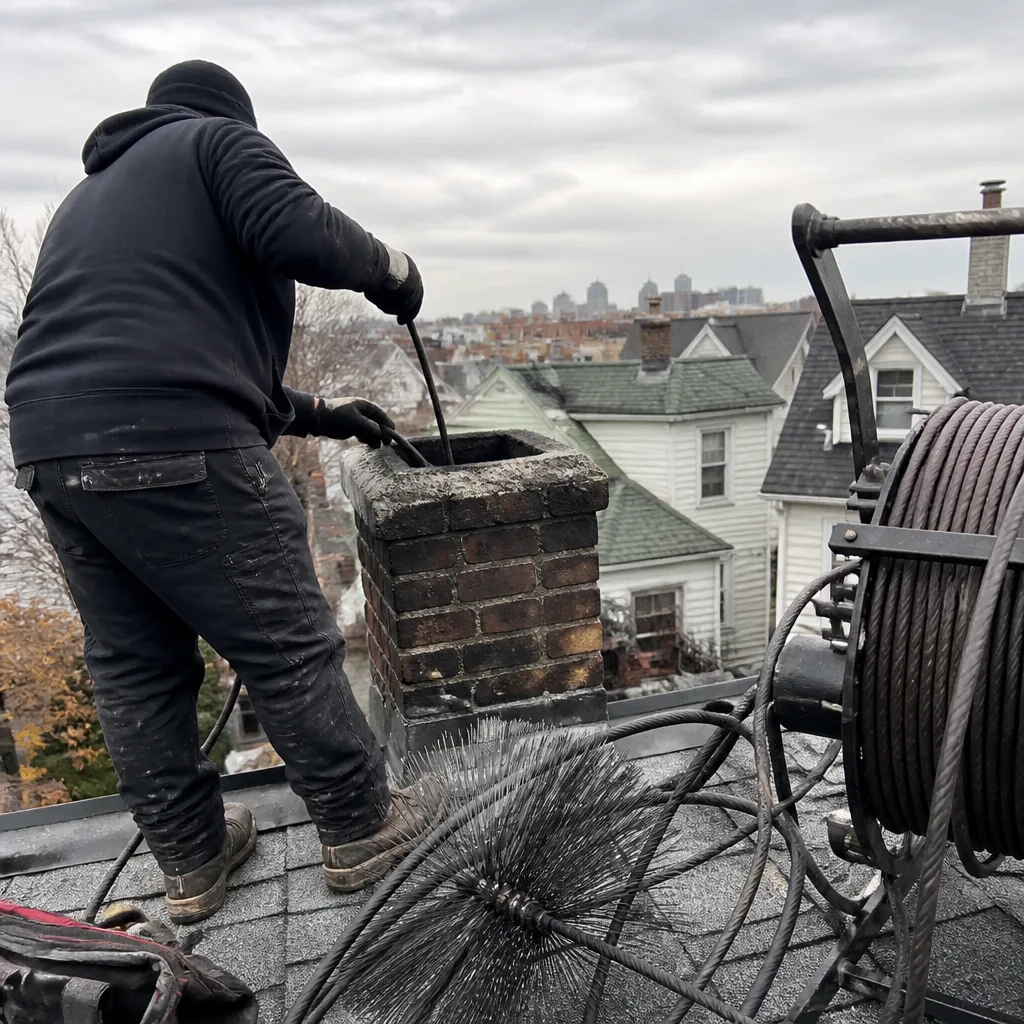 Before
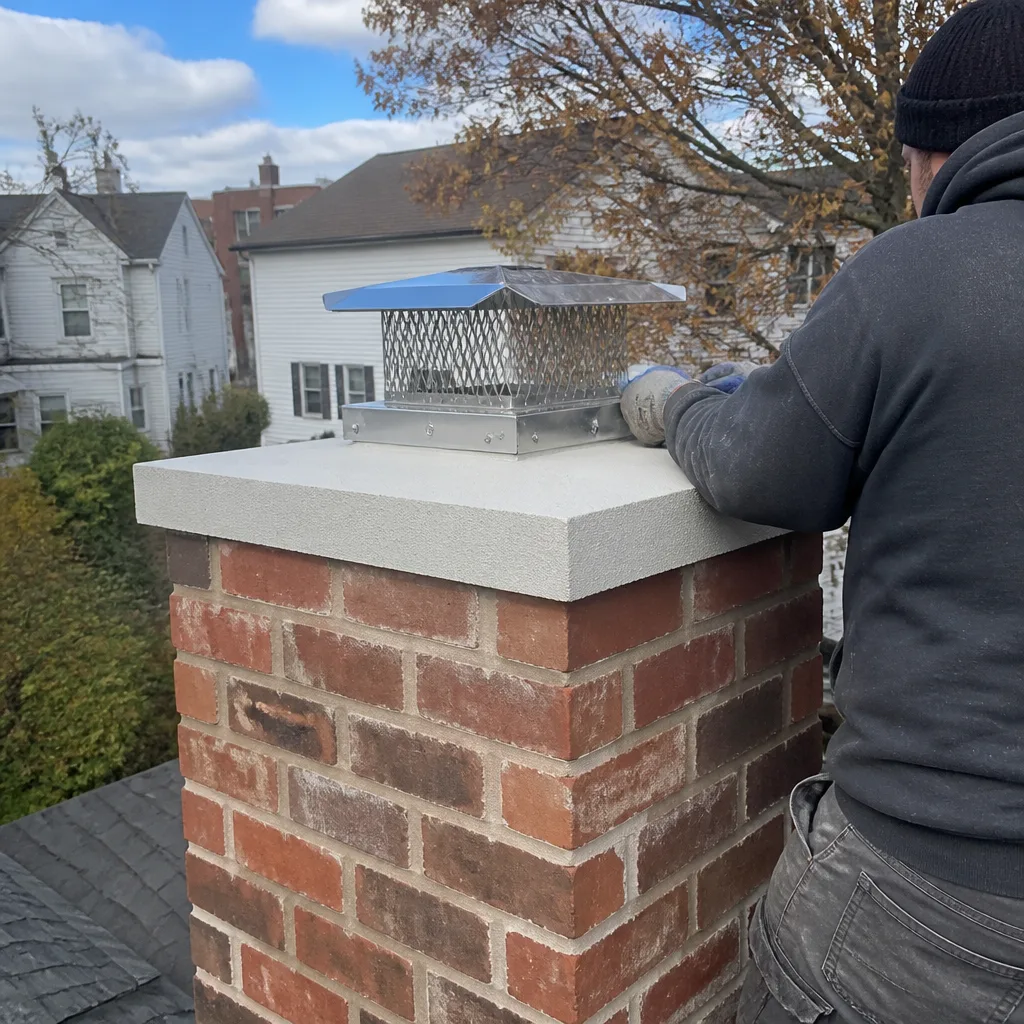 After
After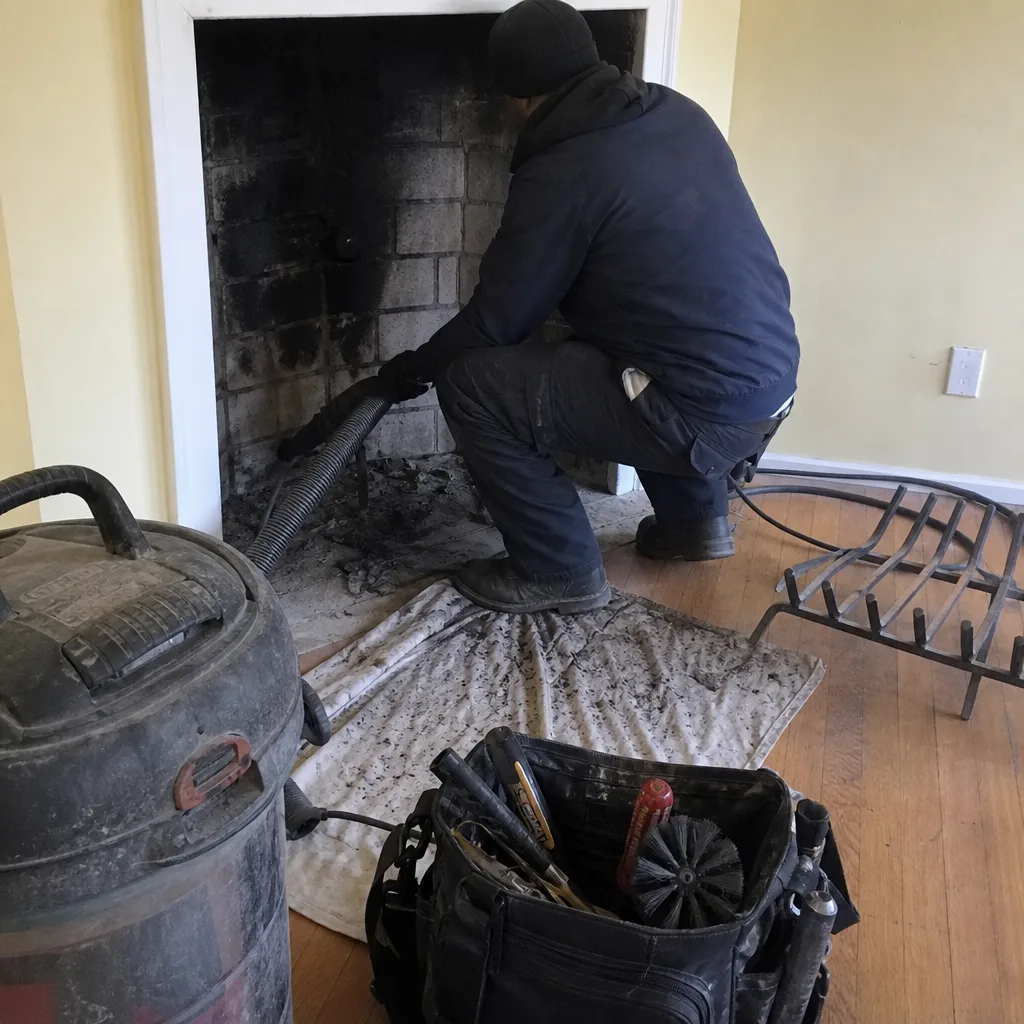 Before
 After
AfterThe Complete Guide to Chimney Cleaning in Astoria
The most dangerous chimney in Astoria isn’t the one with visible soot. It’s the one whose owner has a receipt that says “inspected and cleaned” and no photo evidence of what was actually inside. In a borough where attached brick row houses share party walls and flues run side by side, a chimney problem three doors down can alter the draft in your own fireplace. This guide walks through what chimney cleaning actually removes, what it can’t fix, what a legitimate inspection should document, and how to read the report you’re handed when the job is done. For more guides & resources on keeping your home safe, see our full collection. If you own a home in Astoria with a working fireplace, wood stove, or gas insert, this is the reference you’ll want before you book anyone.
Quick Answer
Chimney cleaning in Astoria typically costs between $189 and $389 for a standard sweep, depending on fuel type, flue condition, and accessibility. A proper cleaning removes creosote, soot, and debris that can ignite or block exhaust gases. But cleaning alone is not an inspection: a legitimate service includes a camera scan documenting liner condition, creosote classification, and any obstructions, with before-and-after photos you keep.
Table of Contents
- What Chimney Cleaning Actually Removes
- Cleaning vs. Inspection: Two Separate Tasks
- How Often Should You Clean Your Chimney in Astoria?
- What Astoria’s Housing Stock Means for Your Chimney
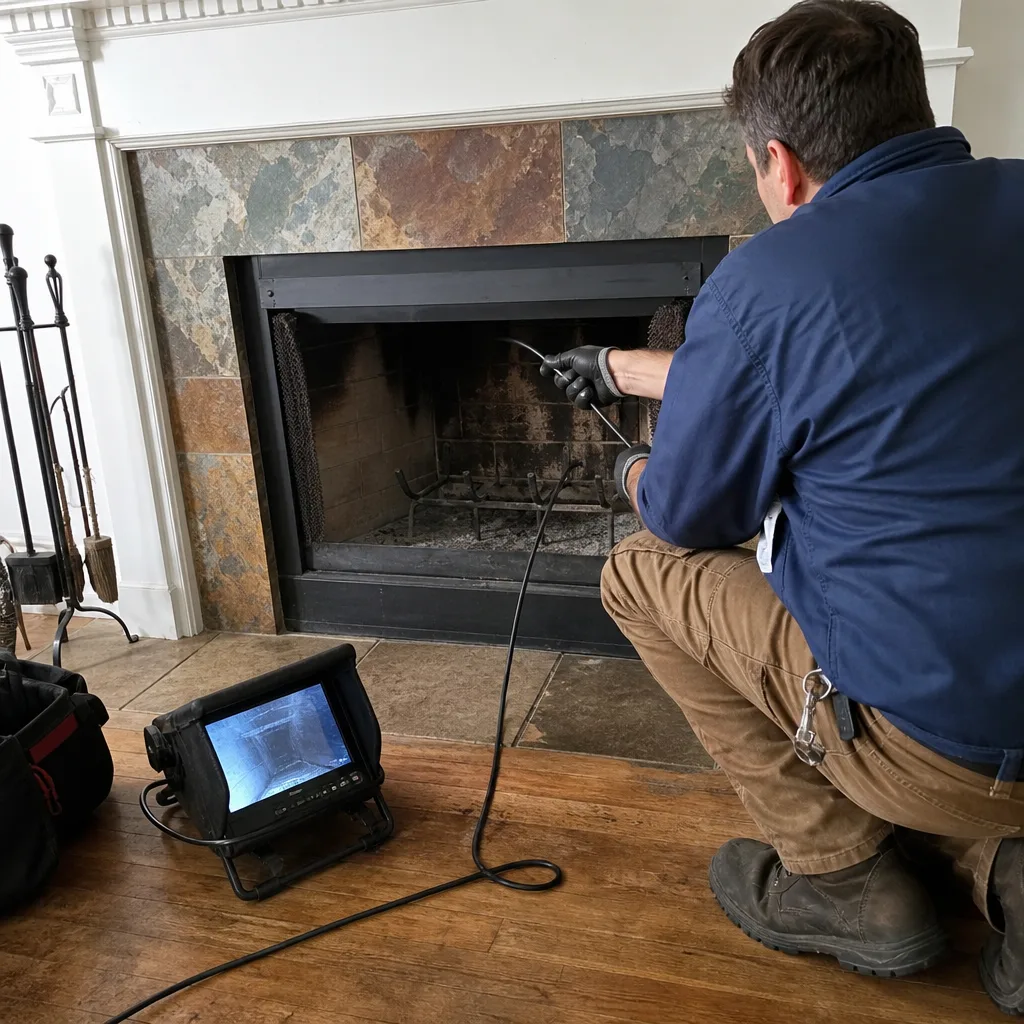
- What a Camera Scan Reveals That a Flashlight Misses
- How to Read Your Post-Cleaning Documentation
- What Chimney Cleaning Costs in Astoria
- What You Can Check Yourself (and What You Shouldn’t)
 Before
 After
AfterWhat Chimney Cleaning Actually Removes
A chimney sweep removes three things: creosote, soot, and debris. The distinction matters because each one signals something different about how your fireplace or stove is performing.
Creosote is the tar-like residue that condenses on flue walls when wood smoke cools before it exits the chimney. It comes in three classes. Class I is a fine, dusty film that brushes off easily. Class II is thicker, flaky, and requires mechanical scraping. Class III is hardened, glazed, and looks like black glass: it’s the form most likely to fuel a chimney fire, and it often requires chemical treatment or removal by a professional with rotary tools.
Soot is the fine black powder produced by incomplete combustion. It accumulates faster in fireplaces that burn unseasoned wood, or in flues that are oversized for the appliance they serve. Soot is easier to remove than creosote, but its presence tells you combustion isn’t as efficient as it should be.
Debris includes anything that didn’t come from burning fuel: leaves, twigs, nesting material from birds or squirrels, broken mortar fragments, and occasionally a dead animal. In Astoria’s tree-lined blocks near Astoria Park and along Ditmars Boulevard, leaf litter and squirrel nests in uncapped flues are common findings during fall cleanings.
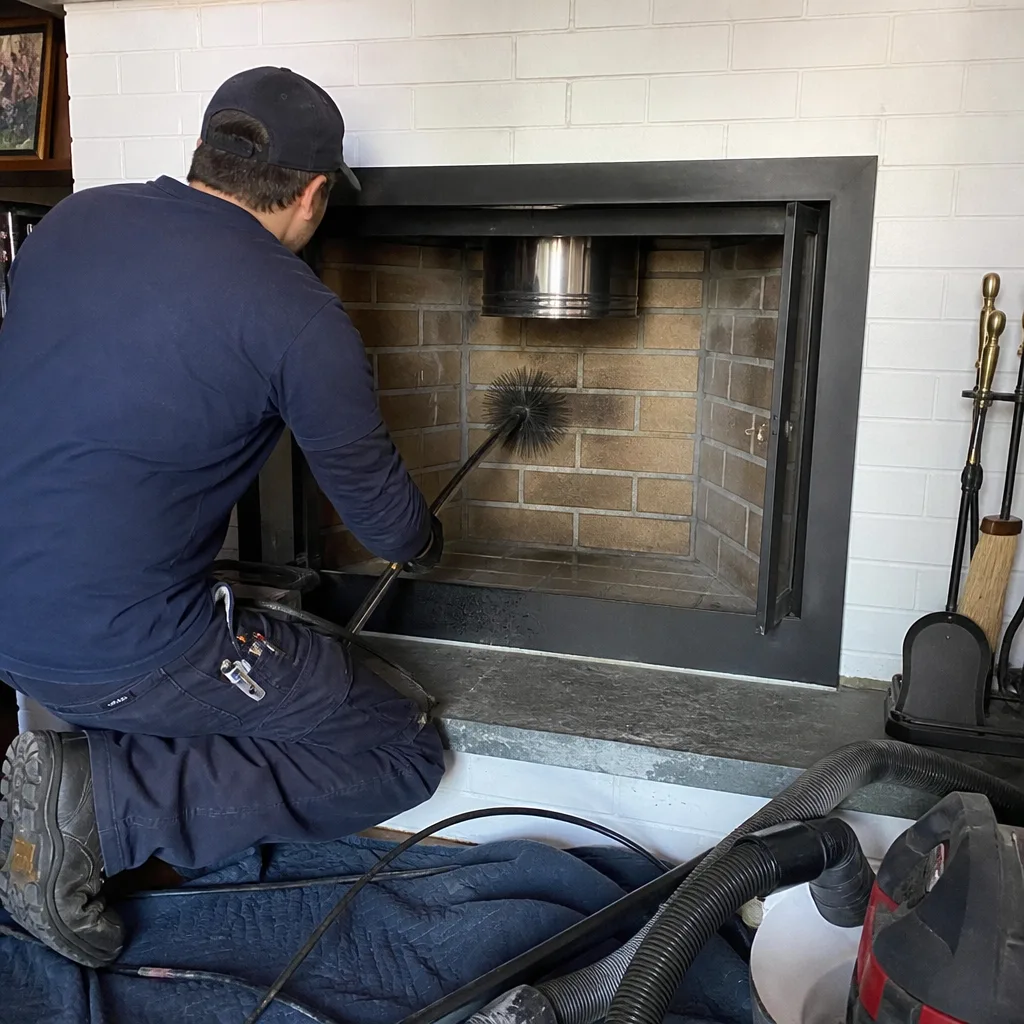
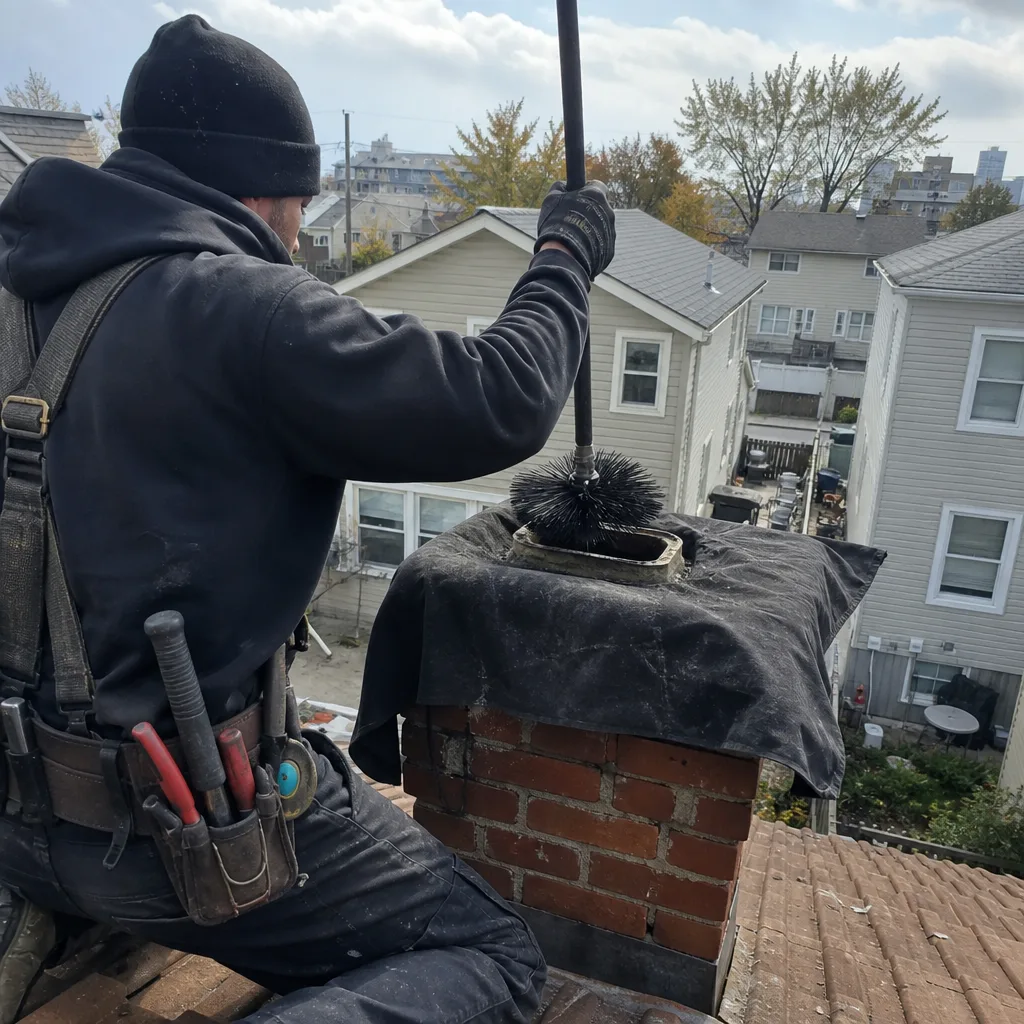
The cleaning process itself is straightforward: a sweep uses brushes sized to your flue, works from the roof or up from the firebox, and removes the loosened material with a HEPA-filtered vacuum to keep it out of your living space. A proper job includes cleaning the smoke chamber and smoke shelf, the angled area above the firebox where creosote and debris collect out of sight.
Quick Answer: Cleaning removes creosote (the fire risk), soot (the efficiency signal), and debris (the blockage risk). If your sweep can’t tell you which of these they found and in what quantity, you didn’t get a cleaning: you got a dusting.
Why Creosote Class Matters More Than “Clean”
A flue can look clean to the naked eye and still carry a Class II creosote layer inside the smoke chamber or above the smoke shelf. That’s why the creosote classification belongs on your post-cleaning record. It tells you whether the chimney is safe to use now, and what to change about your burning habits before next season.
Key Takeaways: What Cleaning Removes
- Creosote has three classes: Class I (dust), Class II (flakes), Class III (glazed, high fire risk)
- Soot accumulation signals inefficient combustion, usually from wet wood or an oversized flue
- Debris in Astoria flues is often leaf litter, squirrel nests, or broken mortar
- A legitimate sweep cleans the smoke chamber and smoke shelf, not just the visible flue walls
- Always ask for the creosote class in your post-cleaning record
Cleaning vs. Inspection: Two Separate Tasks
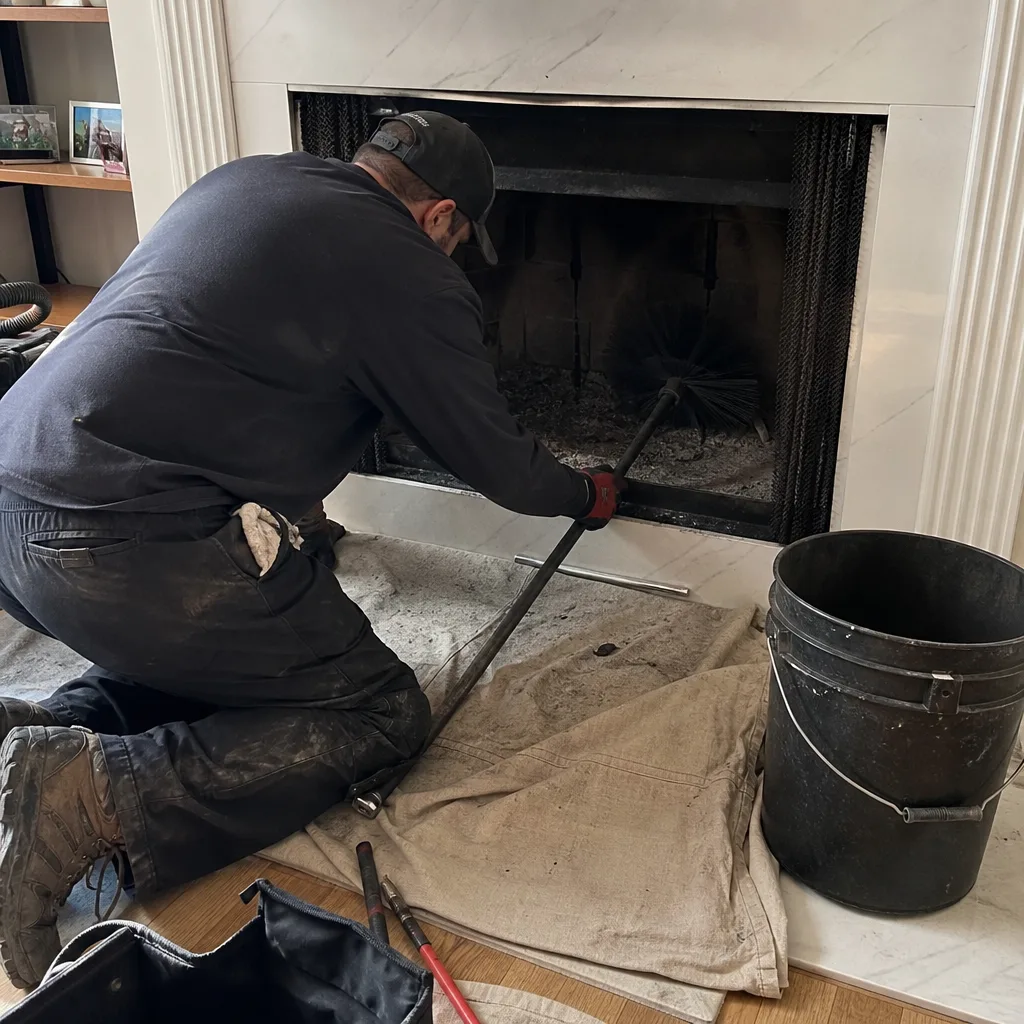
Here’s the single most important thing this guide will tell you: cleaning and inspection are two different jobs, and bad contractors bundle them into one vague line item. A sweep removes deposits. An inspection documents condition. One is about what’s in the chimney now. The other is about whether the chimney will function safely next month, next season, or five years from now.
NFPA 211, the national standard for chimneys and vents, defines three inspection levels. A Level 1 inspection is a visual check of readily accessible areas, done during routine cleaning. A Level 2 inspection adds a camera scan of the entire flue interior, including the portions above the roofline and below the smoke shelf that no mirror can reach. A Level 3 inspection involves partial demolition to access concealed areas, typically after a fire or structural event.
Most homeowners think they’re getting a Level 2 inspection when they book a “cleaning and inspection” for $199. What they often get is a Level 1 visual look, or no inspection at all, just a sweep. Then a receipt arrives that says “inspected and cleaned.” That receipt is the dangerous kind: it creates confidence without evidence.
At Level Two Chimney Astoria, the camera scan has been standard on every visit since 2009. Not as an upsell. Not when the tech “sees something concerning.” Every visit. That practice became Clause 4 of the Haven Standard, the operating standard this company has worked under since its founding: a documented photo record on every job, not an optional add-on.
Why does this matter? Because a mirror shows you the first two feet of flue. A camera shows you the full run: the smoke chamber, the smoke shelf, the liner seams, the flue tile joints, the chimney crown. If a liner crack exists at the 20-foot mark, a mirror will never see it. A camera will.
What You Should Receive After a Proper Inspection
- Before-and-after photos of the flue interior, labeled with date and job number
- Creosote class noted in writing (Class I, II, or III)
- Measurements of any obstructions found: nest diameter, debris depth, blockages at the smoke shelf
- Liner condition described in plain terms: intact, cracked, spalling, or missing sections
- A written scope of recommended work, priced in writing, separate from the cleaning bill
If your sweep hands you a receipt and nothing else, you didn’t get inspected. You got cleaned, and you’re gambling on the rest.
How Often Should You Clean Your Chimney in Astoria?
The honest answer: it depends on what you burn, how often you burn it, and what the last inspection found. Cleaning frequency is fuel- and usage-dependent, not calendar-dependent. A gas insert used twice a week needs different scheduling than a wood-burning fireplace used nightly from November through March.
Here are the working guidelines we use in Astoria:
| Fuel Type | Typical Usage | Recommended Cleaning Interval |
|---|---|---|
| Wood-burning fireplace | Nightly, November-March | Every 30-40 fires, or once mid-season |
| Wood-burning fireplace | Occasional (weekends, holidays) | Once per year, before first burn |
| Wood stove | Primary heat source | Every 1-2 cords of wood burned |
| Gas insert / gas fireplace | Regular use, any frequency | Annually, for venting check and debris removal |
| Oil furnace flue | Seasonal heating | Annually, before heating season |
| Unused fireplace (decorative only) | None | Inspect every 2 years, clean as needed |
These numbers shift based on what a camera finds. A flue with light Class I creosote after 30 fires can go longer. A flue with Class II buildup after 20 fires needs attention now, and likely a change in wood type or burning technique.
Astoria’s fall and winter weather pushes this schedule. The heating season runs roughly October through April, with the coldest stretch from December through February. If you haven’t used the fireplace since March, a crack, nest, or debris blockage may have developed over the summer. That’s why the first cleaning of the season matters most: it clears whatever moved in while you weren’t looking.
Quick Answer: Most wood-burning fireplace owners in Astoria need one to two cleanings per year. Gas insert owners need one annual venting check. The only way to know your actual interval is to see what the last cleaning found.
What Astoria’s Housing Stock Means for Your Chimney
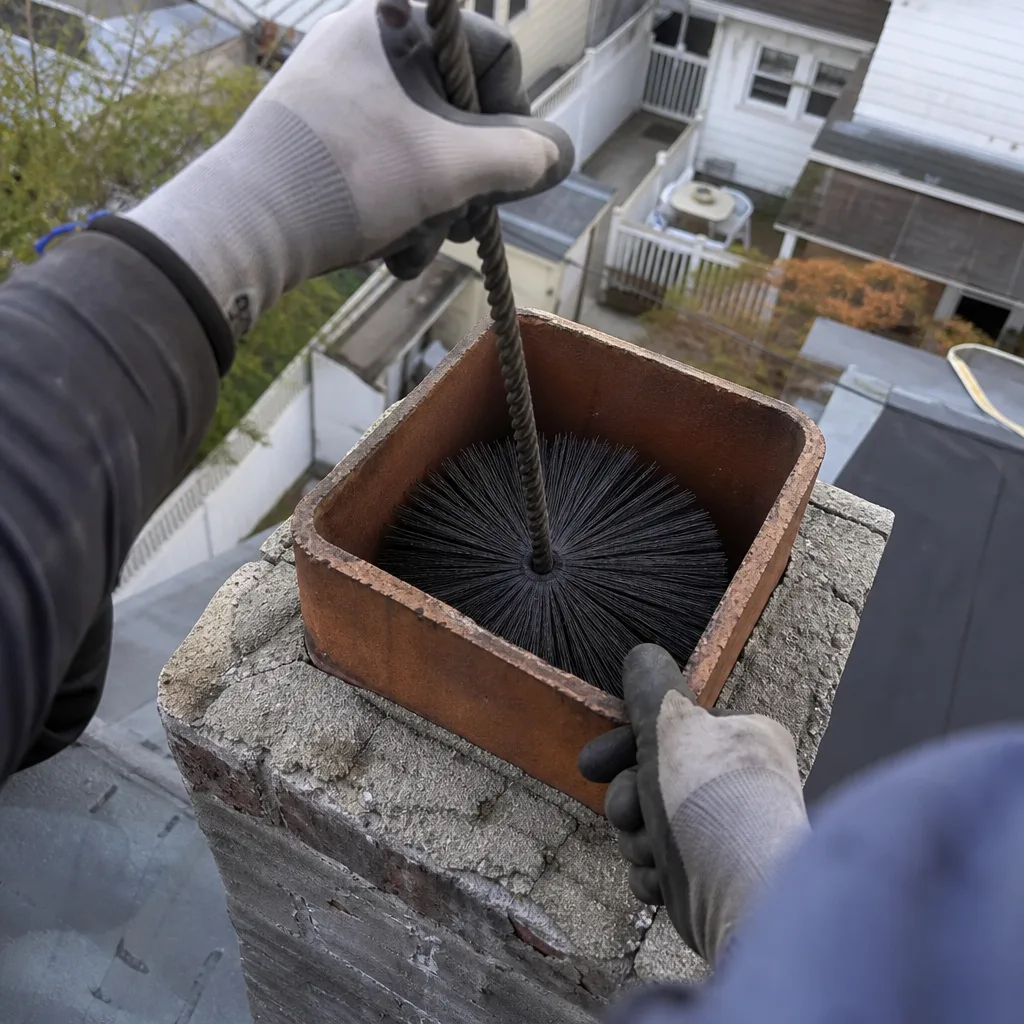
Astoria’s buildings share walls, rooflines, and sometimes flues. That changes the risk profile compared to a detached house with a single chimney on its own roof.
Most single-family and two-family homes in Astoria were built between 1900 and 1940. Their chimneys are masonry, often unlined or lined with original clay tile, and they’ve been exposed to a century of freeze-thaw cycles in Queens. Older rowhouses along 30th Avenue, 31st Street, Steinway Street, and the blocks around Astoria Boulevard typically have attached or semi-attached construction: your flue and your neighbor’s flue may run parallel through the same masonry mass, separated by a single wythe of brick.
That has real consequences. If a neighbor’s chimney has a liner crack that allows heat or gases into the shared masonry, it can pressurize the cavity that also contains your flue. You may notice draft problems, smoke backing into your living room, or a smell you can’t place coming from the fireplace even when it isn’t in use. In attached housing, a chimney problem three doors down can present as a problem in your home.
Astoria’s location on the East River also matters. The marine air carries more moisture than inland Queens, and that moisture accelerates spalling: the flaking or crumbling of brick and mortar caused by water absorption and freeze-thaw cycling. Chimney crowns, the concrete caps at the top of the flue, are particularly vulnerable. A cracked crown lets water into the masonry, and from there into the flue, and from there into your walls.
There’s also the leaf factor. Astoria’s street trees, particularly the London planes and oaks common along residential blocks, shed heavily in fall. An uncapped flue collects leaves fast, and leaves become a blockage, and a blockage becomes a carbon monoxide risk when you light that first fire in November.
Quick Answer: Astoria’s attached housing, century-old masonry, marine air, and street trees combine to make chimney problems more common and more consequential than in detached suburban homes. Shared walls mean shared risks.
What This Means for Your Cleaning Schedule
If you live in an attached rowhouse, you should not assume your chimney is clean because you haven’t used it. Squirrels, raccoons, and birds don’t check your usage schedule. Nesting happens in spring and summer, and a nest in your flue doesn’t care whether you burn wood or gas or nothing at all. Annual inspection matters for every Astoria chimney, used or not, because the threats come from outside as often as from inside.
What a Camera Scan Reveals That a Flashlight Misses
A mirror shows you a few feet. A camera shows you everything. Here’s what a legitimate camera scan of an Astoria chimney typically reveals, and what each finding means in plain terms.
Liner Cracks and Gaps
The flue liner is the barrier between combustion gases and the masonry around them. Clay tile liners crack from thermal stress: decades of heating and cooling, sometimes compounded by a chimney fire the previous owner never mentioned. A cracked liner allows heat, gas, and creosote vapor to move into the surrounding masonry, where it can ignite or seep into living spaces. Camera scans catch these cracks early, when repair is still a liner or a HeatShield resurfacing, not a full rebuild.
Blockages Above the Smoke Chamber
The smoke chamber is the cone-shaped area above the firebox. The smoke shelf is the flat ledge at its base. Debris collects there because it’s out of sight and awkward to reach with standard brushes. Nests, leaves, and decades of creosote buildup hide at the smoke shelf. A camera sees them. A flashlight, aimed up from the firebox, usually doesn’t.
Mortar Deterioration at the Smoke Shelf
The mortar joints at the smoke shelf take a beating: they’re exposed to the hottest gases as they pass from firebox to flue. Over time the mortar crumbles, and the gaps left behind trap creosote and soot. This is a fire hazard and a draft problem, and it’s invisible without a camera or a dismantled smoke chamber.
Flue Tile Misalignment
In older Astoria chimneys, clay tiles can shift or separate at the joints. The result is a ledge inside the flue where creosote collects and exhaust swirls. Misalignment is rarely visible from either end; it takes a camera traveling the full length of the flue.
Since 2009, the camera scan has been the default at Level Two Chimney Astoria, not an upgrade. Clause 4 of the Haven Standard puts it in writing: a documented photo record on every job. That means you leave every appointment with images of your flue interior, not just a technician’s verbal summary.
How to Read Your Post-Cleaning Documentation
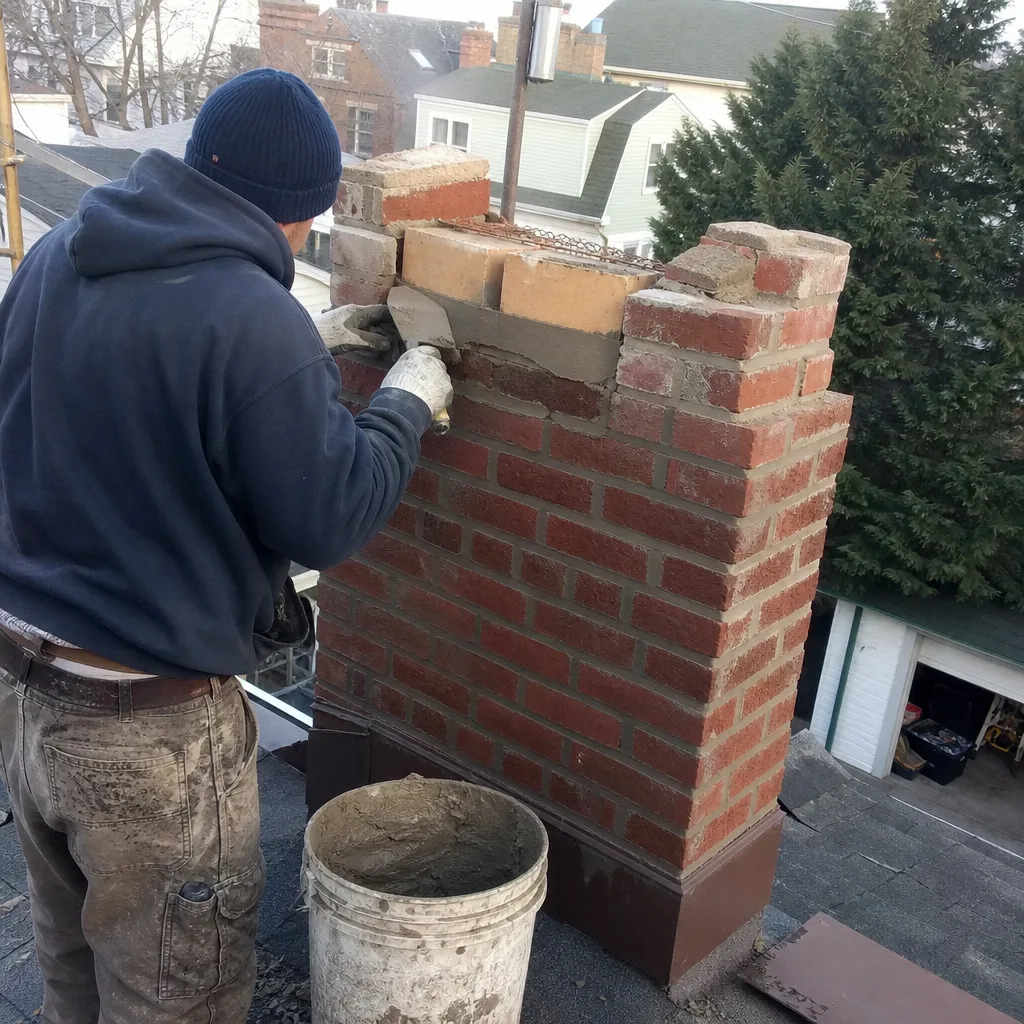
The documentation you receive after a chimney cleaning is the difference between knowing what happened and hoping nothing bad was missed. A legitimate record contains specific information, presented in plain language. Here’s what to look for.
Before-and-After Images
You should see the flue before cleaning and after cleaning. The before images show what was there: creosote coverage, debris, blockages. The after images show what’s gone and what remains. If a liner crack or spalling area was found, it should be visible in the after photos, labeled so you can point to it.
Creosote Class Noted
The record should state the creosote classification in writing: Class I, II, or III. It should also note where in the flue the heaviest accumulation was found. “Class II at smoke chamber, Class I above” tells you a lot more than “some buildup.”
Obstruction Measurements
If anything was blocking the flue, the record should include its measurement: nest diameter, debris depth, the vertical location of the obstruction. This matters for two reasons. It tells you whether the blockage was a one-time event or a recurring problem, and it gives you a baseline for next year’s scan.
Liner Condition Description
The record should describe the liner in words you understand: “intact clay tile, no cracks observed,” “hairline crack at 15-foot mark, monitor,” or “spalling at multiple joints, repair recommended.” Each finding should include a plain-language explanation of what it means and whether action is needed now or can wait.
Written Scope of Recommended Work
If the sweep recommends repairs, you should receive a written scope with a written price. Not a verbal estimate. Not a “we’ll send something later.” Clause 1 of the Haven Standard (H.A.V.E.N., “Have it in writing”) requires a written price, written scope, and written warranty before any work starts. You should have the same standard for any contractor in your home.
Here’s a working example of what a legitimate post-cleaning record looks like:
- Before photo: Class II creosote on flue walls, full length
- After photo: flue walls clean, Class II removed
- Finding: nest at 12-foot mark, 8-inch diameter, removed
- Finding: hairline crack at 22-foot mark, clay tile, monitor
- Finding: minor spalling at crown, no immediate action
- Recommendation: crown seal application within 12 months, $425 written estimate provided
- Creosote class: Class II removed, no Class III observed
That’s the standard. If the record you’re handed is a one-line receipt, you’re owed more.
What Chimney Cleaning Costs in Astoria
The cost of a chimney sweep in Astoria varies with fuel type, flue condition, accessibility, and what the last inspection found. Here’s a breakdown of what you should expect to see in a written estimate.
| Service | Typical Range in Astoria | What It Includes |
|---|---|---|
| Standard chimney sweep (wood-burning, single flue) | $189-$249 | Full flue brushing, smoke chamber cleaning, HEPA vacuum, creosote class noted |
| Standard sweep + camera scan inspection | $279-$349 | All of the above plus full-flue camera scan and photo record |
| Gas fireplace venting check and cleaning | $149-$199 | Venting system inspection, debris removal, log set cleaning |
| Oil furnace flue cleaning | $189-$249 | Flue brushing, connector pipe cleaning, draft check |
| Class III creosote removal | $350-$500 | Chemical treatment plus mechanical removal, requires additional time and tools |
| Multi-flue rowhouse (2 flues) | $329-$449 | Both flues swept, camera scan both, shared masonry noted |
These prices assume a standard two-story Astoria rowhouse with accessible roof access. Multi-story buildings, steep roof pitches, or flues that haven’t been cleaned in several years may run higher. The price should always be written before work begins, with no surprise charges added after the fact.
Quick Answer: Expect $189 to $389 for most Astoria chimney cleanings. The upper end reflects camera-scan documentation, multiple flues, or creosote that requires chemical treatment. Always get a written price before work starts.
Why the Cheapest Sweep Is Usually the Most Expensive
A $99 chimney sweep sounds like a deal until you consider what that price buys. At that rate, the company is covering a truck, a tech, insurance, and fuel, and still turning a profit. Something gets skipped: the camera scan, the smoke chamber cleaning, the documentation, or the inspection entirely. You get a brushing and a receipt. Six months later, when a liner crack you never knew about causes a problem, the repair bill makes the $99 look like a rounding error.
The wrote price matters more than the low price. A written scope tells you what you’re getting before the tech arrives at your door, not after. If a company won’t put a price in writing, that’s your signal to call someone else.
What You Can Check Yourself (and What You Shouldn’t)
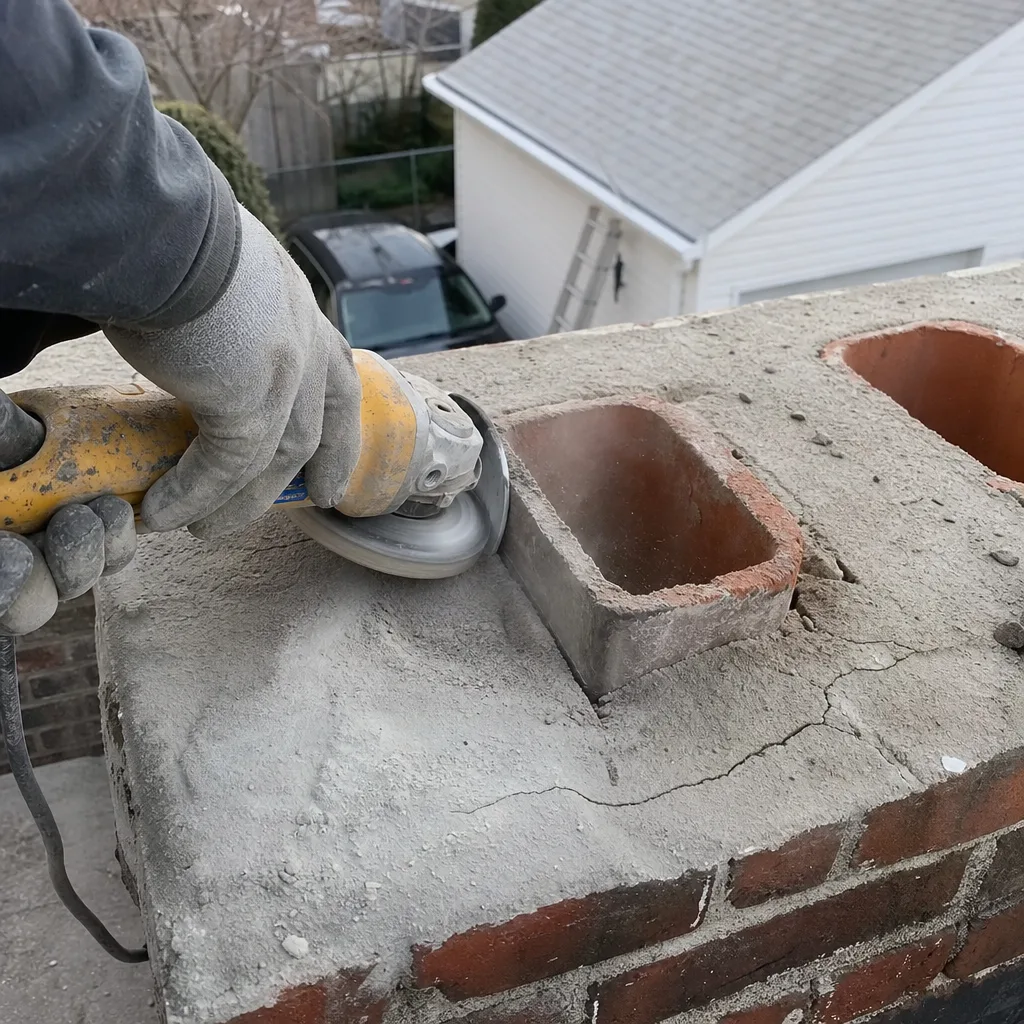
Here’s the safety note up front: chimney work at height or inside a flue is not a DIY task. Rooftop work in Astoria means navigating a steep pitch, often on a shared roofline, with a drop to brick or concrete below. Inside the flue, you’re working in a confined space with creosote, which is a respiratory irritant and a carcinogen. There are things you can safely check from the ground. The rest belongs to a trained, equipped professional.
What You Can Check from Inside Your Home
- Look up from the firebox with a flashlight. You’ll see the first few feet of the flue. If you see heavy black buildup, animals, or light coming from where it shouldn’t be, that’s enough to warrant a professional look.
- Check for moisture stains on the ceiling or walls near the chimney. Water intrusion shows up as brown stains, peeling paint, or efflorescence (white mineral deposits) on brick.
- Note any unusual smells. A strong smoky odor when the fireplace isn’t in use can indicate a draft problem or a blockage.
- Listen for animals. Scratching, chirping, or fluttering from the chimney area usually means a nest.
- Observe the smoke when you have a fire. If smoke enters the room instead of drafting up the flue, stop using the fireplace and call a professional. That’s a sign of blockage or draft failure.
What You Should Never Attempt
- Climbing onto a roof without proper safety gear and training. Astoria rooflines are steep, often slate or tile, and shared with neighbors. A fall from even a two-story roof can be fatal.
- Using chemical creosote removers without knowing your creosote class. Some products are designed for Class I only. Applying the wrong chemical to glazed creosote can make it harder to remove.
- Attempting a liner repair or replacement. A flue liner is a safety component. Improper installation creates a carbon monoxide and fire risk.
- Anything involving a damaged or collapsed flue. If you suspect structural damage, the fire is not safe to use until a professional has assessed it. Full stop.
If you see something that concerns you, the next step is a professional chimney cleaning and camera scan in Astoria. Not a YouTube video, not a friend with a ladder. The risks aren’t worth the savings.
Common Mistakes to Avoid
- Assuming a receipt means an inspection happened. A receipt that says “cleaned” tells you nothing about liner condition or creosote class. If there are no photos, there was no real inspection.
- Scheduling cleaning in December and being surprised there’s a wait. Fall is the busy season for every chimney service in Queens. Book your first cleaning in September or October, before the heating rush.
- Burning unseasoned wood to save money. Wet wood produces more creosote and less heat. You’ll pay more in cleaning and repair than you saved on the wood.
- Ignoring the fireplace because you “only use it a few times a year.” Occasional use doesn’t prevent nests, moisture damage, or liner deterioration. In attached Astoria housing, your neighbor’s problems can affect your flue even if you never light a fire.
- Hiring a “handyman” with a brush and no camera. Chimney sweeping is a skilled trade with real safety consequences. A trained sweep has the equipment, the insurance, and the documentation standards to do the job right.
- Accepting a verbal quote. If the price isn’t in writing before work starts, you have no protection against surprise charges. Insist on a written scope, written price, and written warranty.
- Skipping the cap. A chimney cap costs under $150 at most supply houses and prevents most debris, animal, and water intrusion. It’s the cheapest insurance your chimney can have.
When to Call a Professional
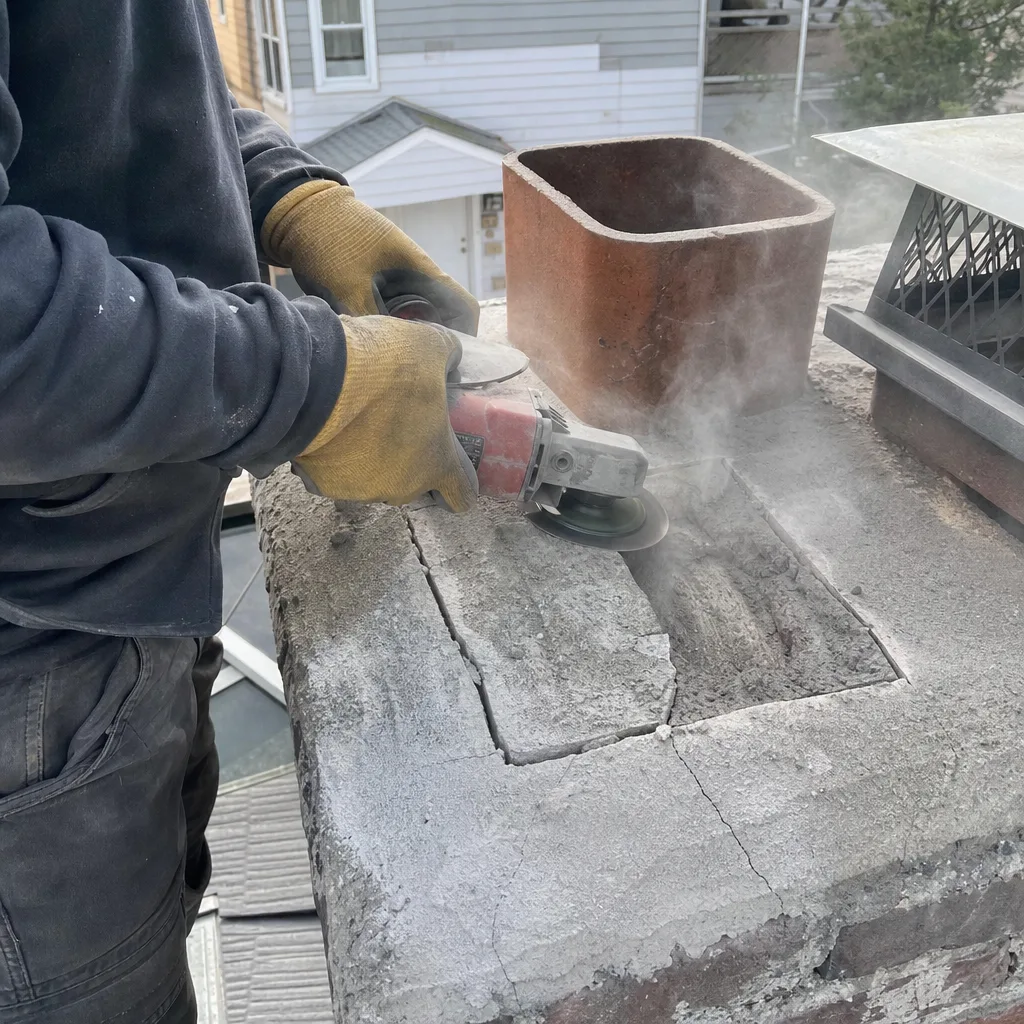
Call a professional chimney sweep in the following situations: you haven’t had the chimney cleaned in over a year and use it regularly; you smell smoke or notice soot in the home when the fireplace isn’t running; you hear or see signs of animals in the flue; you see water stains or efflorescence on chimney masonry; your last cleaning produced no documentation; or you’re buying a home in Astoria and want a definitive condition report on the chimney before closing. If any of these apply, and if you’ve noticed draft problems, smoke backup, or a smell you can’t place coming from the fireplace, stop using it and make the call. Chimney repair in Astoria is always cheaper before a small crack becomes a structural problem. Level Two Chimney Astoria offers free estimates in Astoria. Call (516) 301-1549 to schedule a cleaning and camera scan.
Frequently Asked Questions
A standard chimney sweep in Astoria typically costs between $189 and $249 for a wood-burning fireplace, and $279 to $349 when a camera-scan inspection and photo record are included. Gas venting checks run $149 to $199, and multi-flue rowhouses run $329 to $449. Always get a written price before work begins. Call (516) 301-1549 for an exact quote. Estimates are free.
You need a new liner or liner repair if a camera scan shows cracks, gaps, or spalling that allow heat and gases to move into the surrounding masonry. Minor hairline cracks can sometimes be monitored, but a missing tile section or visible separation at the joints is a repair item. No one should recommend a liner replacement without showing you the camera evidence. If a contractor recommends liner work and can’t show you photos, get a second opinion.
Most wood-burning fireplace owners in Astoria need one or two cleanings per year, depending on usage. Gas insert owners need an annual venting check. The only way to know your actual interval is to see what the last cleaning found: creosote class, obstruction history, and liner condition all shift the schedule. Fireplace services in Astoria include a camera-scan record that establishes your baseline.
Skipping cleaning allows creosote to accumulate. Class III creosote is combustible and can fuel a chimney fire, which can crack a flue liner, spread to the roof, and require a full rebuild. Blockages from debris or nests can push carbon monoxide back into your living space. The consequences range from expensive to fatal, and both are preventable with a documented annual cleaning. Call (516) 301-1549 to schedule before the heating season.
A visual inspection from the firebox shows only the first few feet of flue. A camera scan shows the full run: smoke chamber, smoke shelf, liner joints, and flue interior. Problems above the smoke shelf are invisible without it. At Level Two Chimney Astoria, the camera scan has been standard on every visit since 2009 under Clause 4 of the Haven Standard. You should accept nothing less from any sweep.
You should receive before-and-after photos of the flue interior, a written creosote class notation, measurements of any obstructions found, a written description of liner condition, and a written scope and price for any recommended work. A receipt with a single line item is not documentation; it’s a receipt. Insist on the full record. Call (516) 301-1549 to schedule a cleaning that comes with the complete photo record.
The Bottom Line
Chimney cleaning in Astoria is not a single service with a single schedule. It depends on what you burn, how often, what the last camera scan found, and whether your home shares a wall with a neighbor’s flue. A legitimate cleaning removes creosote, soot, and debris; a legitimate inspection documents liner condition, smoke chamber buildup, and flow obstructions with photo evidence. The two are separate tasks, and both are non-negotiable. If your last sweep produced a receipt without photos, that’s the starting point. Call (516) 301-1549. The estimate is free. The evidence is the point.
Written by Corrine Halstead, Owner at Level Two Chimney Astoria, serving Astoria since 2009.