
Last updated September 20, 2026
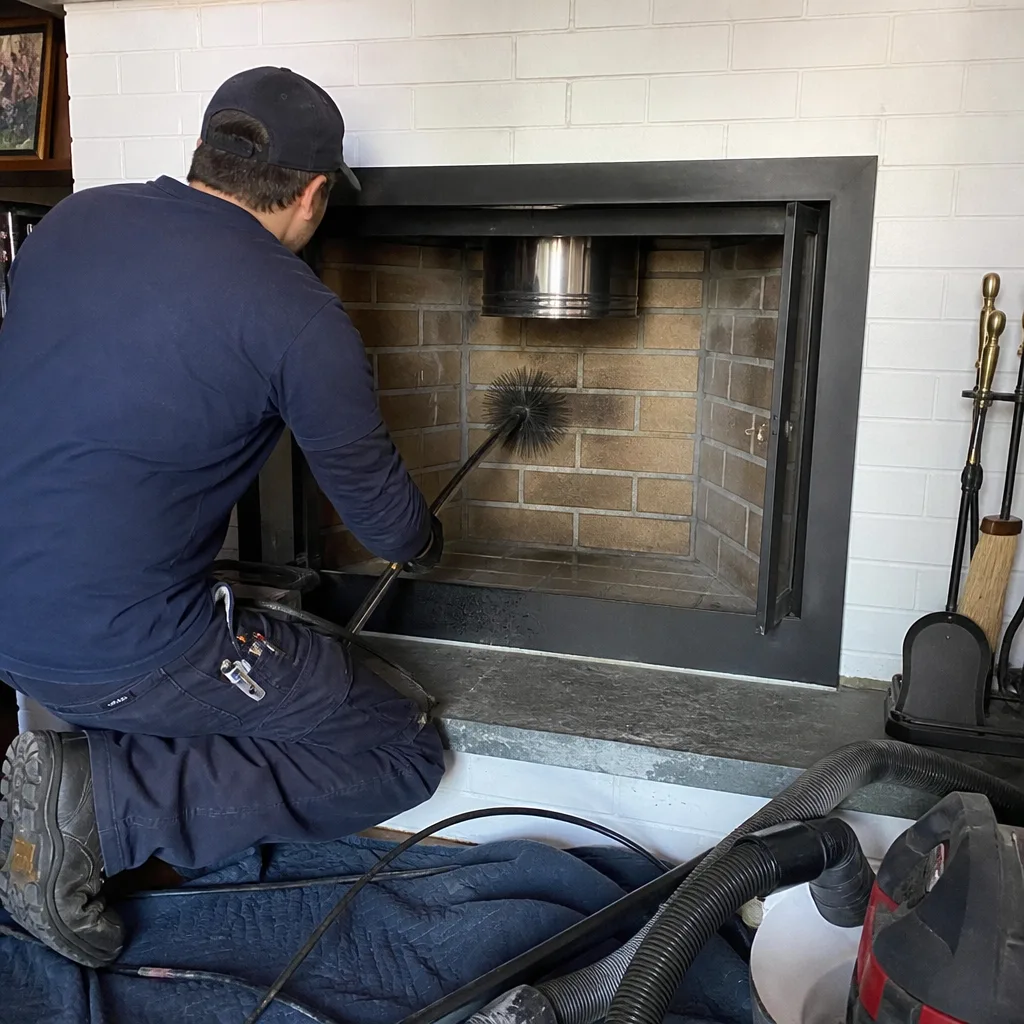
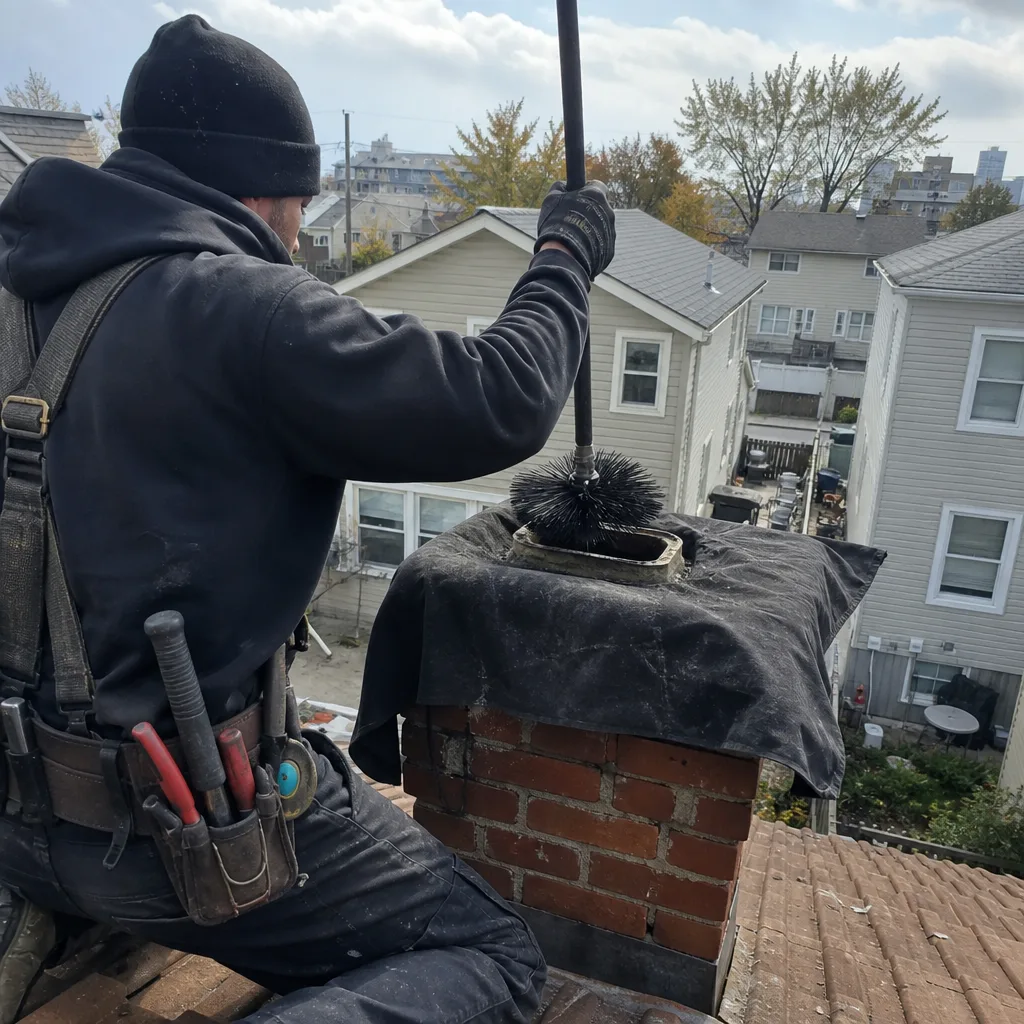
Level 1 sweep and inspection to the NFPA 211 annual standard - flue, crown, cap, and flashing checked and photographed
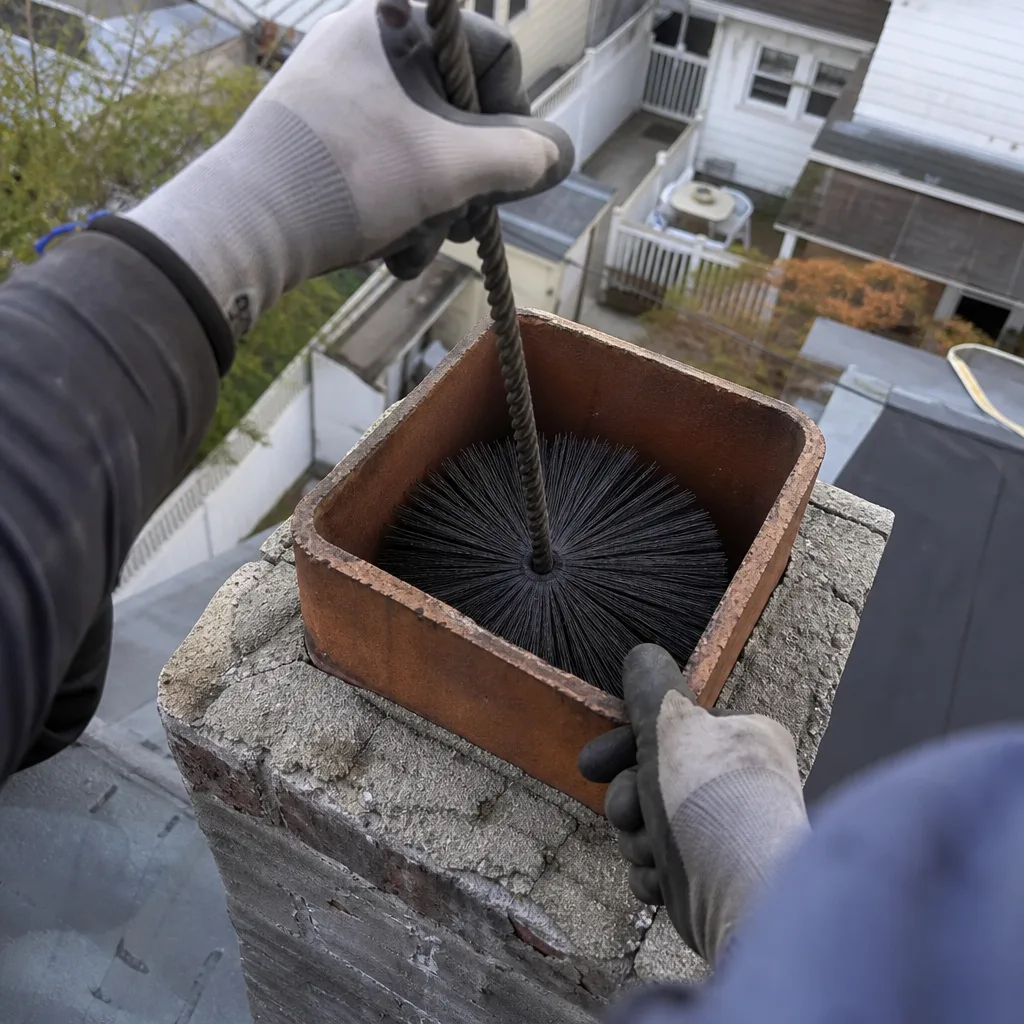
Chimney sweep logs do not sweep chimneys. They loosen some creosote - which then falls where a brush and vacuum still have to collect it.
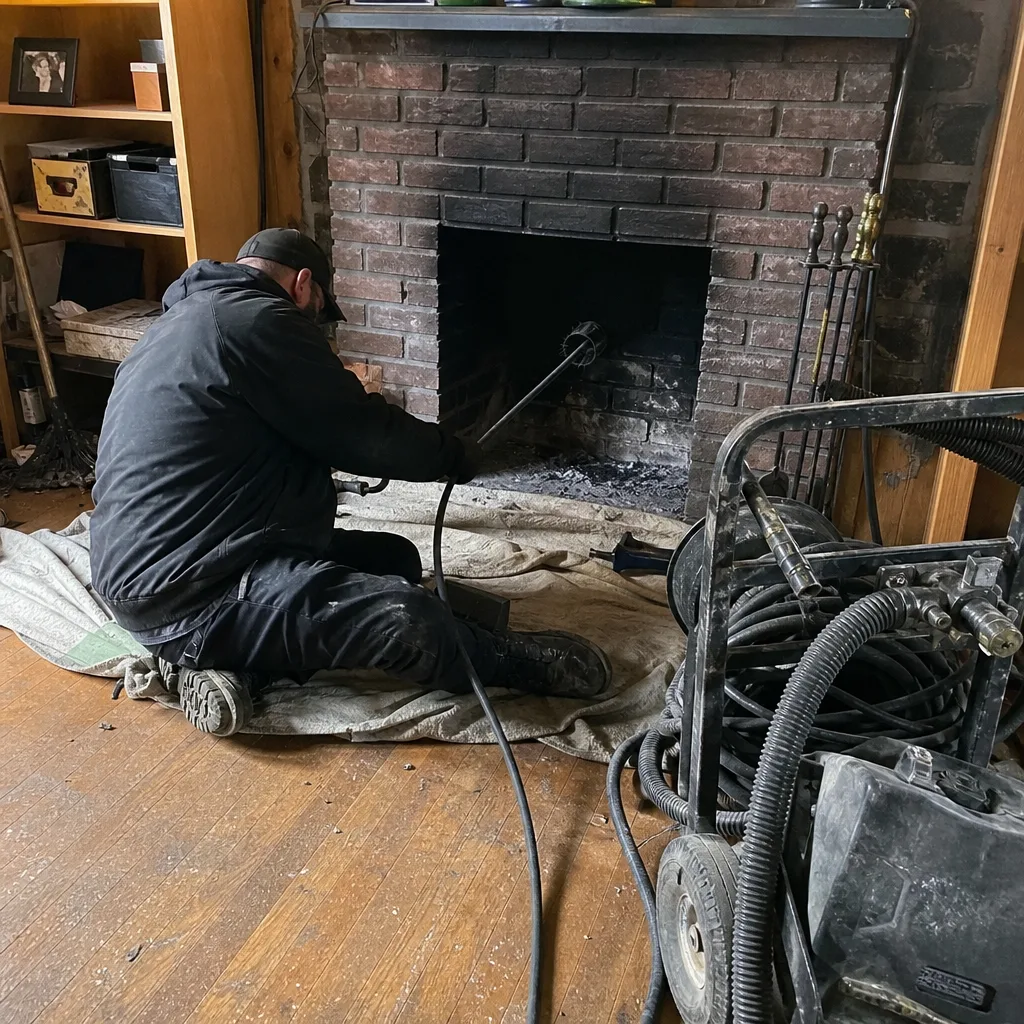 Before
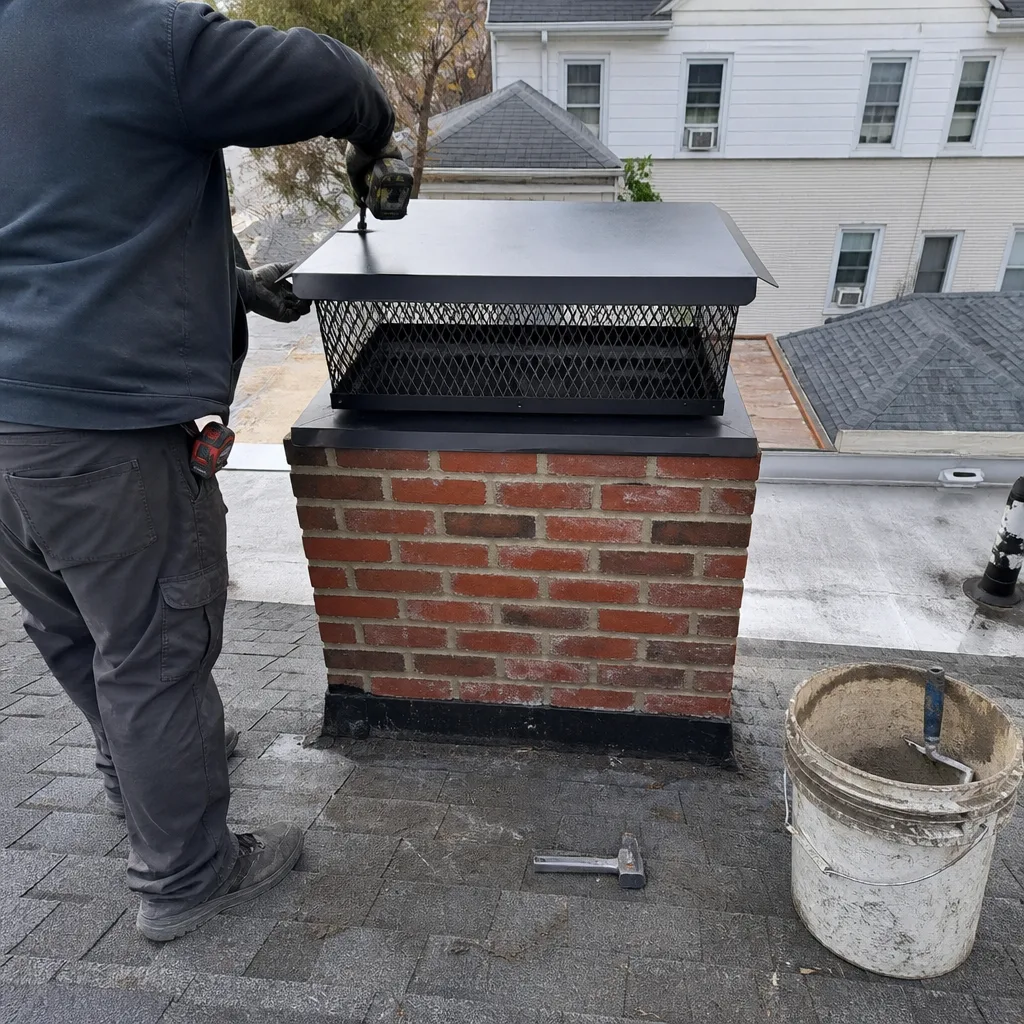 After
After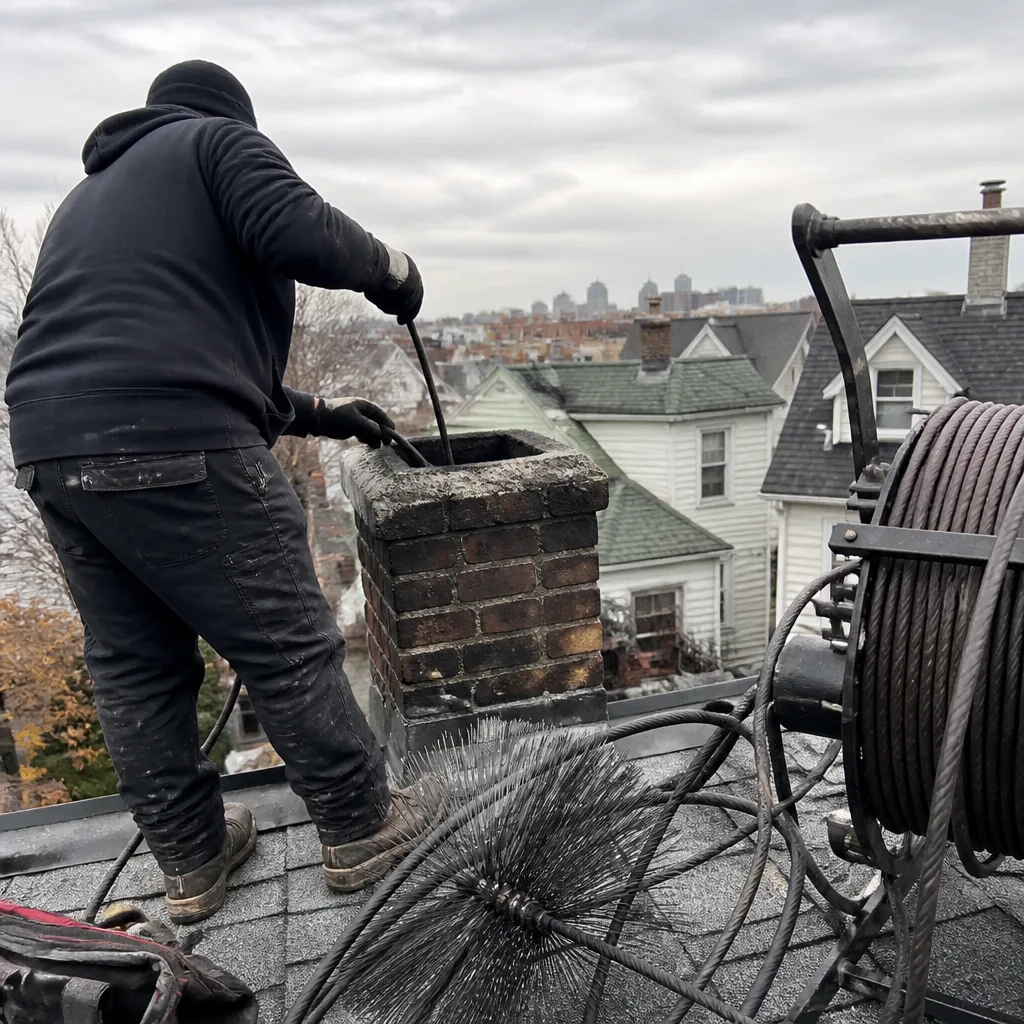 Before
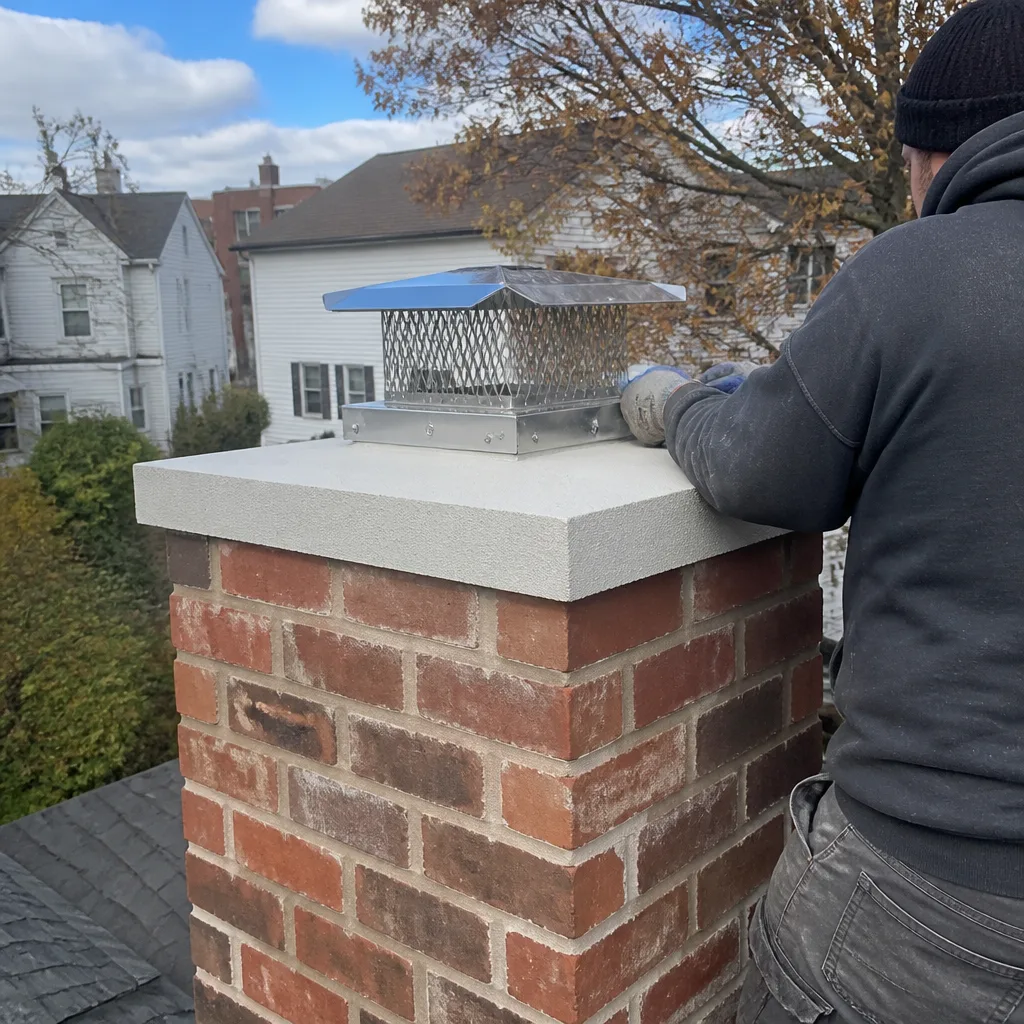 After
After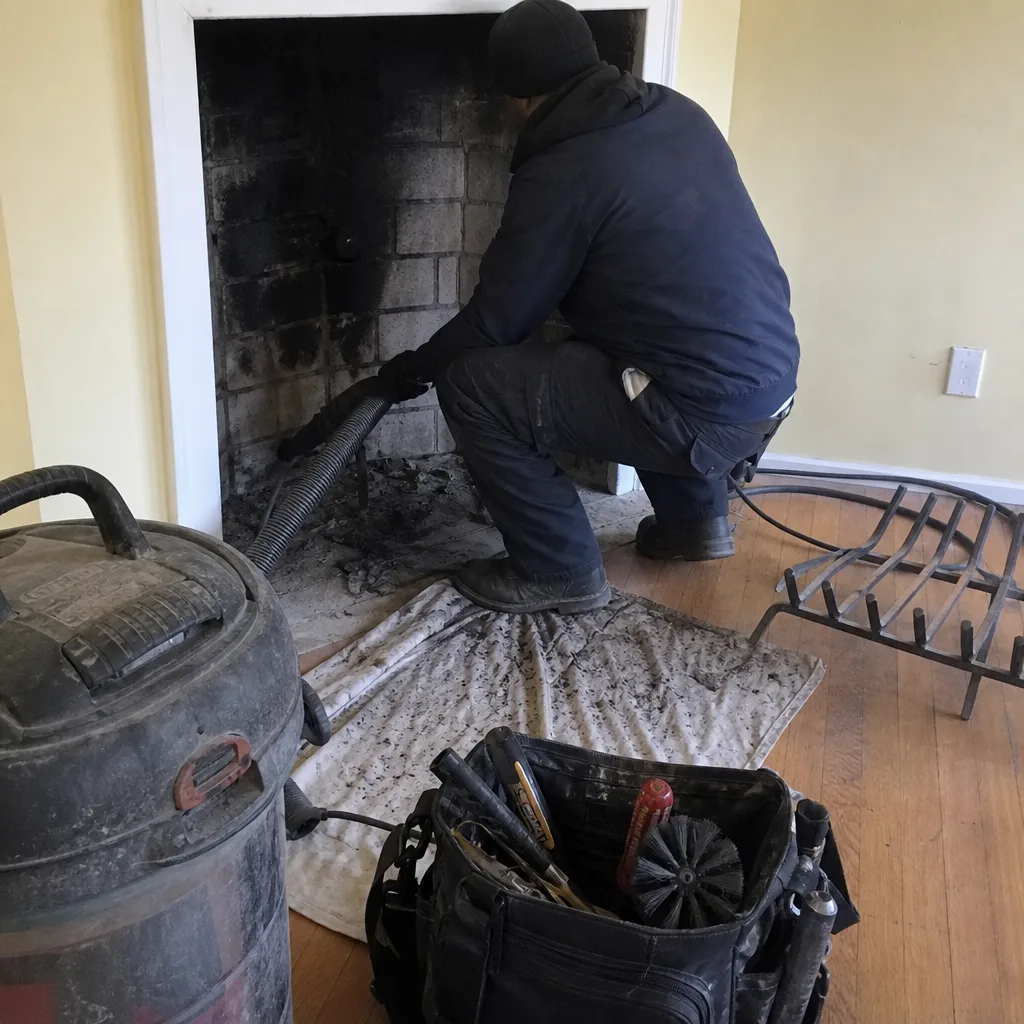 Before
 After
AfterChimney Cleaning & Sweep Maintenance Checklist for Astoria Homeowners
Most chimney checklists are written so a contractor can check every box in under four minutes. This one is written so you can tell whether they did. In Astoria, where row houses and attached homes share party walls and chimney stacks stand inches from a neighbor’s, a lazy sweep isn’t just a wasted fee; it’s a fire risk shared across a property line. This Complete Guide to Chimney Cleaning in Astoria gives you an evidence-based maintenance checklist built around observable findings, not vague advice. You’ll learn which items you can check yourself from the sidewalk or rooftop hatch, which items require a camera down the flue, and what each failed item actually costs if you defer it for one season versus three. By the end, you’ll know exactly what documentation to demand before a sweep starts and how to compare this year’s receipt to last year’s to see whether your chimney is stable, improving, or quietly failing.
Quick Answer
A proper chimney maintenance checklist for Astoria homeowners splits into two layers: items you can observe yourself (crown mortar condition, damper operation, off-season odors, cap rust) and items only a contractor can verify with a camera scan (liner integrity, smoke chamber parging, cap seal at the flue tile). The most important maintenance action in Astoria is Chimney Cleaning & Sweep with an annual NFPA 211 Level 2 camera inspection when creosote buildup reaches 1/8 inch, because wind-driven rain from the East River and salt air corrosion accelerate metal component failure faster than in inland Queens neighborhoods.
Table of Contents
- Owner-Observable Checklist Items: What to Look For From the Ground
- Contractor-Verifiable Items: What Requires a Camera Scan
- Astoria-Specific Failure Patterns: Salt Air, Wind-Driven Rain, and Party Walls
- What Each Failed Item Costs If Deferred: One Season vs. Three
- Pre-Appointment Documentation Checklist: What to Request Before Work Starts
- How to Compare Two Sweep Receipts Year Over Year
- A Seasonal Maintenance Schedule for Astoria Chimneys
 Before
 After
AfterOwner-Observable Checklist Items: What to Look For From the Ground
You don’t need a ladder to collect useful evidence about your chimney’s condition. In Astoria, where most homes are two-to-three-story attached or semi-attached brick buildings, a pair of binoculars from the sidewalk or a look from a rear extension roof gives you a clear sightline to the crown, cap, and upper brick courses. Here’s what to check and what each finding means.
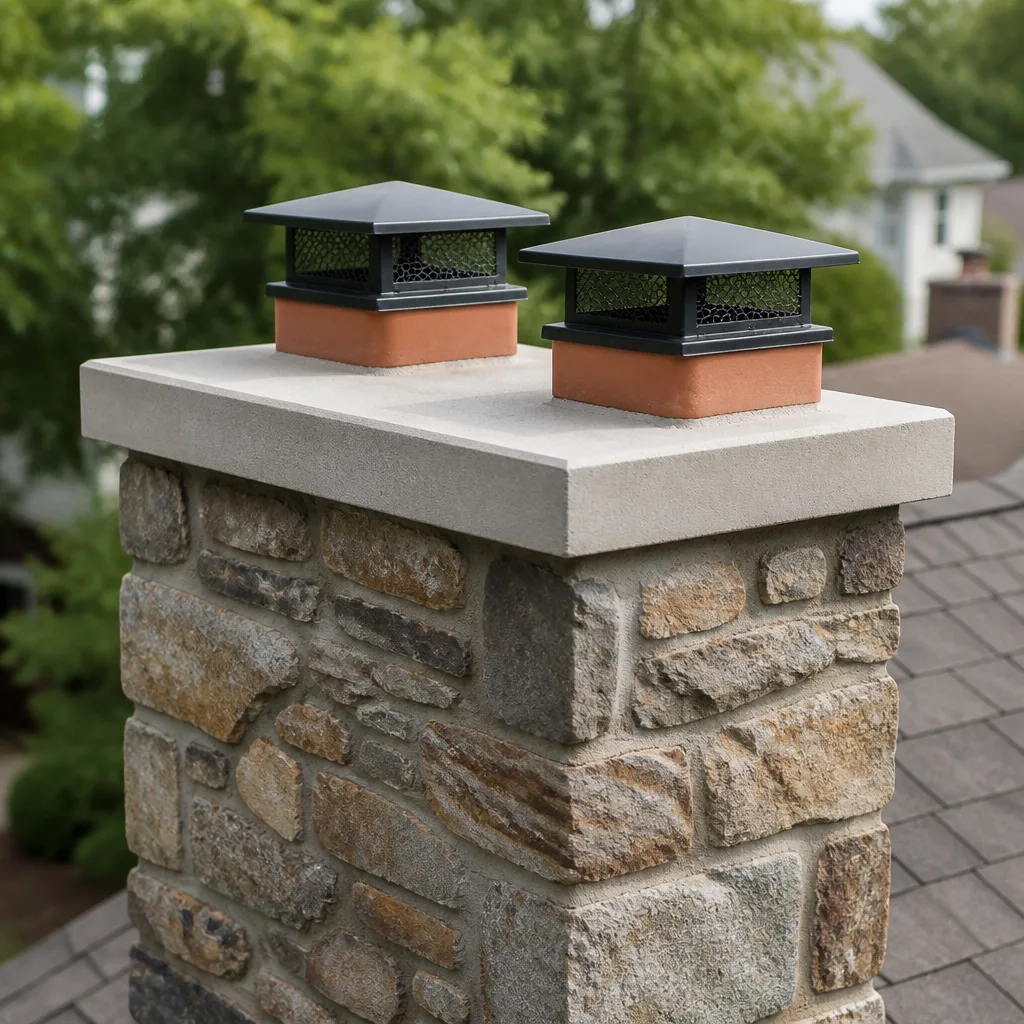
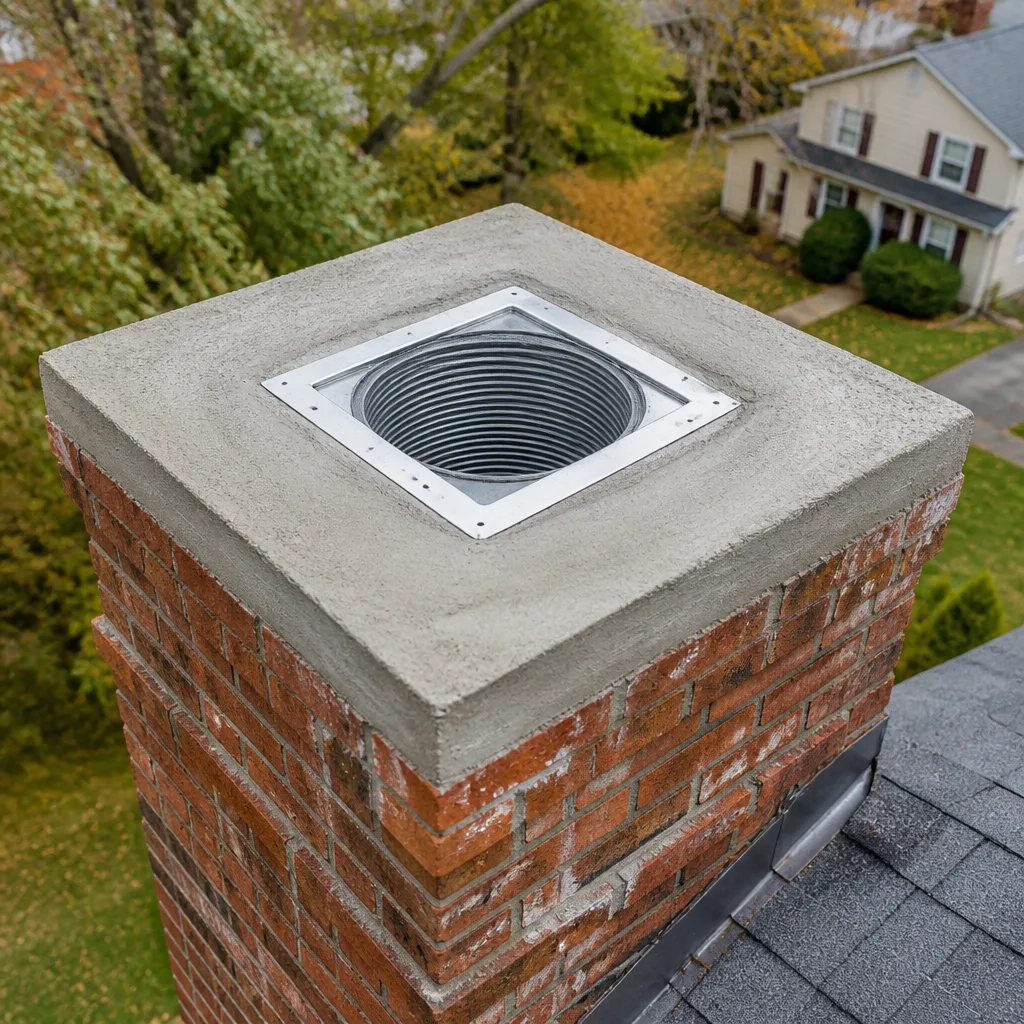
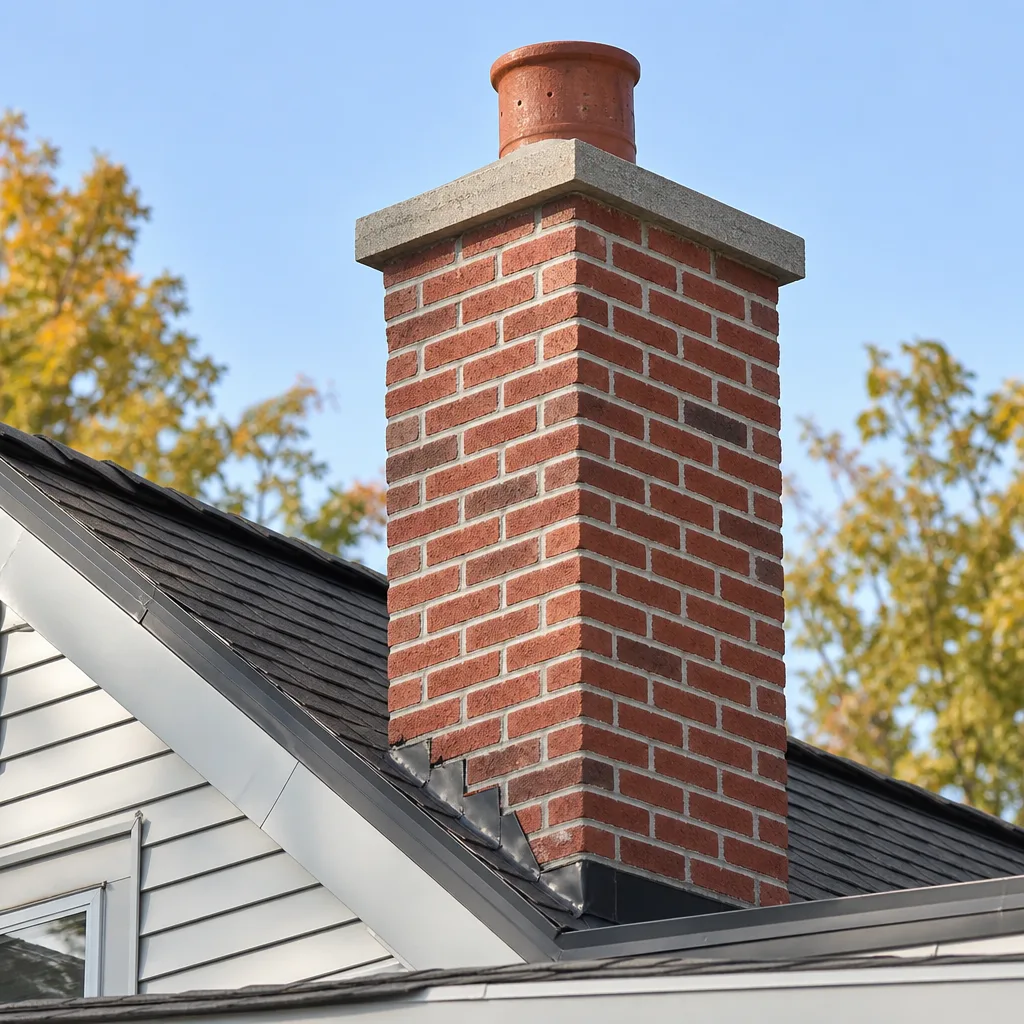
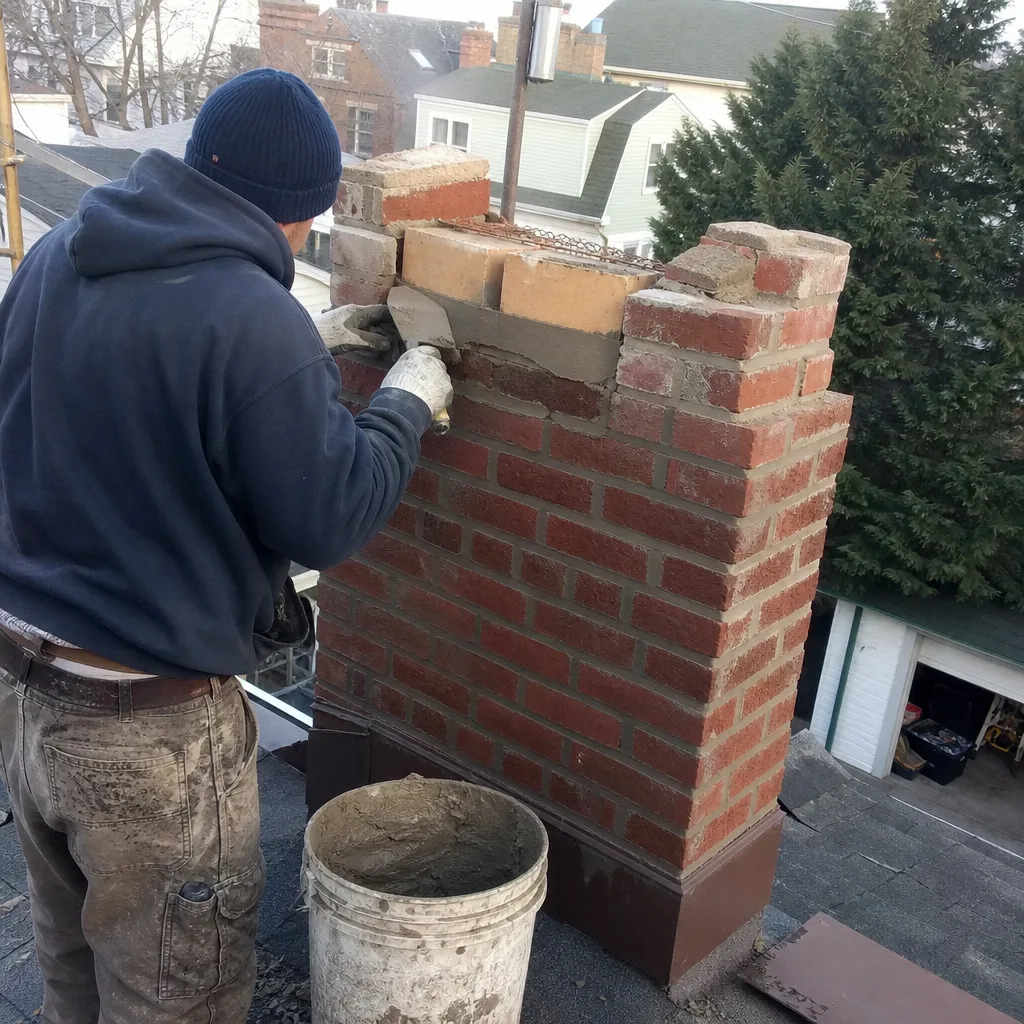
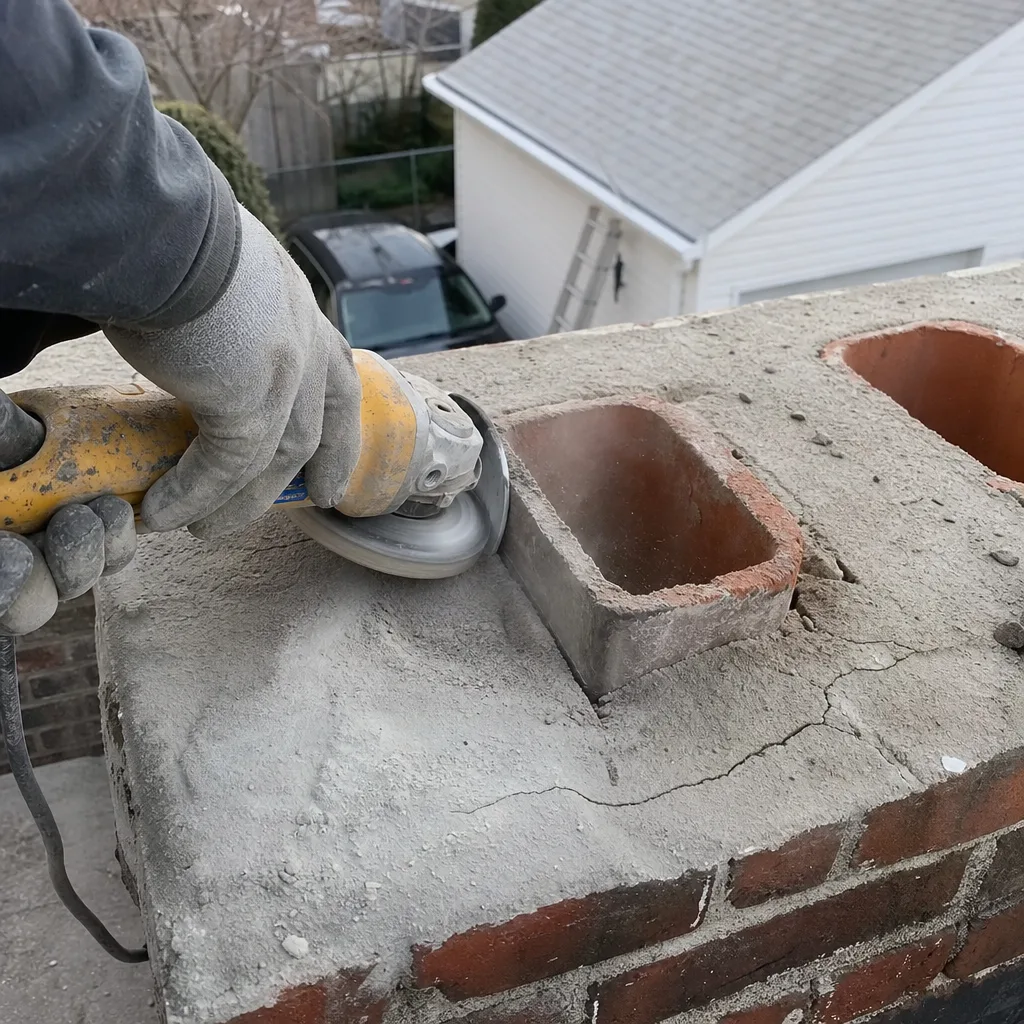
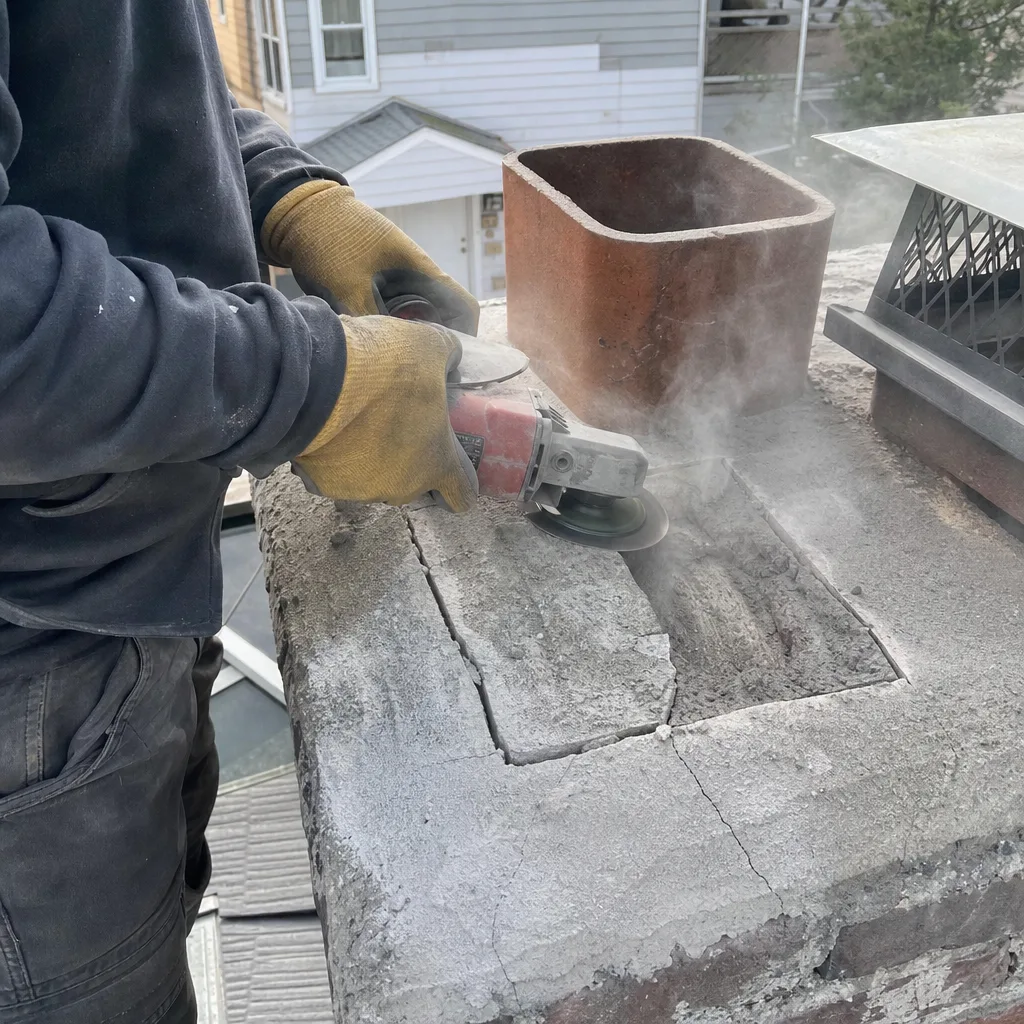
1. Crown mortar condition. The crown is the concrete or mortar slab that caps the chimney’s top, sealing the gap between the flue liner and the outer brick. Look for hairline cracks, missing chunks, or a crown that has pulled away from the flue tile. A cracked crown lets water into the brick matrix. In Astoria’s freeze-thaw winters, that water freezes, expands, and spalls the brick face. What you’re seeing as a cosmetic crack now is a repointing job in two seasons and a partial rebuild in five.
2. Cap presence and rust. The cap is the metal hood, usually stainless steel or galvanized steel, that sits over the flue opening to keep rain, leaves, and animals out. If you can see rust streaks running down the brick from the cap, the cap is failing. Galvanized caps near the East River waterfront rust through in as little as five to seven years because of salt air. A rusted cap lets rain directly into the flue, which accelerates liner deterioration and can produce a musty odor in the firebox during summer.
3. Damper operation. Open and close your fireplace damper. A damper that sticks, won’t seal fully, or rattles in its track is letting conditioned air escape up the flue year-round. In an Astoria rowhouse with shared walls, you’re paying to heat air that exits through a leaky damper into a flue shared with a neighbor’s chimney stack. A damper that won’t close fully can cost $200 to $400 per heating season in lost energy, and it’s the single most common owner-detectable issue we see in Astoria homes built before 1980.
4. Off-season odor. Walk past your fireplace in July or August and take a deliberate sniff. A sharp, acrid smell, like damp campfire ash, indicates creosote buildup absorbing summer humidity. A musty smell suggests water intrusion through a failed cap or crown. Either finding means the flue needs attention before the first fall fire. Odor is not a nuisance; it’s the cheapest early-warning signal you have, and it costs nothing to check.
5. Visible spalling on upper brick courses. Spalling is when the brick face flakes, peels, or pops off in thin sheets. From the ground, look for brick that appears pitted, lighter in color than surrounding brick, or has a dusty residue on the surface below. Spalling means water has penetrated the brick and is working its way out through freeze-thaw cycles. In Astoria’s attached housing stock, spalled brick on your chimney is often visible from a neighbor’s roof deck. Have a professional assess whether the damage is cosmetic or structural before the next winter.
Contractor-Verifiable Items: What Requires a Camera Scan
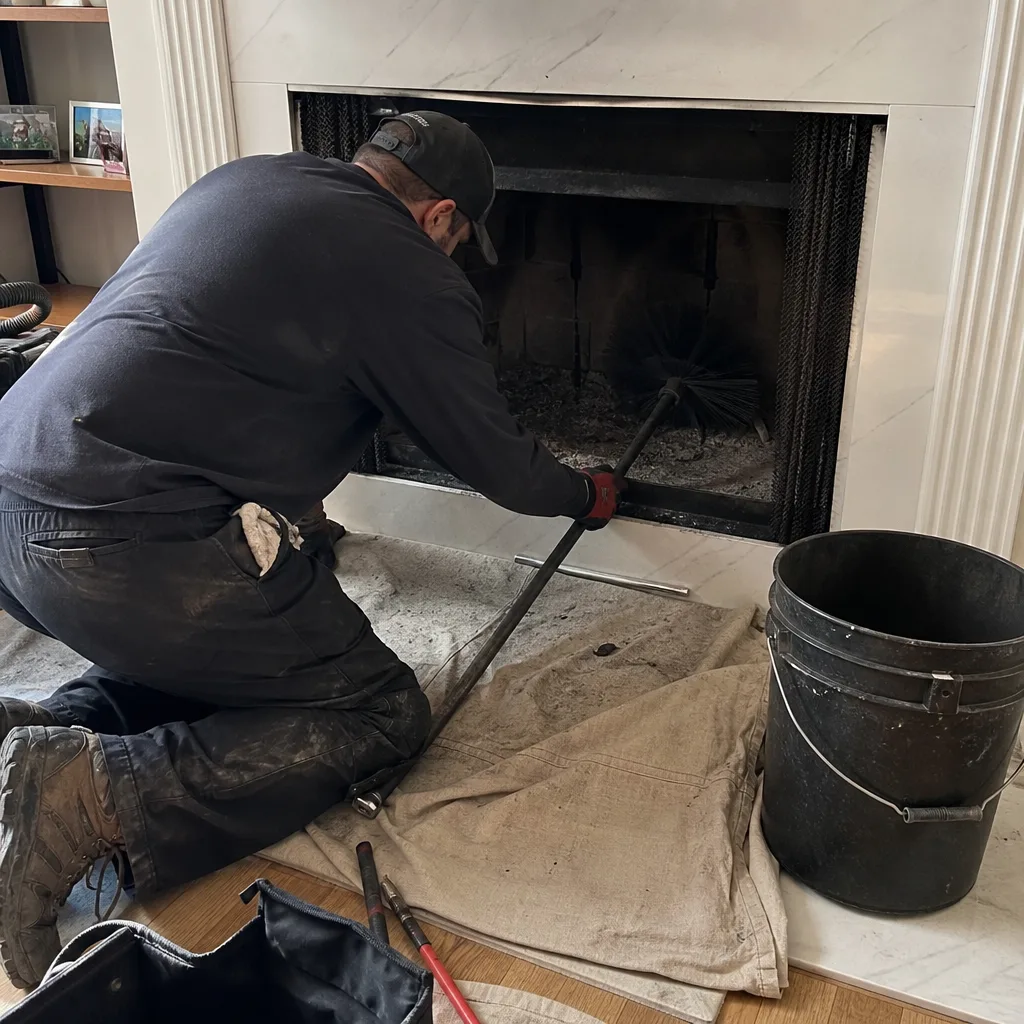
A homeowner checklist ends at the cap. Everything below the cap, inside the flue, is invisible to the naked eye and requires a camera scan to assess honestly. This is the dividing line between a sweep who does a visual flashlight look and a sweep who works to NFPA 211 Level 2 standards. In Astoria, where older homes frequently have unlined or clay-tile-lined flues that are 60 to 90 years old, the camera scan is where the real findings emerge.
1. Flue liner integrity. Clay tile liners crack under thermal stress. Stainless steel liners corrode over time, especially in salt air near the East River. A camera scan shows the entire liner surface from the firebox to the cap, including the joints between tile sections. Cracks wider than 1/16 inch, missing tile sections, or gaps at the joints are findings that matter. A cracked liner can vent combustion gases into wall cavities, not just up the flue.
2. Creosote classification and thickness. Creosote is not one substance; it’s a range. First-degree creosote is dusty soot that brushes off. Second-degree creosote is a flaky, tar-like glaze that requires mechanical scraping. Third-degree, or Class III, creosote is a hardened, glossy coating that ignites at 2,000°F and typically requires chemical treatment or liner replacement. A camera scan tells you which degree you’re dealing with, not just that “there’s buildup.” What each degree costs to remove is a different number, and a written quote should specify the observed degree.
3. Smoke chamber parging. The smoke chamber is the corbeled, funnel-shaped section between the firebox and the flue. In Astoria’s pre-1970 housing stock, smoke chambers were frequently built with exposed, stepped brick and never parged. Exposed brick in the smoke chamber collects creosote in every ledge and pocket, and it’s one of the most commonly missed findings in a non-camera inspection. Parging, the application of a smooth, heat-resistant mortar coating, reduces creosote collection and improves draft.
4. Cap seal at the flue tile. You can see the exterior of the cap from the ground, but the seal between the cap and the flue tile is only verifiable from the top or with a camera scan. A cap that looks fine from the street can be loose at the base, letting rain run down the outside of the flue tile and into the smoke chamber. This is a small fix, a new cap and reseal, typically under $400, but only if you catch it before water damage spreads.
5. Flue offset and alignment. Older Astoria chimneys often have an offset, a horizontal jog in the flue that routes around a structural beam or old boiler connection. Offsets are collection points for creosote and debris. A camera scan maps the offset, measures its angle, and confirms whether buildup has narrowed the usable flue diameter. An offset that’s not documented on a sweep receipt is an offset that wasn’t inspected.
Astoria-Specific Failure Patterns: Salt Air, Wind-Driven Rain, and Party Walls
Astoria is not a generic heating climate. Homes within a half-mile of the East River waterfront, from Astoria Park down to Socrates Sculpture Park and Hallet’s Cove, carry salt air that corrodes metal chimney components at two to three times the rate seen in inland Queens neighborhoods like Sunnyside or Woodside. A stainless steel cap that lasts 15 years in Woodside may last 7 in the blocks between 21st Street and the water. Galvanized steel caps fail even faster.
Wind-driven rain is the second Astoria-specific factor. Exposed rooftops on three-story homes with unobstructed sightlines to the river get hit with diagonal rain that a vertical cap can’t fully deflect. We regularly see cap designs that work fine on a sheltered midblock rowhouse but let water in on a corner lot or top-floor exposure. What fixes this is a cap with a larger overall footprint than the flue opening, not just a taller screen. That’s a $100 to $300 upgrade at the time of installation, and it prevents thousands in liner damage over a decade.
Party walls are the third factor. In Astoria’s attached housing stock, especially the brick rowhouses and two-family homes south of the Grand Central Parkway, chimneys are often paired, with a shared central wall and separate flues. A fire in one flue heats the neighbor’s flue through shared brick. A liner failure in one home’s flue can compromise the shared stack’s structural integrity. This is why documentation matters here more than in a detached single-family home in the suburbs. Your neighbor’s chimney problem becomes yours through shared brick, and vice versa. A camera scan with a photo record gives you evidence of your side of the shared stack, which is what a diligent insurance company wants to see.
What Each Failed Item Costs If Deferred: One Season vs. Three
Deferral is not a binary. A cracked liner left alone for one winter in Astoria is not the same repair bill as one left alone for three. Here’s what each checklist finding costs at the first season of observation versus the third season of ignoring it. These are Astoria market price ranges, not national averages.
| Finding | One Season Deferred | Three Seasons Deferred |
|---|---|---|
| Hairline crown crack | $150-$300: sealant, no structural work | $1,800-$3,200: crown rebuild and top-course repointing after freeze-thaw spalling |
| Rusted or loose cap | $250-$450: cap replacement and reseal | $1,200-$2,500: cap replacement plus liner repair or replacement from water damage |
| Leaky damper | $150-$400: damper repair or replacement | $400-$800: damper replacement plus smoke chamber parging if creosote hardened from air exposure |
| Second-degree creosote | $250-$450: standard sweep with mechanical scraping | $1,500-$3,000: chemical treatment, possible liner replacement if glaze hardened to Class III |
| Clay liner crack, single tile | $800-$1,800: tile replacement or stainless liner section | $3,500-$7,000: full liner replacement after water and gas escape widened the failure |
| Exposed smoke chamber brick | $800-$1,500: parging | $2,500-$4,500: parging plus creosote removal from deep brick pockets and possible liner repair |
The pattern is consistent: catch a finding in its first season, and you’re dealing with a repair bill under $500 in most cases. Wait three seasons, and the same finding becomes a $2,000 to $7,000 project. The difference is not that the chimney changed faster; it’s that water and creosote compound, and in Astoria’s freeze-thaw climate, each winter does a full cycle of expansion and contraction through whatever crack you ignored last year.
Pre-Appointment Documentation Checklist: What to Request Before Work Starts
Everything a homeowner needs to verify a sweep’s work is in writing before the appointment and in a photo record after it. If a company won’t provide these, call a different company. Here’s the checklist of what to request when booking a chimney cleaning and sweep in Astoria:
- Written price, not a phone estimate. A flat price with a defined scope: what’s included in the sweep, what the sweep covers (interior flue, smoke chamber, damper area), and what’s excluded.
- Written scope of work. A list of exactly what will be done, in what order, and what the technician will inspect.
- Camera scan as a standard item, not an upsell. Ask whether camera inspection is included in the base price or billed separately. A sweep that doesn’t put a camera down the flue is not able to verify the liner, smoke chamber, or cap seal.
- Written warranty on the work. What’s covered, for how long, and what void it. A 90-day warranty on a sweep is standard. A 365-day guarantee on the workmanship is stronger.
- Photo record as an included deliverable. Confirm that you’ll receive images from the camera scan, not just a verbal summary. Clause 4 of the Haven Standard requires a documented photo record on every job, and it’s the single most useful thing you can have in hand if you ever need to compare year-over-year condition or file an insurance claim.
Bring a competitor’s written quote to any estimate, and a reputable Astoria sweep company will match it or explain line by line why the scopes differ. A Level Two Chimney Astoria home visit always includes a Free Second Opinion on any written estimate. If the competitor’s quote is lower because it doesn’t include a camera scan, that’s not a lower price; that’s a different, lesser scope.
How to Compare Two Sweep Receipts Year Over Year
This is the most useful discipline a homeowner can develop, and almost no one does it. Every year, after the sweep is complete, you have a receipt. Lay this year’s receipt next to last year’s. Here’s what to look for, and what each comparison tells you.
1. Creosote degree recorded both years? A receipt that says “2nd degree creosote, moderate” last year and “2nd degree creosote, moderate” this year tells you the chimney is getting the same amount of use and the buildup is stable. If it says “3rd degree” this year after “1st degree” last year, something changed: more fires, wetter wood, a draft problem, or a skipped sweep. The receipt should record the degree. If it doesn’t, the sweep didn’t document what they found.
2. Liner condition in the same language both years? You want to see a direct comparison: “liner intact, no new cracks” this year versus “1/16-inch crack noted at mid-flue” last year. If the language changes from year to year without explanation “clay liner looks okay” this year, “liner has some wear” last year, you can’t track whether it’s stable. Ask for condition language that mirrors the previous year’s report.
3. Photos of the same reference points. A camera scan should capture the flue from at least three positions: at the firebox, mid-flue, and at the cap. Compare last year’s mid-flue photo to this year’s mid-flue photo. The same crack in the same place, unchanged in width, is stable. The same crack wider by a hair is a progression you can act on. You can’t track what you can’t see.
4. Repairs, if any, noted with before-and-after images. If you had a crown seal or a cap replacement done last year, this year’s receipt should show that area in the photo record. Confirm the repair held. A crown seal that shows a new hairline crack after one winter is worth a follow-up, not a three-season deferral.
5. The receipt is signed, dated, and includes the technician’s name. A receipt without a date or a named tech is not a record. It’s a piece of paper. Clause 4 of the Haven Standard requires that every job produces a documented record that names the technician, dates the work, and includes the photo record. Ask for it, and then keep it.
A Seasonal Maintenance Schedule for Astoria Chimneys
Astoria’s heating season runs from roughly late October through March, with peak use in December, January, and February. Here’s a month-by-month approach that keeps the checklist manageable and catches problems in the cheapest window.
April through June: Post-season inspection window. The moment the regular fires stop, book the annual sweep. Creosote from the winter’s fires is fresh and easier to remove before it hardens over summer humidity. This is also when water intrusion from winter freeze-thaw shows up clearly: any new crown cracks, spalled brick, or cap damage is visible after the thaw. In Astoria, the April through June window is the single best time to book, because you’re not competing with October’s rush and the tech has time to do a thorough camera scan.
July and August: Off-season odor check. Do the sniff test described above. If you detect musty or acrid odors, book a camera scan now, not in October. Summer humidity is what causes second-degree creosote to absorb moisture and start smelling, and it’s a sign the flue needs attention before the first fire.
September: Pre-season cap and crown visual. The binocular check. Look for new rust streaks, new spalling, or a cap that looks tilted. If anything changed since the spring, get a written quote now, while there’s still scheduling flexibility.
October through March: In-season monitoring. During the burning season, watch for smoke entering the room instead of the flue, a lazy fire that struggles to draw, or crackling sounds from the flue. These are the in-season warnings, and any one of them means stop burning and call for a camera scan. A fire that suddenly draws poorly in an Astoria rowhouse can mean a neighbor’s liner failure changed the shared stack’s draft. It’s not always your chimney, but it’s always your problem.
For a deeper look at what a proper sweep involves, start with our Chimney Cleaning & Sweep in Astoria page, then read about Chimney Repair in Astoria if your camera scan turns up liner or crown findings. If the firebox itself is the issue, our Fireplace Services in Astoria page covers damper repair, firebox rebuilding, and gas log conversion.
Common Mistakes to Avoid
- Booking a sweep without asking whether the camera scan is included. A sweep that doesn’t put a camera down the flue is a flashlight and brush. It cannot see the liner, smoke chamber, or cap seal, and it cannot produce the photo record you need for year-over-year comparison.
- Accepting a verbal price. In Astoria, a verbal estimate has no enforceability. Get the price, scope, and warranty in writing before the tech arrives. No written price means no agreed-upon work.
- Ignoring off-season odors. A musty smell in July is water intrusion. An acrid smell is creosote absorbing humidity. Both are cheap to fix now and expensive to fix in December.
- Skipping the crown check because you can’t reach it. Binoculars from the sidewalk are enough to see a crack. And if you can’t see it clearly, the sweep should be photographing it from the top. You’re not paying a contractor to tell you what you can see from the ground; you’re paying them to document what you can’t.
- Comparing two quotes by price without comparing scope. A $199 sweep that excludes camera inspection is more expensive than a $350 sweep that includes it, because the $199 sweep can miss a liner crack that costs $3,500 to fix in three seasons.
- Burning pine and construction scrap as firewood. Softwoods and painted or treated wood produce more creosote per cord than seasoned hardwoods. In Astoria, where many homes burn scrap from renovations, this is a common and avoidable cause of rapid Class III creosote buildup.
- Assuming a neighbor’s chimney problem isn’t yours. In attached and semi-attached Astoria housing, chimneys share stacks and party walls. A liner failure in the neighboring flue can affect draft, water intrusion, and structural stability in yours. Document your side of the stack every year.
When to Call a Professional
Call a professional when you observe any of these: smoke entering the room during a fire, a sudden change in draft, visible spalling or crown cracks that have widened since last year, a rusted or tilted cap, or an off-season odor that doesn’t clear. Call after any chimney fire, even a small one with no visible damage, because a chimney fire can crack a liner invisibly. Call if your neighbor’s chimney has been rebuilt or relined, and you notice a change in your own draft or odors. Level Two Chimney Astoria offers free estimates in Astoria. Call (516) 301-1549 for a written quote that includes a camera scan. You’ll see the photos yourself before you commit to any work.
Frequently Asked Questions
A standard chimney cleaning and sweep in Astoria typically costs $250 to $450, depending on creosote degree, flue height, and whether the home is an attached rowhouse or a detached single-family property. A camera scan inspection runs $150 to $300 if billed separately, though many companies include it in the sweep price. For an exact written quote, call (516) 301-1549; estimates are free.
Once a year, at minimum, for any wood-burning fireplace used regularly during the heating season. If you burn more than one cord per year, or if you burn softwood or scrap wood, twice a year is safer. In Astoria’s salt air environment, even gas fireplace venting should be inspected annually for cap corrosion, though gas flues need sweeping less often than wood-burning flues.
Not without camera scan evidence. A cracked liner or Class III creosote can warrant liner replacement, but you should see the photos yourself before agreeing to the work. If a sweep recommends a new liner without showing you the camera images, ask for them. If they can’t provide them, get a second opinion. A legitimate recommendation is backed by images you can see.
Creosote builds up incrementally, and the risk profile shifts from dusty soot to a hardened, flammable glaze. Skipping one year usually means a heavier, more expensive sweep. Skipping two or three years in an Astoria home with a clay tile liner can mean the creosote has hardened to the point where a standard brush sweep won’t remove it, and chemical treatment or liner replacement becomes the only option. The cost progression is the difference between $300 and $3,000.
You can remove loose first-degree soot with a do-it-yourself brush kit, but you cannot inspect the liner, smoke chamber, or cap seal without a camera, and you cannot safely assess whether creosote is second-degree or third-degree. A DIY sweep in an older Astoria home gives you a false sense of confidence without documentation. The high-tension components of chimney work, like liner replacement or work on a steep roof, should always be left to a trained professional. The risk of a fall or a missed liner crack isn’t worth the savings.
Yes. Homes within a half-mile of the East River in Astoria experience accelerated corrosion of metal caps, dampers, and stainless steel liners compared to inland Queens. Galvanized caps that last 10 years inland can fail in 5 to 7 near the waterfront. If you live between 21st Street and the river, expect to replace your cap more often and ask for corrosion documentation in your annual photo record. Call (516) 301-1549 for a free estimate and we’ll show you exactly what condition your cap is in.
The Bottom Line
A useful chimney maintenance checklist does two things: it tells you what to look for and tells you what a finding means. Most checklists fail at the second part. An Astoria homeowner following the checklist above can spot a spalled brick from the sidewalk, smell an off-season creosote odor in August, and demand a camera scan photo record in April. The documentation, not the sweep itself, is what protects you. Written price before work starts, a named technician, a photo record when it’s done. That’s the standard. Everything else is a flashlight and a brush.
Written by Corrine Halstead, Owner at Level Two Chimney Astoria, serving Astoria since 2009.